

Commentary
Michael Pettis
{
  "authors": [
    "Michael Pettis"
  ],
  "type": "legacyinthemedia",
  "centerAffiliationAll": "dc",
  "centers": [
    "Carnegie Endowment for International Peace",
    "Carnegie China"
  ],
  "collections": [],
  "englishNewsletterAll": "asia",
  "nonEnglishNewsletterAll": "",
  "primaryCenter": "Carnegie China",
  "programAffiliation": "AP",
  "programs": [
    "Asia"
  ],
  "projects": [],
  "regions": [
    "North America",
    "United States",
    "East Asia",
    "China",
    "Western Europe",
    "United Kingdom"
  ],
  "topics": [
    "Economy"
  ]
}
Source: Getty
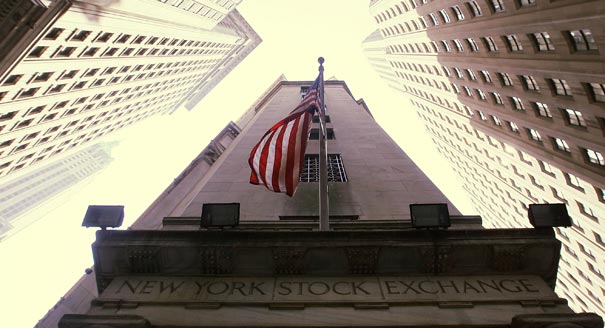
Today's global economic meltdown will increase the importance of New York and London in the coming decade. Another financial center may rise to prominence, but the current crisis is likely to make this process slower.
Source: Newsweek

To understand why, it's important first to remember that boom-bust cycles are nothing new. Over the past two decades, as in previous periods of globalization, the world economy experienced massive growth in the volume of financial transactions. Banks got bigger and financial activity expanded dramatically. But past periods of globalization have always come to an end, usually in financial crises. These crises have always led to a credit crunch, a sharp decline in international trade and investment, and a subsequent collapse in speculative financial activity.
Yet in the past this process has always increased, not decreased, the dominance of big financial centers at the expense of smaller ones. The same thing is likely to happen today, for the same reasons.
Big centers have two huge advantages over smaller rivals: greater liquidity and larger networks. Big investors tend to flock to big financial capitals because they offer higher volume and lower trading costs, and issuers of stocks, bonds and other financial products follow the flock of investors.
Of course, smaller financial centers have advantages of their own: namely specialized access to information and favorable time zones. As a result, during liquidity booms these secondary centers benefit from massive increases in trading volume and financial activity. And as their pools of capital grow, they tend to retain their natural advantages while their disadvantages—lower liquidity and higher transaction costs—shrink in relative importance. Growing liquidity tempts more and more investors and issuers to move to smaller markets in order to exploit local conditions. This is just what happened in the past two decades, and markets in places such as São Paulo, Singapore and Bahrain profited accordingly.
When a liquidity boom ends, however, it tends to accentuate the advantages of big markets while diminishing those of smaller ones. The volume of financial transactions declines as does investors' appetite for risk, and the costs of buying or selling, especially for large trades, rise sharply. These changes all make smaller, less-liquid secondary financial centers seem less attractive to most parties. Traders and issuers begin to migrate back to the deeper primary financial centers, which increases the liquidity of the big players while further reducing that of the smaller centers. Liquidity draws liquidity, as the old trader's saw has it.
We're seeing a similar process at work today. With global trading drying up, once the markets finally stabilize the appeal of New York and London for large investors and corporations needing capital will grow. Already stock-market trading volume has declined sharply in nearly every emerging market—in Hong Kong, for example, it fell by 50 percent in the first quarter of 2009—and the cost of borrowing money to finance stock and bond positions has gotten a lot higher.
This doesn't mean that the supremacy of NyLon is guaranteed to last forever, of course. As Asia continues to grow, financial center on that continent—Hong Kong seems the most likely candidate—could well experience major growth of a kind that could boost it into the major leagues. But that won't be a result of the current financial crisis. The rise of a new major financial center in Asia (or anywhere else, for that matter) will depend on several factors, the most important of which will be whether officials in New York and London finally decide to make the kind of regulatory changes that now seem imminent and necessary—but that could chase away business if they create costly and overbearing reporting requirements or if they somehow manage to reduce transparency and fail to protect investors. Still, as this suggests, dominance remains very much NyLon's to lose.
There are other reasons not to bet against the current heavyweights. To grow in importance, a secondary financial center would need a dependable local currency for international transactions, a reliable legal framework, political and regulatory independence and a sizable home market. The city where the market is based must also be generally perceived as politically safe and stable, especially in times of financial and political turmoil. With the possible exception of Hong Kong, very few of the Asian candidates today score well on these measures. It's possible that over the next decade another financial center will rise in prominence enough to earn a place at the table and gradually wrest significant market share from New York or London. But the current crisis is likely to make this process slower, not quicker. So don't count the old financial powerhouses out just yet.

Nonresident Senior Fellow, Carnegie China
Michael Pettis is a nonresident senior fellow at the Carnegie Endowment for International Peace. An expert on China’s economy, Pettis is professor of finance at Peking University’s Guanghua School of Management, where he specializes in Chinese financial markets.
Recent Work
Michael Pettis
Michael Pettis
Carnegie does not take institutional positions on public policy issues; the views represented herein are those of the author(s) and do not necessarily reflect the views of Carnegie, its staff, or its trustees.

China’s banking crisis in the 2000s was resolved by transferring the costs to households through financial repression—a decision that recapitalized the banks while exacerbating the structural imbalances that continue to shape the Chinese economy today.
Michael Pettis

Chinese biotech companies have been on the receiving end of U.S. economic coercion. Yet their responses have differed significantly because firm and state interests are not uniformly aligned. For Washington, treating all Chinese tech firms the same, irrespective of their actual interests, risks pushing them farther into Beijing’s corner.

Xue Gong

China’s latest energy plan explicitly calls for integrating data centers into the electricity system, particularly connecting them to green energy. It appears Beijing wants to use compute as a source of domestic demand to absorb renewables excess capacity.

Damien Ma

But their "principal to principal" model will only be as effective as the political strength of each leader back home.
Damien Ma

U.S. unpredictability has allowed China to capitalize on its positioning as the “responsible great power”. Paradoxically, the more China wins the perception game, the more likely expectations will rise for Beijing to deliver not just words but to demonstrate with its deeds.

Chong Ja Ian