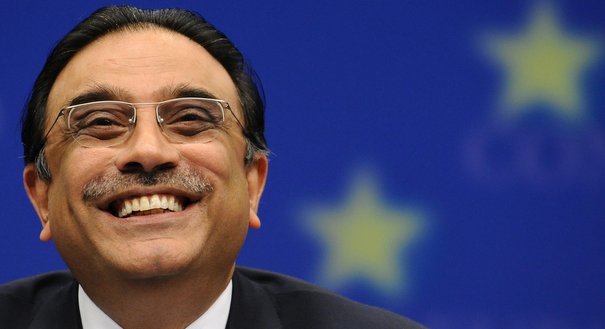
The EU-Pakistan summit should mark the beginning of a new strategic partnership that helps Islamabad deal with its immediate crisis and helps transform a weakened state into a modern Muslim democracy.
Take EU Pakistan Policy Off AutopilotWhen EU leaders hold their first ever summit with Pakistan on June 17th, they will meet a country at a critical juncture. After two months of warfare, the Islamabad government has regained territory in Swat and Malakand from the Pakistani Taliban. Feeling pressured, the militants are now striking back the best way they can – through terror and bombings, such as the attacks seen in Peshawar.
How Islamabad deals with the three fronts of the current crisis -- security, governance and humanitarian -- will determine whether Pakistan slides back to its old habits of denial and fragmentation, or whether it can uphold the fragile but genuine momentum for change.
Through a three-pillar stabilization package using aid and governance tools, while boosting trade and development, the EU can play a critical role in making Pakistan's change a lasting one. For the EU –Pakistan summit to be the start of a true strategic cooperation between Europe and Pakistan, Brussels and its institutions will need a stronger mandate from European capitals.
First the EU should help address the unprecedented humanitarian crisis triggered by the military offensive. The number of internally displaced people is a staggering two million in addition to the 500,000 made homeless by an earlier operation in Bajaur. This may in the long-term hamper Pakistan’s economic recovery; in the short-term, it undermines the military’s hard-fought gains. The reason: the Pakistani government’s inability to deliver post-combat assistance to the 2.5 million displaced people who are easy prey for charity-cum-extremists such as Lashkar-e-Taiba. As Pakistani forces fight today’s enemy, they may inadvertently be swelling the ranks of future foes.
The EU should begin by matching the recent U.S. pledge of more than 200 million US dollars (142 million euros) in humanitarian aid. Its 5.5 million euro humanitarian aid package pledged so far -- in the light of the half-billion dollar appeal from the UN -- and the fact that not a single EU commissioner has visited the refugees speak volumes of the EU’s neglect.
For those EU countries that do not have bilateral ties with Pakistan, the establishment of a “Frontier Emergency Fund” would help channel aid into quick-impact projects. Small donations of a million or even half a million euros could make a difference. Such a fund would also help reinforce the credibility of Pakistan’s civilian government by providing assistance to support state services, including the provision of security, electricity and potable water.
Beyond the emergency situation, the EU should focus on what it does best: trade and development. The EU must listen carefully to Pakistan’s requirements and, despite misgivings and technical blockages, explore the pros and cons of opening negotiations on a Free Trade Agreement (FTA). Doing so will send a powerful political signal that few other overtures can.
Increased access to trade financing is also necessary to ensure a continuation of exports despite the financial crisis. Boosting Pakistan’s private sector should be another key priority. According to the Asian Development Bank, Pakistan’s private sector is the biggest contributor to GDP as well as Pakistan’s biggest employer. The EU should help remove bureaucratic bottlenecks, which prevent the emergence of more freer, more dynamic private sector.
The EU should then launch a Rule of Law Review Task Force with the Pakistani authorities to identify gaps and needs in resources and training within the civilian security forces and the judicial sector. Such a joint body could make recommendations on how develop an effective civilian counter-terrorism strategy, which emphasizes police and legal action rather than exclusively military efforts and targets EU assistance not only to the frontline, but also to policing Sindh and Punjab provinces.
This need not be a traditional ESPD mission, but “smart ESDP”, i.e. not boots-on-the-ground, but a boutique intervention with few, long-serving experts working in partnership with the Pakistani authorities and with co-location tied to out-of-country training for the top echelons of Pakistan’s police and judiciary.
Finally, the summit must signal an EU shift away from backing Pakistan’s political flavour of the month to helping build strong institutions and investing in civil society, which is vibrant, dynamic and committed to democracy. Groups that deserve support include lawyers' organisations, women's groups, human rights activists and the media, where the focus should be on ensuring media independence and journalism training.
In the last two years, Pakistan's civil society proved its essential role in deepening democracy. Based on the recommendations of its own election mission from last year, the EU should approach the Pakistani authorities to explore ways to jointly support strengthening of democratic institutions, including the modernisation of political parties and the electoral framework.
Pakistan is at a cross-road and will need EU help and encouragement to take the right turn. The EU-Pakistan summit should mark the beginning of a new strategic partnership, which helps the Islamabad government deal with the immediate crisis and helps transform a weakened state into a modern Muslim democracy in the heart of South Asia.
Pothier, director of Carnegie Europe, is a noted commentator on European policy in Afghanistan and Pakistan, transatlantic issues, and global drug policy.
Carnegie does not take institutional positions on public policy issues; the views represented herein are those of the author(s) and do not necessarily reflect the views of Carnegie, its staff, or its trustees.
The Plaza Accord was not an externally imposed punishment of Japan but part of a broader restructuring that Japanese economists and policymakers themselves recognized was necessary. Its effects were undermined, however, when Tokyo responded to the resulting slowdown with policies that exacerbated investment, credit expansion, and the very imbalances the adjustment was intended to resolve.
The nuclear relationship between China and the United States is increasingly shaped by widening perception gaps rather than deliberate strategic design.
China’s banking crisis in the 2000s was resolved by transferring the costs to households through financial repression—a decision that recapitalized the banks while exacerbating the structural imbalances that continue to shape the Chinese economy today.
Chinese biotech companies have been on the receiving end of U.S. economic coercion. Yet their responses have differed significantly because firm and state interests are not uniformly aligned. For Washington, treating all Chinese tech firms the same, irrespective of their actual interests, risks pushing them farther into Beijing’s corner.