

In The Media
Martha Brill Olcott
{
  "authors": [
    "Martha Brill Olcott"
  ],
  "type": "legacyinthemedia",
  "centerAffiliationAll": "dc",
  "centers": [
    "Carnegie Endowment for International Peace",
    "Carnegie Russia Eurasia Center"
  ],
  "collections": [],
  "englishNewsletterAll": "ctw",
  "nonEnglishNewsletterAll": "",
  "primaryCenter": "Carnegie Endowment for International Peace",
  "programAffiliation": "russia",
  "programs": [
    "Russia and Eurasia"
  ],
  "projects": [
    "Eurasia in Transition"
  ],
  "regions": [
    "North America",
    "United States",
    "South Asia",
    "Afghanistan",
    "Pakistan",
    "Central Asia",
    "Kazakhstan",
    "Kyrgyz Republic",
    "Tajikistan",
    "Turkmenistan",
    "Uzbekistan"
  ],
  "topics": [
    "Political Reform",
    "Democracy",
    "Economy",
    "Security",
    "Military",
    "Foreign Policy"
  ]
}
Source: Getty
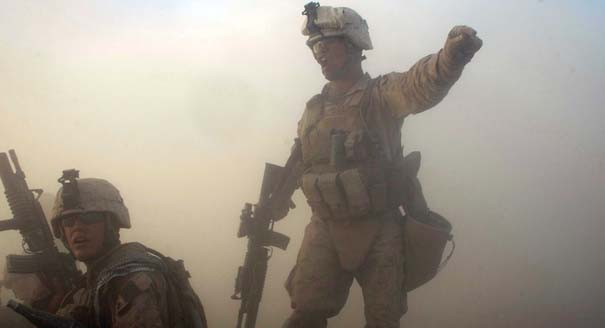
While the U.S.-led NATO operations in Afghanistan have resulted in somewhat enhanced security capacity for Central Asian countries, their long-term security challenges seem to be increasing, given the current situation in Afghanistan and the growing instability of Pakistan.
Source: Norwegian Peacebuilding Centre Policy Brief

While the US-led NATO operations in Afghanistan have resulted in somewhat enhanced security capacity in the Central Asian countries, most projects designed to strengthen the regional economy remain on the drawing board. In fact, the long-term security challenges faced by the Central Asian states seem to be increasing, given the current situation in Afghanistan and the growing instability of Pakistan.
As public pressure mounts in the US and in Europe to wind down their military involvement in Afghanistan, and to find other ways to protect their populations from the risks posed by al-Qaeda, Central Asian elites are left pondering how best to protect their own populations, in view of the limited regional, multilateral or bilateral assistance on offer.
Nato withdrawal would be very damaging for the Central Asian states and would greatly exacerbate the deteriorating economic and security conditions in some of these countries. Aid from the West is badly needed; however, in the past Western funding for projects in Central Asia has often fallen short. Given the financial climate, the current emphasis on smaller bilateral exchanges and cross-border production of electricity should be encouraged.
Former Senior Associate, Russia and Eurasia Program and, Co-director, al-Farabi Carnegie Program on Central Asia
Olcott is professor emerita at Colgate University, having taught political science there from 1974 to 2002. Prior to her work at the endowment, Olcott served as a special consultant to former secretary of state Lawrence Eagleburger.
Recent Work
Martha Brill Olcott
Martha Brill Olcott
Carnegie does not take institutional positions on public policy issues; the views represented herein are those of the author(s) and do not necessarily reflect the views of Carnegie, its staff, or its trustees.

China’s banking crisis in the 2000s was resolved by transferring the costs to households through financial repression—a decision that recapitalized the banks while exacerbating the structural imbalances that continue to shape the Chinese economy today.

Michael Pettis

But their "principal to principal" model will only be as effective as the political strength of each leader back home.

Damien Ma

U.S. unpredictability has allowed China to capitalize on its positioning as the “responsible great power”. Paradoxically, the more China wins the perception game, the more likely expectations will rise for Beijing to deliver not just words but to demonstrate with its deeds.

Chong Ja Ian

Hanoi and Beijing have long treated each other as distant cousins rather than comrades in arms. That might be changing as both sides draw closer to hedge against uncertainty and America’s erratic behavior.

Nguyễn Khắc Giang

Across Asia, China is better positioned to withstand energy shocks from the fallout of the Iran war. Its abundant coal capacity can ensure stability in the near term. Yet at the same time, the country’s energy transition away from coal will make it even less vulnerable during the next shock.
Damien Ma