• Commentary
  • Research
  • Experts
  • Events
Carnegie China logoCarnegie lettermark logo
{
  "authors": [
    "Karim Sadjadpour"
  ],
  "type": "legacyinthemedia",
  "centerAffiliationAll": "dc",
  "centers": [
    "Carnegie Endowment for International Peace",
    "Malcolm H. Kerr Carnegie Middle East Center"
  ],
  "collections": [],
  "englishNewsletterAll": "menaTransitions",
  "nonEnglishNewsletterAll": "",
  "primaryCenter": "Carnegie Endowment for International Peace",
  "programAffiliation": "MEP",
  "programs": [
    "Middle East"
  ],
  "projects": [],
  "regions": [
    "Middle East",
    "Iran",
    "Gulf"
  ],
  "topics": [
    "Political Reform",
    "Foreign Policy",
    "Nuclear Policy"
  ]
}
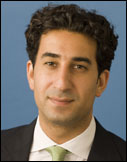
Source: Getty

In The Media

Overtures To Iran Bear Some Fruit

A year of attempts by U.S. officials to engage with Iran has not yet yielded any change in Iran’s nuclear position, but it has succeeded in demonstrating to both the Iranian people and the international community that the problem lies in Tehran, not in Washington.

Link Copied
By Karim Sadjadpour
Published on Dec 17, 2009

Source: NPR's Morning Edition

STEVE INSKEEP (Host): Okay. This document emerged as the United States nears the end of a year of trying to engage with Iran. Some positive gestures were followed by a disputed election and Iran's repression of its citizens. An apparent nuclear agreement ended with Iran rejecting it. So let's discuss all this with Karim Sadjadpour. He analyses Iran for the Carnegie Endowment for International Peace.

Welcome back to the program.
 
Mr. KARIM SADJADPOUR (Carnegie Endowment for International Peace): Thank you, Steve. Great to be here.
 
INSKEEP: Good morning. President Obama tried a different approach, famously extending his hand this year. What has the U.S. gained?
 
Mr. SADJADPOUR: You know, on the nuclear issues, Steve, we ostensibly haven't gained much, because Iran hasn't changed its nuclear position at all. But I would argue the overtures that the Obama administration have made have really borne fruit, in the sense that we've made it clear to both the Iranian people and to our friends in the international community, whether the Europeans or the Russians or Chinese, that the problem lies in Tehran not Washington.
 
I think many people during the Bush administration pointed to United States and said, well, you really haven't made an effort at engaging Iran. You haven't really made an effort at reaching out, and I think under the Obama administration everyone recognizes that the United States has reached out. It's the Iranians who have refused to reciprocate, and I think we have a much more robust international coalition now than we did before. And I would just add in the context of domestic Iranian politics, whereas the Bush administration's more hardline approach united Iran's disparate factions against a common threat. I think the Obama administration's overtures have accentuated these deep internal divides within Iran, both amongst political elites and between the population and the regime.
 
INSKEEP: Although when we hear that Iran launched another missile this week, it suggests that the people who are really in charge are still very firmly in charge and determined on their course.
 
Mr. SADJADPOUR: Well, that's very true in the sense that you have a hardline cartel running the country post June 12th, post election. And many of these hardliners believe that enmity towards the United States was a fundamental pillar of the 1979 revolution and essential to the identity of the Islamic Republic. I would argue, however, that the Iranian government is probably less stable than it's ever been in its three decade history, and we have never seen the types of opposition protests that we continue to see now, even six months after the election.
 
INSKEEP: Well, what's changing if anything with those protests, as time goes on?
 
Mr. SADJADPOUR: It's an important question, Steve. Because certainly the scale of the protest has decreased since we've seen last June. Because the Iranian government is very good at repression, and they are able to prevent large masses of people from congregating in one area. But what we have seen is that the protests have continued in smaller number, in the thousands, but the intensity of the protests has increased, in a sense that four months ago if you look at the slogans people were chanting, they were very much related to the elections. They would say, I want my vote back. Now they are saying much more strident slogans like to death to Khamenei, and they are calling for an Iranian republic instead of an Islamic republic. So I think the demands have grown stronger with time.
 
INSKEEP: And Karim, when you say that this government seems less stable now than at any time since the revolution 30 years ago, are you suggesting that there is some possibility these protests could lead to Iran's regime being toppled?
 
Mr. SADJADPOUR: Steve, I think we are still not there yet and I think the opposition themselves recognize that this is not going to be an overnight process, but I would simply argue that the regime has far fewer supporters than it's ever had, and part of that is, part of that reason is because they have purged the system of any moderate or pragmatic elements. And I think we could, you know, it could be on simmer for quite a long time but we could reach this tipping point which could change things quite abruptly.
 
INSKEEP: And very briefly, Karim, you're talking with us from Washington, of course. You get a chance I'm sure to speak with U.S. officials. Is it your sense that American officials feel that they have figured out or are figuring out how to deal with Iran?
 
Mr. SADJADPOUR: I don't think so. I think that there is still a great deal of frustration, and the Obama administration would have preferred not to pursue this path of sanctions and punitive measures because they believe they need Iran's help to help stabilize Afghanistan and Iraq. But I think they no longer have the luxury of patience and they're now going to move forward with a more hardline approach.
 
INSKEEP: Karim Sadjadpour, thanks very much.
 
Mr. SADJADPOUR: Anytime, Steve.
 
INSKEEP: He's the Iran analyst for the Carnegie Endowment for International Peace in Washington, D.C.

About the Author

Karim Sadjadpour

Senior Fellow, Middle East Program

Karim Sadjadpour is a senior fellow at the Carnegie Endowment for International Peace, where he focuses on Iran and U.S. foreign policy toward the Middle East.

    Recent Work

  • Q&A
    What’s Keeping the Iranian Regime in Power—for Now

      Aaron David Miller, Karim Sadjadpour, Robin Wright

  • Q&A
    How Washington and Tehran Are Assessing Their Next Steps

      Aaron David Miller, David Petraeus, Karim Sadjadpour

Karim Sadjadpour
Senior Fellow, Middle East Program
Karim Sadjadpour
Political ReformForeign PolicyNuclear PolicyMiddle EastIranGulf

Carnegie does not take institutional positions on public policy issues; the views represented herein are those of the author(s) and do not necessarily reflect the views of Carnegie, its staff, or its trustees.

More Work from Carnegie China

  • Commentary
    Malaysia’s Year as ASEAN Chair: Managing Disorder

    Malaysia’s chairmanship sought to fend off short-term challenges while laying the groundwork for minimizing ASEAN’s longer-term exposure to external stresses.

      Elina Noor

  • Commentary
    When It Comes to Superpower Geopolitics, Malaysia Is Staunchly Nonpartisan

    For Malaysia, the conjunction that works is “and” not “or” when it comes to the United States and China.

      Elina Noor

  • Commentary
    Neither Comrade nor Ally: Decoding Vietnam’s First Army Drill with China

    In July 2025, Vietnam and China held their first joint army drill, a modest but symbolic move reflecting Hanoi’s strategic hedging amid U.S.–China rivalry.

      • Nguyen-khac-giang

      Nguyễn Khắc Giang

  • Commentary
    China’s Mediation Offer in the Thailand-Cambodia Border Dispute Sheds Light on Beijing’s Security Role in Southeast Asia

    The Thai-Cambodian conflict highlights the limits to China's peacemaker ambition and the significance of this role on Southeast Asia’s balance of power.

      Pongphisoot (Paul) Busbarat

  • Trump and Xi on a red background
    Commentary
    Emissary
    China Is Determined to Hold Firm Against Trump’s Pressure

    Beijing believes that Washington is overestimating its own leverage and its ability to handle the trade war’s impacts. 

      • Sheena Chestnut Greitens

      Rick Waters, Sheena Chestnut Greitens

Get more news and analysis from
Carnegie China
Carnegie China logo, white
  • Research
  • About
  • Experts
  • Events
  • Contact
  • Careers
  • Privacy
  • For Media
Get more news and analysis from
Carnegie China
© 2026 Carnegie Endowment for International Peace. All rights reserved.









