

Commentary
Michael Pettis
{
  "authors": [
    "Michael Pettis"
  ],
  "type": "legacyinthemedia",
  "centerAffiliationAll": "dc",
  "centers": [
    "Carnegie Endowment for International Peace"
  ],
  "collections": [],
  "englishNewsletterAll": "asia",
  "nonEnglishNewsletterAll": "",
  "primaryCenter": "Carnegie Endowment for International Peace",
  "programAffiliation": "AP",
  "programs": [
    "Asia"
  ],
  "projects": [],
  "regions": [
    "North America",
    "United States",
    "East Asia",
    "China"
  ],
  "topics": [
    "Economy",
    "Trade"
  ]
}
Source: Getty
The contraction in global demand set off by the financial crisis has led to escalating trade tensions between China and the United States, and a breakdown in trade will slow the global recovery and create hostility and mistrust between major economies whose cooperation is necessary to resolving important global problems.
Source: Financial Times

This should cause alarm. A breakdown in trade will slow the global recovery and create hostility and mistrust between major economies, making a resolution of important global problems, including the environment, terrorism and nuclear proliferation, unlikely. If trade issues are to be resolved optimally, policymakers in the leading economies must begin by understanding how difficult the problems are for their counterparts.
Like the US before the 1930s Great Depression, China has benefited from a decade of surging productivity growth and an undervalued currency to claim an outsize share of global manufacturing and a relatively small share of global consumption, which requires it to export the surplus abroad.
As long as global demand surged, this was not a problem. But the global financial crisis set off a contraction in debt and of excess demand in overconsuming countries. China, like the US in 1930, has done everything it can to maintain its ability to export excess production, but Asian trade rivals and western importers, like Europe in 1930, are having none of it. The result is that trade is increasingly the centre of conflict, as it was after 1930.
Since, as in 1930, each side has misunderstood or underestimated the others’ problems, it is hard to imagine trade disputes being resolved optimally. Escalating tensions, aggressive actions and reactions and a slower global recovery are more likely.
China’s problem is that it cannot change its reliance on foreign net demand quickly enough. Rebalancing the economy away from overproduction and towards domestic consumption is a long and difficult process. The historical precedents are clear.
But it is also politically unacceptable for trade-deficit countries, especially in the developed west, to accept the high unemployment consistent with leakage of demand to trade-surplus countries. With 10 per cent US unemployment – and higher in some European countries – few will see the benefits of permitting domestic demand to be absorbed abroad to maintain employment in China.
Beijing needs to understand that the world cannot continue indefinitely accepting policies, such as an undervalued exchange rate and excessively low financing costs, that force China’s consumers to subsidise its exporters. Washington and Brussels must understand that China cannot possibly rebalance quickly without causing massive disruptions to its own economy. Unless they expect Beijing willingly to engineer a transition that causes domestic manufacturing to collapse and unemployment to surge, the west cannot expect a quick resolution.
Things will get worse before they get better. The massive monetary expansion engineered by the world’s major economies to protect themselves from the effects of the financial crisis has temporarily reduced the economic pain, but perhaps only at the cost of exacerbating the underlying imbalances. The US and European governments have postponed the necessary rise in savings. China has pumped money into increased production or into economically unviable infrastructure investment, which, since it must be paid for by China’s long-suffering consumers, will continue to inhibit consumption growth.
As a result the trade imbalances are more necessary than ever to justify increased investment in surplus countries, but rising unemployment makes them politically and economically unacceptable in deficit countries. Rising savings in the US will collide with stubbornly high savings in China.
Unless a long-term solution is jointly worked out immediately, trade conflict will worsen and it will become increasingly hard to reverse offensive policies. Most importantly, if deficit countries demand structural change faster than surplus countries can manage, we will almost certainly finish with a nasty trade dispute that will slow the global recovery and poison relationships for years. Our new decade should not start out so badly.

Nonresident Senior Fellow, Carnegie China
Michael Pettis is a nonresident senior fellow at the Carnegie Endowment for International Peace. An expert on China’s economy, Pettis is professor of finance at Peking University’s Guanghua School of Management, where he specializes in Chinese financial markets.
Recent Work
Michael Pettis
Michael Pettis
Carnegie does not take institutional positions on public policy issues; the views represented herein are those of the author(s) and do not necessarily reflect the views of Carnegie, its staff, or its trustees.

Across Asia, China is better positioned to withstand energy shocks from the fallout of the Iran war. Its abundant coal capacity can ensure stability in the near term. Yet at the same time, the country’s energy transition away from coal will make it even less vulnerable during the next shock.

Damien Ma

In the latest Five-Year Plan, the Chinese president cements the shift to an innovation-driven economy over a consumption-driven one.
Damien Ma

For Malaysia, the conjunction that works is “and” not “or” when it comes to the United States and China.

Elina Noor

ASEAN needs to determine how to balance perpetuating the benefits of technology cooperation with China while mitigating the risks of getting caught in the crosshairs of U.S.-China gamesmanship.
Elina Noor
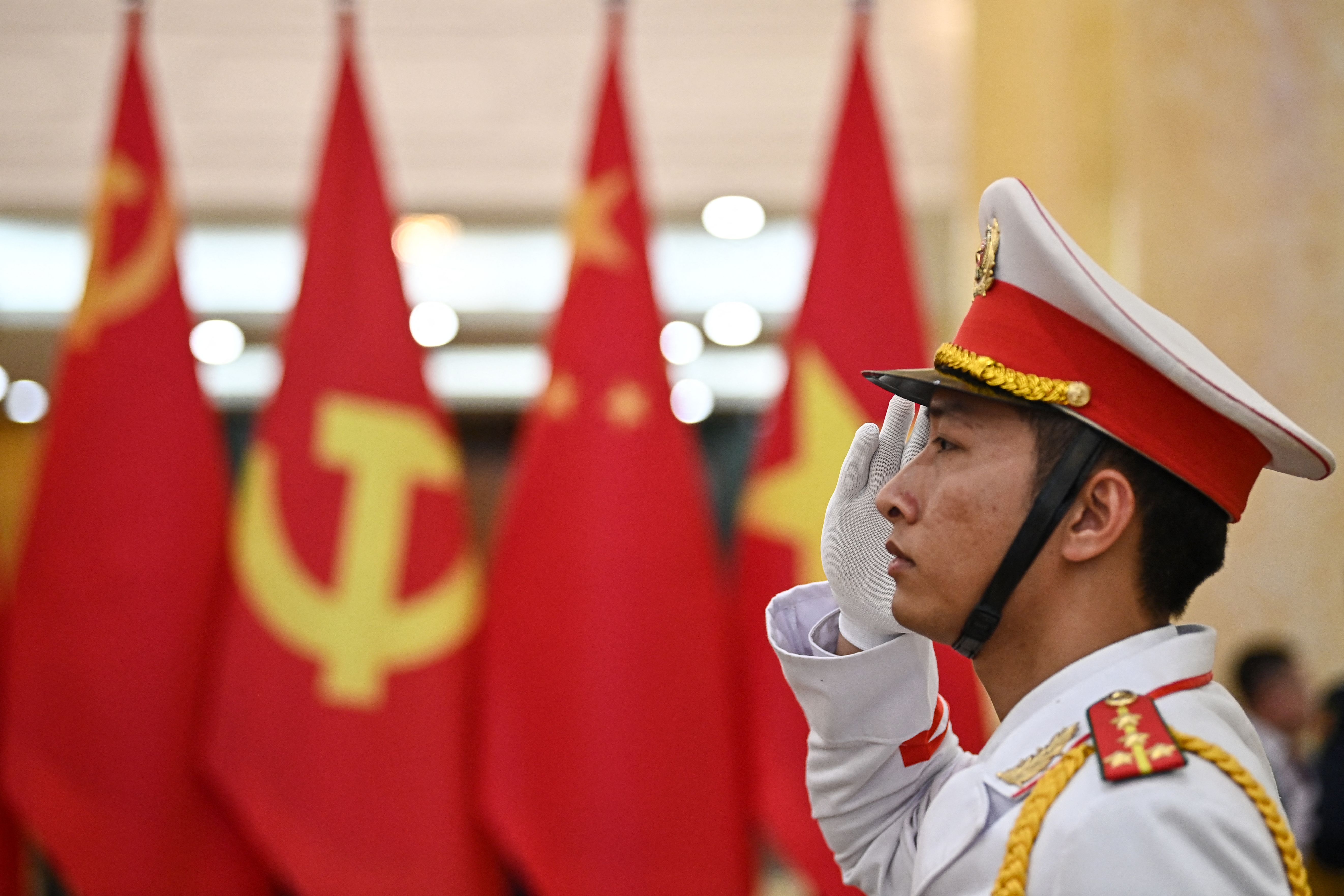
In July 2025, Vietnam and China held their first joint army drill, a modest but symbolic move reflecting Hanoi’s strategic hedging amid U.S.–China rivalry.

Nguyễn Khắc Giang