• Commentary
  • Research
  • Experts
  • Events
Carnegie China logoCarnegie lettermark logo
{
  "authors": [],
  "type": "pressRelease",
  "centerAffiliationAll": "dc",
  "centers": [
    "Carnegie Endowment for International Peace"
  ],
  "collections": [],
  "englishNewsletterAll": "menaTransitions",
  "nonEnglishNewsletterAll": "",
  "primaryCenter": "Carnegie Endowment for International Peace",
  "programAffiliation": "MEP",
  "programs": [
    "Middle East"
  ],
  "projects": [],
  "regions": [
    "Middle East",
    "Yemen"
  ],
  "topics": [
    "Security"
  ]
}
REQUIRED IMAGE

REQUIRED IMAGE

Press Release

Al-Qaeda exploits local Yemeni grievances

Al-Qaeda has successfully adapted its message in Yemen to exploit local grievances. Still, the violent jihad it advocates is not widely accepted by Yemenis at this point, and there is a small window of opportunity to take steps to undermine al-Qaeda’s influence.

Link Copied
Published on Jun 8, 2010

WASHINGTON, June 8—Al-Qaeda has successfully adapted its message in Yemen to exploit local grievances. Still, the violent jihad it advocates is not widely accepted by Yemenis at this point, and there is a small window of opportunity to take steps to undermine al-Qaeda’s influence.

An effective strategy to combat Al-Qaeda in the Arabian Peninsula (AQAP) must identify how the group’s message resonates with Yemenis and develop ways for state institutions to address underlying complaints, contends a new paper by Alistair Harris.

Recommendations

  • Avoid over-dependence on hard power. While military and law enforcement clearly have a role to play, civilian casualties need to be avoided and Yemeni-led security operations must be part of a comprehensive approach that prioritizes soft power.  
  • Better understand AQAP’s message. By knowing how AQAP communicates and why local populations are drawn to the messages, the government can more effectively respond to preexisting grievances and exploit any contradictions in al-Qaeda’s narrative.   
  • Support locally-led responses. To counter the threat of terrorism in Yemen, the government must effectively improve local participation, responsiveness, credibility, and service delivery.

“Complementary to targeted intelligence and Yemeni-led law enforcement activities, an effective strategy to combat AQAP must seek to understand which parts of the group’s narrative are resonating and why and how state institutions can address the grievances—real or perceived—articulated by AQAP,” writes Harris.

###


NOTES

  • Click here to read the paper online in English

  • Click here to read the paper online in Arabic

  • Click here to read the executive summary online

  • Yemen: On the Brink is a new four-part Carnegie series that takes an in-depth look at the daunting challenges facing the country—now a near-perfect haven for al-Qaeda—and recommends how the international community should respond to the civil war in the north, secessionist movement in the south, rapidly dwindling resources, rampant poverty, and a weak and corrupt government. The series follows the groundbreaking September 2009 paper Yemen: Avoiding a Downward Spiral, which detailed the confluence of crises confronting the troubled state.
  • Alistair Harris is a former diplomat and UN staff member. He is an associate fellow at the Royal United Services Institute (RUSI) and frequent commentator for RUSI on Middle Eastern issues, as well as director of the research consultancy Pursue Ltd. A specialist in counter-radicalization, security sector assistance, and post-conflict stabilization, he has worked in recent years in the Balkans, Pakistan, Afghanistan, Yemen, the Palestinian Territories, Lebanon, and Africa. Harris has a first class degree from Emmanuel College, Cambridge and is a graduate student at the Centre for the Study of Terrorism and Political Violence at St. Andrews University.
  • The Carnegie Middle East Program combines in-depth local knowledge with incisive comparative analysis to examine economic, socio-political, and strategic interests in the Arab world to provide analysis and recommendations in both English and Arabic that are deeply informed by knowledge and views from the region.
  • The Carnegie Middle East Center based in Beirut, Lebanon, aims to better inform the process of political change in the Middle East.
  • Carnegie's Arab Reform Bulletin analyzes political reform in the Middle East.
  • Press Contact: David Kampf, 202/939-2233, pressoffice@ceip.org
SecurityMiddle EastYemen

Carnegie does not take institutional positions on public policy issues; the views represented herein are those of the author(s) and do not necessarily reflect the views of Carnegie, its staff, or its trustees.

More Work from Carnegie China

  • Commentary
    China’s Mediation Offer in the Thailand-Cambodia Border Dispute Sheds Light on Beijing’s Security Role in Southeast Asia

    The Thai-Cambodian conflict highlights the limits to China's peacemaker ambition and the significance of this role on Southeast Asia’s balance of power.

      Pongphisoot (Paul) Busbarat

  • Trump and Xi on a red background
    Commentary
    Emissary
    China Is Determined to Hold Firm Against Trump’s Pressure

    Beijing believes that Washington is overestimating its own leverage and its ability to handle the trade war’s impacts. 

      • Sheena Chestnut Greitens

      Rick Waters, Sheena Chestnut Greitens
  • Commentary
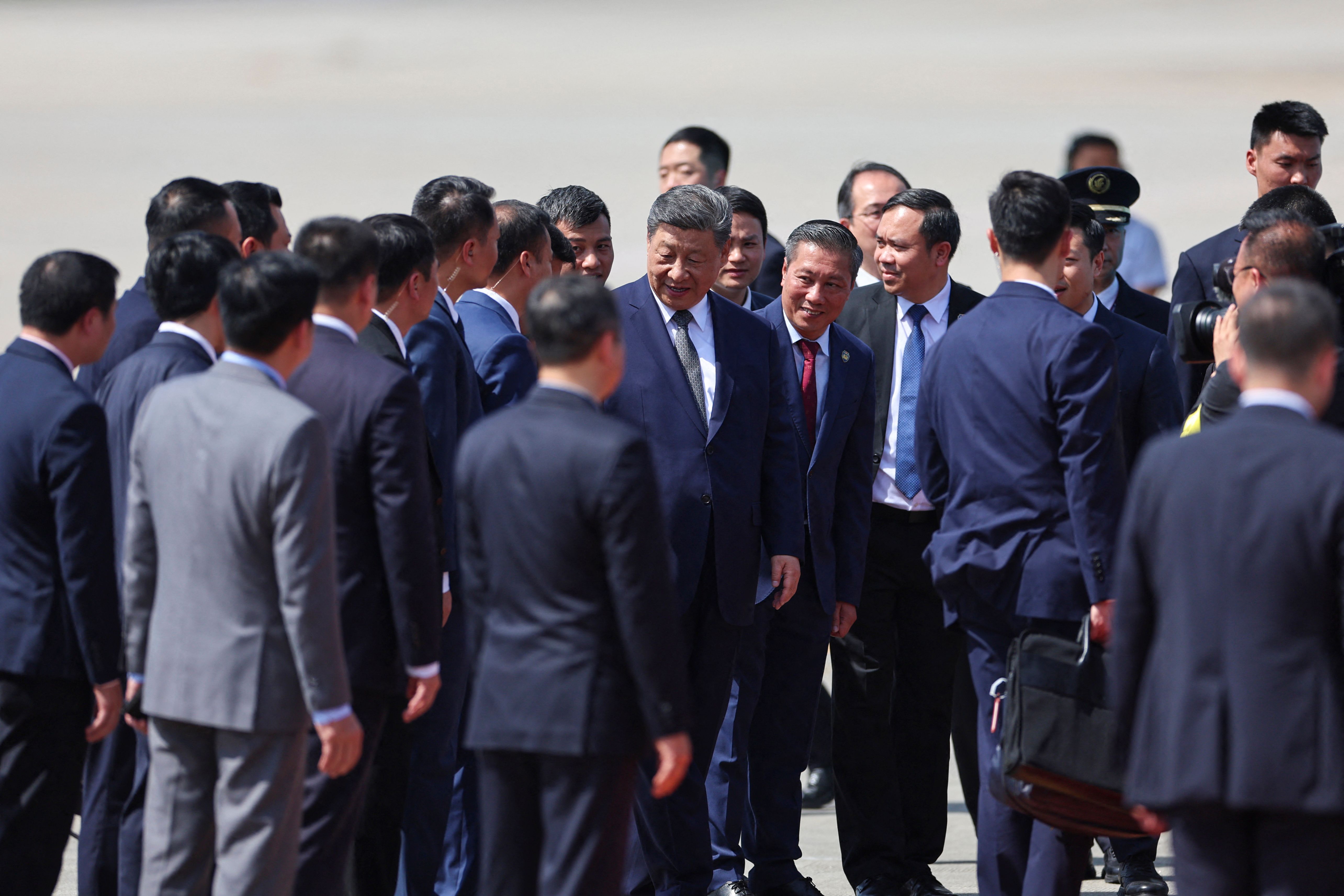
    A Second Trump Term: Will Southeast Asia Tilt Toward China?

    Tapping our network of China experts in the region, Carnegie China offers this latest “China Through a Southeast Asian Lens” report to offer preliminary assessments of whether the U.S. effort to reshape the global trading order will lead countries in the region to tilt toward Beijing. 

      • +6

      Selina Ho, Khin Khin Kyaw Kyee, Joseph Ching Velasco, …
  • Research
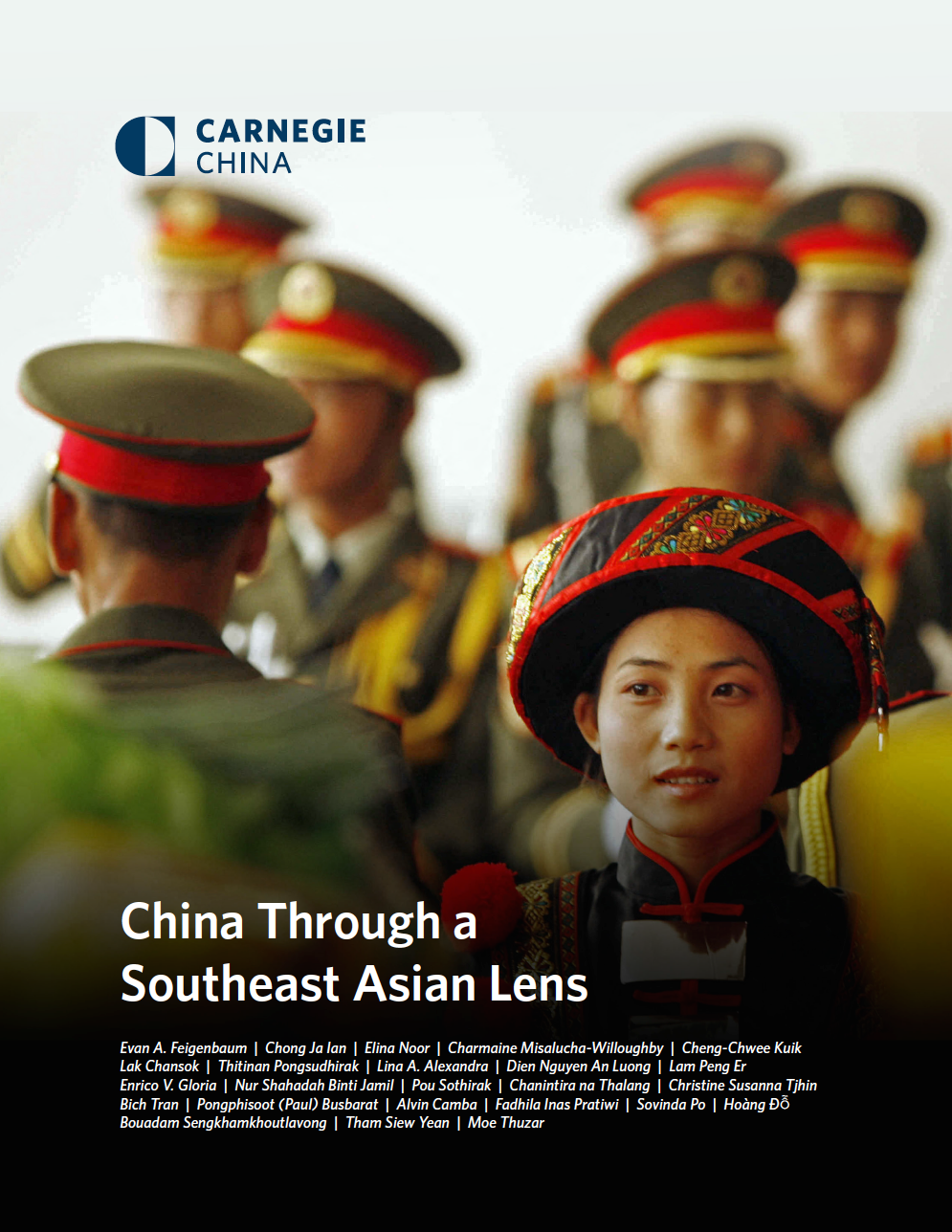
    China Through a Southeast Asian Lens

    Because strategic, economic, and ideological perceptions of China contain multiple, sometimes contradictory facets in Southeast Asia, receptions of and responses to Beijing diverge across and within state lines.


      Evan A. Feigenbaum, Chong Ja Ian, Elina Noor

  • Article
    Northeast Asia Is for Deterrence and Southeast Asia Is (Mostly) for Freeriding: Appreciating Divergent East Asian Approaches to Order, Uncertainty, and Contestation

    Most Southeast Asian states behave as if the actions of their Northeast Asian neighbors and the Philippines will be sufficient to maintain a regional status quo from which they can benefit.

      Chong Ja Ian

Get more news and analysis from
Carnegie China
Carnegie China logo, white
Keck Seng Tower133 Cecil Street #10-01ASingapore, 069535
  • Research
  • About
  • Experts
  • Events
  • Contact
  • Careers
  • Privacy
  • For Media
Get more news and analysis from
Carnegie China
© 2026 Carnegie Endowment for International Peace. All rights reserved.