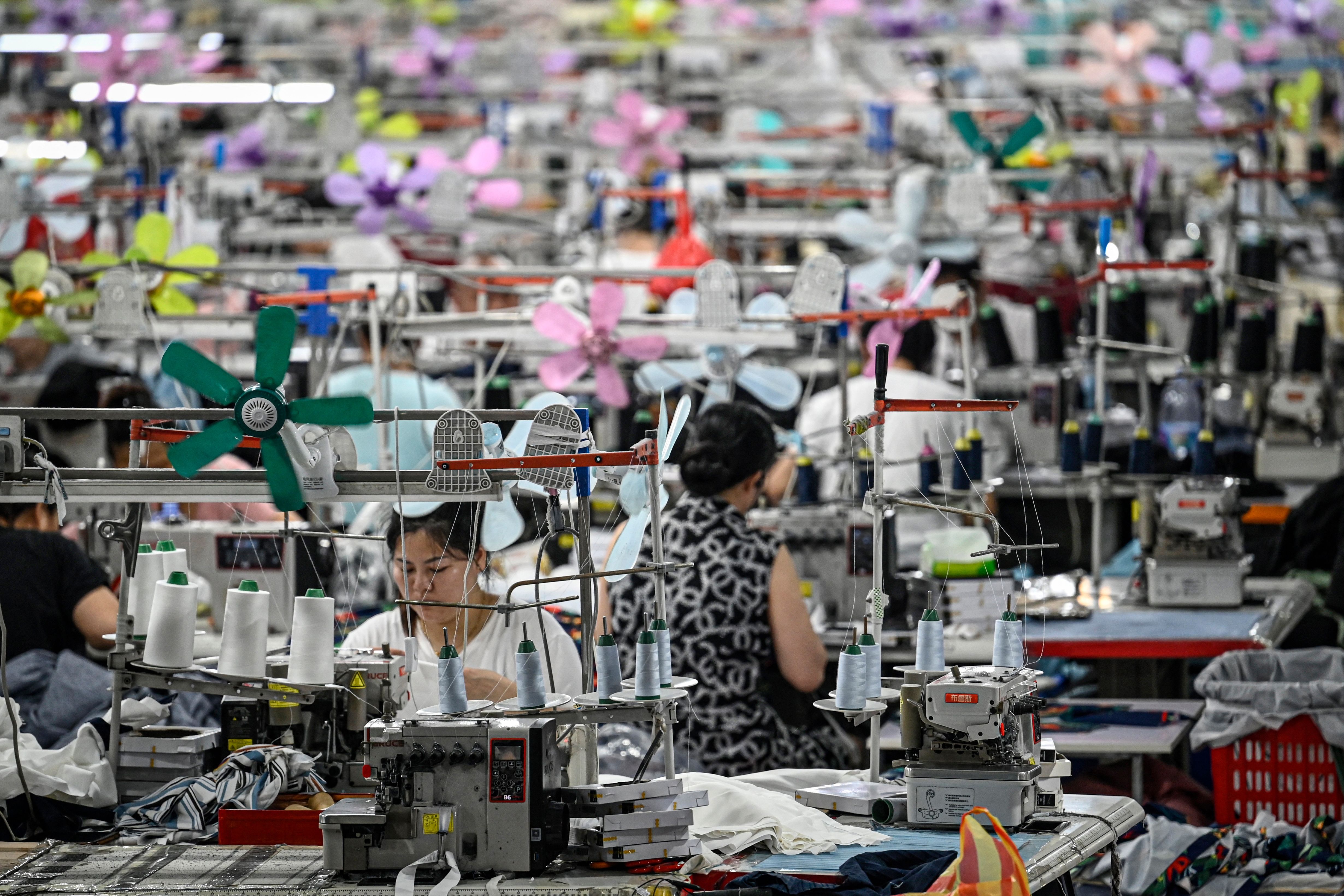
Rather than climate ambitions, compatibility with investment and exports is why China supports both green and high-emission technologies.
Mathias Larsen
{
"authors": [],
"type": "pressRelease",
"centerAffiliationAll": "",
"centers": [
"Carnegie Endowment for International Peace"
],
"collections": [],
"englishNewsletterAll": "",
"nonEnglishNewsletterAll": "",
"primaryCenter": "Carnegie Endowment for International Peace",
"programAffiliation": "",
"programs": [],
"projects": [],
"regions": [
"Eastern Europe",
"Western Europe",
"France",
"Germany",
"North America"
],
"topics": [
"Economy"
]
}REQUIRED IMAGE
In a special report and interactive website, Carnegie experts examine the causes of the euro crisis, provide country case studies, and offer policy recommendations for the affected European countries, Germany, and the United States.
WASHINGTON, June 3—The debt crisis that began in Greece quickly engulfed Europe and now threatens the global recovery and the future of the euro. Despite unprecedented support from the European Union and International Monetary Fund, the euro crisis is far from over.
In a new special report and interactive website, Carnegie experts examine the causes of the crisis, provide country case studies, and offer policy recommendations for the affected European countries, Germany, and the United States.
Key points
“While the adoption of the euro brought important benefits, including lower interest rates and reduced transaction costs, it also created major distortions that now need to be corrected at great cost,” says Uri Dadush, the report’s lead author. “Failure to deal with these problems could lead to some countries leaving the euro area.”
###
NOTES
CONTRIBUTORS
Uri Dadush is senior associate and director of Carnegie's International Economics Program
Moisés Naím is the editor-in-chief of Foreign Policy magazine
Sergei Aleksashenko, former deputy minister of finance of the Russian Federation and former deputy governor of the Russian central bank, is a scholar-in-residence in the Carnegie Moscow Center's Economic Policy Program
Paola Subacchi is the research director in international economics at Chatham House in London
Shimelse Ali is an economist in Carnegie's International Economics Program
Vera Eidelman is the managing editor of Carnegie's International Economic Bulletin
Bennett Stancil is a junior fellow in Carnegie's International Economics Program
Carnegie does not take institutional positions on public policy issues; the views represented herein are those of the author(s) and do not necessarily reflect the views of Carnegie, its staff, or its trustees.
Rather than climate ambitions, compatibility with investment and exports is why China supports both green and high-emission technologies.
Mathias Larsen
“Involution” is a new word for an old problem, and without a very different set of policies to rein it in, it is a problem that is likely to persist.
Michael Pettis
While China's investment story seems contradictory from the outside, the real answers to Beijing's high-quality growth ambitions are hiding in plain sight across the nation's cities.
Yuhan Zhang
China's stimulus addiction cannot go on forever. Beijing still has policy space to clean up the country's massive debt issue, but time is running short.
Michael Pettis
A quick look at the complexities behind Beijing’s enduring Catch-22 situation with revaluing the Renminbi, despite advantages of a stronger currency.
Michael Pettis