

Article
- +1
Toby Dalton, Mark Hibbs, Nicole Grajewski, …
{
  "authors": [
    "Mark Hibbs"
  ],
  "type": "legacyinthemedia",
  "centerAffiliationAll": "dc",
  "centers": [
    "Carnegie Endowment for International Peace"
  ],
  "collections": [
    "U.S. Nuclear Policy"
  ],
  "englishNewsletterAll": "ctw",
  "nonEnglishNewsletterAll": "",
  "primaryCenter": "Carnegie Endowment for International Peace",
  "programAffiliation": "NPP",
  "programs": [
    "Nuclear Policy"
  ],
  "projects": [],
  "regions": [
    "North America",
    "United States",
    "South Asia",
    "Pakistan",
    "East Asia",
    "China"
  ],
  "topics": [
    "Nuclear Policy",
    "Nuclear Energy"
  ]
}
Source: Getty
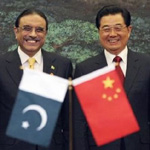
There are growing concerns that China and the United States are on a collision course over Chinese plans to build two nuclear reactors in the Punjab province of Pakistan.
Source: Radio Australia

Presenter: Liam Cochrane
Speaker: Mark Hibbs, nuclear policy expert at the Carnegie Endowment for International Policy in Washington D.C
HIBBS: We've known for several years that China has contracted with Pakistan for new nuclear reactors. The Nuclear Suppliers Group has been following this carefully and they know that China has been moving ahead in its commercial negotiations with Pakistan for these deals and the question is really when would China be prepared to do this. It appears to us that the commercial contacts between China and Pakistan were very, very advanced indeed at the time that the United States and India made a separate nuclear deal and the Chinese were merely waiting for an opportunity to advance this project and they have that opportunity now because the US has gone ahead with its project with India and the Nuclear Suppliers Group in 2008 has approved it. So China has had a few years to wait, they've waited and now the US-India project is going ahead and China now sees this as their opportune moment.
COCHRANE: If they do announce the plans to export nuclear technology to Pakistan at this upcoming meeting, what sort of reaction can they expect from the other members?
HIBBS: The reaction will primarily be a largely muted or negative reaction. I am confident that the NSG members do not want to see this transaction go forward. However they realise that because they themselves approved the US-India deal in 2008 and let that deal enter into force, they created a precedent which was tailor-made for China to spring into the breach in the interests of its relations with Pakistan. The problem for the NSG is that as we look at the meeting getting started it would appear that there was no real agreement between the members about how to proceed.
COCHRANE: But membership to the Nuclear Suppliers Group is voluntary. Is there a chance that China might simply walk away?
HIBBS: China could if it's rebuked by NSG parties leave the NSG. This is a very delicate balancing act for the parties of the NSG, because on the one level China is the biggest nuclear beehive in the world. The NSG parties do not want to see China drift away from the nuclear trade regime. The worst case outcome is that China could become the centre of a clandestine nuclear trade network, that is not what we want to see happen.
At the same time the NSG parties realise they have real leverage over China and they can have some impact on Chinese behaviour, vis-a-vis Pakistan. And the reason for that is simply the fact that China needs uranium from countries, including Australia, to fuel its nuclear power reactors in the future. Australia and other countries will have a certain amount of leverage. They also require the Chinese a certain amount of cooperation from vendor countries, in Europe, in the United States, in Japan for example, to continue to build reactors and to export these reactors. So countries like Australia, the United States, Canada, countries that are in a position to support China's nuclear energy development, these countries are not powerless and would be in the position to engage China to restrain its behaviour.

Nonresident Senior Fellow, Nuclear Policy Program
Hibbs is a Germany-based nonresident senior fellow in Carnegie’s Nuclear Policy Program. His areas of expertise are nuclear verification and safeguards, multilateral nuclear trade policy, international nuclear cooperation, and nonproliferation arrangements.
Recent Work


Toby Dalton, Mark Hibbs, Nicole Grajewski, …
Mark Hibbs
Carnegie does not take institutional positions on public policy issues; the views represented herein are those of the author(s) and do not necessarily reflect the views of Carnegie, its staff, or its trustees.

China’s banking crisis in the 2000s was resolved by transferring the costs to households through financial repression—a decision that recapitalized the banks while exacerbating the structural imbalances that continue to shape the Chinese economy today.

Michael Pettis

Chinese biotech companies have been on the receiving end of U.S. economic coercion. Yet their responses have differed significantly because firm and state interests are not uniformly aligned. For Washington, treating all Chinese tech firms the same, irrespective of their actual interests, risks pushing them farther into Beijing’s corner.

Xue Gong
China’s latest energy plan explicitly calls for integrating data centers into the electricity system, particularly connecting them to green energy. It appears Beijing wants to use compute as a source of domestic demand to absorb renewables excess capacity.

Damien Ma

But their "principal to principal" model will only be as effective as the political strength of each leader back home.
Damien Ma

U.S. unpredictability has allowed China to capitalize on its positioning as the “responsible great power”. Paradoxically, the more China wins the perception game, the more likely expectations will rise for Beijing to deliver not just words but to demonstrate with its deeds.

Chong Ja Ian