

Commentary
Dmitri Trenin
{
  "authors": [
    "Dmitri Trenin"
  ],
  "type": "legacyinthemedia",
  "centerAffiliationAll": "",
  "centers": [
    "Carnegie Endowment for International Peace",
    "Malcolm H. Kerr Carnegie Middle East Center",
    "Carnegie Russia Eurasia Center"
  ],
  "collections": [],
  "englishNewsletterAll": "",
  "nonEnglishNewsletterAll": "",
  "primaryCenter": "Carnegie Russia Eurasia Center",
  "programAffiliation": "",
  "programs": [],
  "projects": [
    "Eurasia in Transition"
  ],
  "regions": [
    "Levant"
  ],
  "topics": []
}
Source: Getty
The Middle East is in a state of heightened tension following Israel’s armed attack on a flotilla of humanitarian aid. If nations in the region are determined to provoke a war, little can be done to prevent conflict from escalating.
Source: Russia Today
Israel’s raid on a flotilla of humanitarian aid has brought global attention to the situation in the Gaza Strip. Dmitri Trenin discussed the flotilla incident and its implications for Israel and the international community with Al Gurnov of Russia Today.
The purpose of Israel’s blockade, Trenin explained, is to prevent Hamas from acquiring arms and ammunitions. Trenin suggested that domestic forces within Turkey had their own interests in the success or failure of the flotilla, and might have anticipated a political benefit when Israel was provoked into an armed attack on the flotilla, resulting in nine deaths. A thorough international investigation that looks at the broader picture and beyond the events that transpired on the ship is necessary, Trenin concluded.
Turning to the growing tension between Israel and Iran, Trenin suggested that war could break out between the two nations if Iran sends its own flotilla, with Iranian revolutionary guards on board ready to provoke Israel into another violent response. He also noted that the Middle East is close to slipping into war. If Iran is intent on provoking Israel, Trenin stated, there is little that can be done to prevent conflict.
Former Director, Carnegie Moscow Center
Trenin was director of the Carnegie Moscow Center from 2008 to early 2022.
Recent Work
Dmitri Trenin
Dmitri Trenin
Carnegie does not take institutional positions on public policy issues; the views represented herein are those of the author(s) and do not necessarily reflect the views of Carnegie, its staff, or its trustees.

It’s about managing oil prices, bread prices, and strategic partnerships.



Amr Hamzawy, Karim Sadjadpour, Aaron David Miller, …
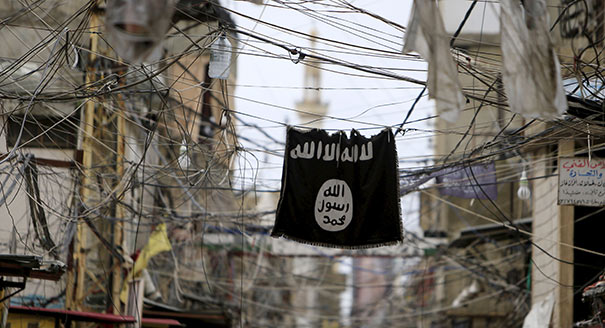
The Islamic State’s ideology is multifaceted and cannot be traced to one individual, movement, or period. Understanding it is crucial to defeating the group.
Hassan Hassan
The rapid rise of the Islamic State means core assumptions driving policy on Syria must be rethought.

Jessica Tuchman Mathews
The world can be an awfully dangerous and unpredictable place.


Thomas Carothers, Lina Khatib, Marwan Muasher, …
China is unusually secure in its policy of nonintervention in the Syrian conflict. But will strong rhetoric and vetoes be enough?

Paul Haenle