• Commentary
  • Research
  • Experts
  • Events
Carnegie China logoCarnegie lettermark logo
{
  "authors": [
    "Michele Dunne",
    "Robert Kagan"
  ],
  "type": "legacyinthemedia",
  "centerAffiliationAll": "dc",
  "centers": [
    "Carnegie Endowment for International Peace",
    "Carnegie Europe",
    "Malcolm H. Kerr Carnegie Middle East Center"
  ],
  "collections": [],
  "englishNewsletterAll": "menaTransitions",
  "nonEnglishNewsletterAll": "",
  "primaryCenter": "Carnegie Endowment for International Peace",
  "programAffiliation": "MEP",
  "programs": [
    "Middle East"
  ],
  "projects": [],
  "regions": [
    "North Africa",
    "Egypt",
    "Middle East"
  ],
  "topics": [
    "Political Reform",
    "Foreign Policy"
  ]
}
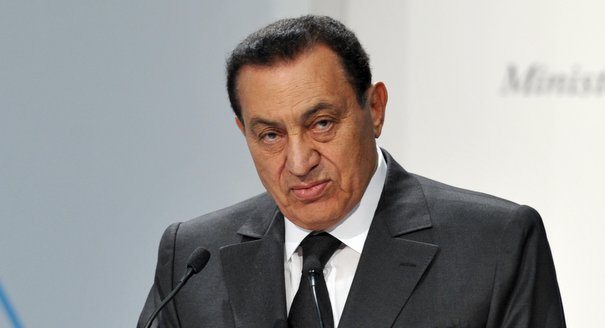
Source: Getty

In The Media

Obama Needs to Support Egyptians as Well as Mubarak

Obama's Cairo speech had the admirable goal of improving relations with the Muslim world, but the administration has focused almost exclusively on building bridges with leaders and governments rather than supporting political and human rights.

Link Copied
By Michele Dunne and Robert Kagan
Published on Jun 4, 2010

Source: The Washington Post

Obama Needs to Support Egyptians as Well as MubaraWhen President Obama called for a "new beginning" in U.S. relations with the Muslim world a year ago, he picked Cairo as the setting for his speech. It was a provocative choice, the capital of a close ally of the United States but also of the three-decades-old autocracy of Hosni Mubarak.

 When Obama declared his commitment to "governments that reflect the will of the people" and said that leaders "must maintain your power through consent, not coercion," Egyptians thought they heard a not-so-subtle reference to their aging leader. One enthusiastic Egyptian shouted, "Barack Obama, we love you!" -- the only such interjection during the address.
 
A year later, Egyptians are scratching their heads about why Obama came to Cairo. In meetings in Cairo this week, Egyptian civil society and political activists across the spectrum voiced their disappointment, asking, "I know they're busy, but can't the Obama administration spare any time at all for what is going on inside Egypt?" and saying resignedly of the president, "He seems like a nice guy, but I guess he's just not going to do anything for us."
 
The disappointment is understandable. As Egypt heads into controversial parliamentary elections in fall 2010 and a presidential election in 2011, the Obama administration has been tone-deaf, intent on continuing to improve relations with the increasingly brittle and unpopular Mubarak regime. It has cut democracy assistance spending in Egypt by half, agreed to forbid assistance from the U.S. Agency for International Development to groups that lack the government's stamp of approval, and is discussing a future "endowment" that would commit the United States to years of assistance with diminished congressional oversight. When administration officials have privately raised questions about democracy or human rights with the Egyptian government, their carefully calibrated "quiet diplomacy" has been dismissed or ignored. Obama himself politely asked Mubarak during an August 2009 Oval Office meeting to fulfill his 2005 pledge to lift the state of emergency under which Egyptians have been repressed since 1981. Mubarak brushed him off. Last month, Mubarak renewed the state of emergency for another two years, conveniently the period during which parliamentary and presidential elections will occur. The Obama administration called it "regrettable."
 
Meanwhile, Mubarak is in ill health and may not even make it to the next presidential election. His regime has systematically excluded or discredited new leaders who enjoy any public support, leaving the field of potential successors depressingly impoverished. One would think that under the circumstances both Egyptians and the U.S. government would be working to put in place an open political process so that any new leader could win the support of the people and thus ensure order in this important nation. But the Egyptian government is paralyzed by the aging Mubarak's refusal to look beyond his own rule. And the Obama administration, in pursuit of an illusory stability, stands mute and passive as the predictable train wreck draws nearer.
 
This administration prides itself on its progressive approach to this post-Cold War world, but it is repeating the mistake that Cold War-era administrations made when they supported right-wing dictatorships -- right up until the point when they were toppled by radical forces.
 
Obama's Cairo speech had the admirable goal of improving relations with the Muslim world, but the manner in which the administration has pursued this goal has been flawed from the beginning. It has focused almost exclusively on building bridges with leaders and governments. Yet in Egypt, and in Iran, a gulf has opened between the government and the citizenry. Obama has strengthened ties with the aging Mubarak while ignoring the concerns of Egypt's increasingly restive population. "What about us?" one prominent democracy activist asked. "Do we count for anything in this U.S.-Egypt relationship?"
 
When rebels ousted the corrupt government in Kyrgyzstan in April, they noted angrily that the United States had never stood up for their rights in the face of rigged elections and human rights abuses, placing a clear priority on strategic cooperation with the government. Watch out. If the Obama administration does not figure out how to make clear that it supports the political and human rights of Egyptian citizens, while cooperating with the Egyptian government on diplomatic and security affairs, people will be saying that about the United States in Cairo one of these days -- and maybe sooner than we expect.
 
There is still time to turn around this failing policy. Vice President Biden visits Egypt next week. There are, as always, numerous crises on the agenda. But if the administration wants to try to head off the next crisis, in Egypt, then Biden should use the opportunity to have a frank talk with Mubarak and other senior officials. In private, he can explain why it is so important, for both Egypt and the United States, that Mubarak take immediate steps to open the political process in this difficult period of transition. In public, Biden needs to make clear that the United States stands for free, fair and competitive elections -- for Egyptians, just as for everyone else.
 
Given the sorry history of the United States supporting the oppressors rather than the oppressed in that part of the world, such a commitment would be the kind of "new beginning" the Egyptian people seek.

About the Authors

Michele Dunne

Former Nonresident Scholar, Middle East Program

Michele Dunne was a nonresident scholar in Carnegie’s Middle East Program, where her research focuses on political and economic change in Arab countries, particularly Egypt, as well as U.S. policy in the Middle East.
Robert Kagan

Former Senior Associate

Kagan, author of the recent book, The Return of History and the End of Dreams (Knopf 2008), writes a monthly column on world affairs for the Washington Post and is a contributing editor at both the Weekly Standard and the New Republic.

Authors

Michele Dunne
Former Nonresident Scholar, Middle East Program
Michele Dunne
Robert Kagan
Former Senior Associate
Robert Kagan
Political ReformForeign PolicyNorth AfricaEgyptMiddle East

Carnegie does not take institutional positions on public policy issues; the views represented herein are those of the author(s) and do not necessarily reflect the views of Carnegie, its staff, or its trustees.

More Work from Carnegie China

  • Commentary
    China’s Energy Security Doesn’t Run Through Hormuz but Through the Electrification of Everything

    Across Asia, China is better positioned to withstand energy shocks from the fallout of the Iran war. Its abundant coal capacity can ensure stability in the near term. Yet at the same time, the country’s energy transition away from coal will make it even less vulnerable during the next shock.


      • Damien Ma

      Damien Ma

  • Commentary
    Malaysia’s Year as ASEAN Chair: Managing Disorder

    Malaysia’s chairmanship sought to fend off short-term challenges while laying the groundwork for minimizing ASEAN’s longer-term exposure to external stresses.

      Elina Noor

  • Commentary
    When It Comes to Superpower Geopolitics, Malaysia Is Staunchly Nonpartisan

    For Malaysia, the conjunction that works is “and” not “or” when it comes to the United States and China.

      Elina Noor

  • Commentary
    Neither Comrade nor Ally: Decoding Vietnam’s First Army Drill with China

    In July 2025, Vietnam and China held their first joint army drill, a modest but symbolic move reflecting Hanoi’s strategic hedging amid U.S.–China rivalry.

      • Nguyen-khac-giang

      Nguyễn Khắc Giang

  • Commentary
    China’s Mediation Offer in the Thailand-Cambodia Border Dispute Sheds Light on Beijing’s Security Role in Southeast Asia

    The Thai-Cambodian conflict highlights the limits to China's peacemaker ambition and the significance of this role on Southeast Asia’s balance of power.

      Pongphisoot (Paul) Busbarat

Get more news and analysis from
Carnegie China
Carnegie China logo, white
Keck Seng Tower133 Cecil Street #10-01ASingapore, 069535Phone: +65 9650 7648
  • Research
  • About
  • Experts
  • Events
  • Contact
  • Careers
  • Privacy
  • For Media
Get more news and analysis from
Carnegie China
© 2026 Carnegie Endowment for International Peace. All rights reserved.







