

Paper
Pekka Sutela
{
  "authors": [
    "Pekka Sutela"
  ],
  "type": "other",
  "centerAffiliationAll": "dc",
  "centers": [
    "Carnegie Endowment for International Peace",
    "Carnegie Russia Eurasia Center"
  ],
  "collections": [],
  "englishNewsletterAll": "ctw",
  "nonEnglishNewsletterAll": "",
  "primaryCenter": "Carnegie Endowment for International Peace",
  "programAffiliation": "russia",
  "programs": [
    "Russia and Eurasia"
  ],
  "projects": [],
  "regions": [
    "Caucasus",
    "Russia",
    "North America"
  ],
  "topics": [
    "Economy"
  ]
}
Source: Getty
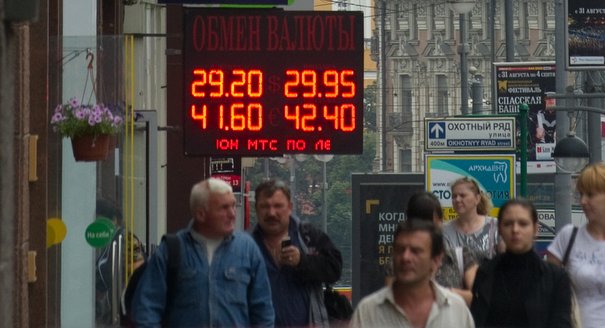
While Russia’s short-term economy will largely depend on oil prices and the country’s demographic challenges, its medium-to-long-term outlook will be influenced by the lessons that leaders take from the crisis, which will affect Russia’s economic structure and policies for many years to come.
While the timing and extent of the global financial crisis surprised many countries, Russia was generally prepared. Its macroeconomic management of the recession rightly earned accolades from several international organizations.
But Moscow’s industrial and social policy responses were not as praiseworthy, representing yet another victory of political tactics over economic strategy. Although Russia’s leaders saw the crisis as vindicating their past policies—including the reform strategies they devised from 2006–2008—most of the structural issues in Russia’s economy remain, with solutions likely delayed for several years. Russia’s fiscal decline— from an average of 7 percent annual growth before the crisis to a loss of 7.9 percent GDP in 2009—is the highest figure among G20 countries.
Russia’s economy in the near term will largely depend on oil prices and how Moscow handles the country’s demographic challenges. But the economy’s medium-to-long-term outlook will be influenced by the lessons that leaders take from the crisis, which will affect Russia’s economic structure and policies for many years to come.
Former Nonresident Senior Associate, Russia and Eurasia Program
Sutela was a nonresident senior associate in the Carnegie Endowment’s Russia and Eurasia Program, where his research focuses on the economies of Eurasia, especially Russia.
Recent Work
Pekka Sutela
Pekka Sutela
Carnegie does not take institutional positions on public policy issues; the views represented herein are those of the author(s) and do not necessarily reflect the views of Carnegie, its staff, or its trustees.

The Plaza Accord was not an externally imposed punishment of Japan but part of a broader restructuring that Japanese economists and policymakers themselves recognized was necessary. Its effects were undermined, however, when Tokyo responded to the resulting slowdown with policies that exacerbated investment, credit expansion, and the very imbalances the adjustment was intended to resolve.

Michael Pettis
China’s banking crisis in the 2000s was resolved by transferring the costs to households through financial repression—a decision that recapitalized the banks while exacerbating the structural imbalances that continue to shape the Chinese economy today.
Michael Pettis
In the latest Five-Year Plan, the Chinese president cements the shift to an innovation-driven economy over a consumption-driven one.

Damien Ma
Rather than climate ambitions, compatibility with investment and exports is why China supports both green and high-emission technologies.

Mathias Larsen
“Involution” is a new word for an old problem, and without a very different set of policies to rein it in, it is a problem that is likely to persist.
Michael Pettis