

Q&A
- +1
Sheena Chestnut Greitens, Oriana Skylar Mastro, Yukon Huang, …
{
  "authors": [
    "Yukon Huang"
  ],
  "type": "legacyinthemedia",
  "centerAffiliationAll": "dc",
  "centers": [
    "Carnegie Endowment for International Peace",
    "Carnegie Europe",
    "Carnegie China"
  ],
  "collections": [],
  "englishNewsletterAll": "asia",
  "nonEnglishNewsletterAll": "",
  "primaryCenter": "Carnegie China",
  "programAffiliation": "AP",
  "programs": [
    "Asia"
  ],
  "projects": [],
  "regions": [
    "East Asia",
    "China",
    "Asia"
  ],
  "topics": [
    "Economy",
    "Trade"
  ]
}
Source: Getty
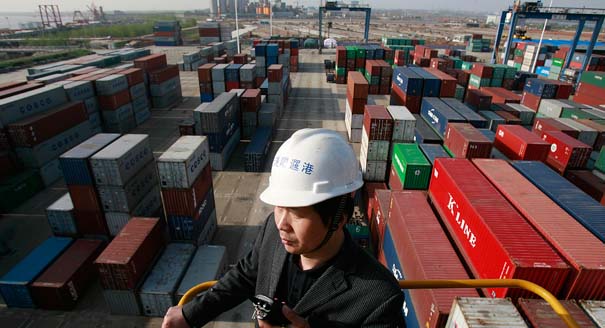
Rising coastal production costs and declining transport costs are reshaping China's economic landscape in ways that may resolve the controversial role that Beijing is accused of playing in shaping global trade imbalances.
Source: The Financial Times

Deng Xiaoping, the architect of China's reforms, would almost certainly have disagreed with those who see appreciation of the renminbi as the solution to global trade imbalances. Instead, he would probably have noted that neither is China's exchange rate a noticeable drag on global growth, nor is it what helped China to develop. It was about the same time that Mr Deng began opening China to the world in 1979 that Mr Krugman began formulating his theories on the "new economic geography". These showed how economies of scale and declining transport costs encourage concentration of production in certain places, and in turn lead to new trade patterns. It is this process that transformed China into the world's most efficient producer-cum-exporter of manufactured goods.
Mr Deng initiated a strategy based on the three "Ds" of this new economic theory. China increased the "density" of economic activity by concentrating production in a few coastal cities geared to exports. It cut the "distance" between markets through an expansion of transport services. It undertook to reduce barriers to the movement of goods, helping to eliminate "divisions".
Deliberate "unbalanced" growth generated huge economies of scale and encouraged some 150m migrant workers to gravitate to the booming commercial centres around Guangzhou, Shanghai and Beijing. Over time, high-technology and export industries relocated to the coast and resource-based and domestically oriented industries established a presence in the interior.
This concentration and specialisation pushed 500m people out of poverty and led to annual gross domestic product growth of 10 per cent. The share of GDP that was traded surged from 10 per cent in 1979 to more than 70 per cent today. This extraordinary transformation was the result of a complex set of policies, with exchange rates having played only a minor role.
For much of this period, China's exchange rate was seen as overvalued not undervalued. Paradoxically, when China finally did allow the renminbi to appreciate from 2005 to 2008, its trade surpluses grew bigger rather than smaller. Other factors – notably savings and investment rates – were, and continue to be, the primary determinants of China’s trade balances.
Mr Deng also foresaw that China's development would eventually reach a turning point. Indeed, forces are now beginning to reshape China's economic landscape in ways that may resolve the controversial role that China is accused of playing in shaping global trade imbalances – and in turn undo concerns over the issue in the US, and increasingly in Europe too.
Given the fragile global economy, China's major concern is to maintain rapid growth and lessen the inequality that came with its original unbalanced growth. Urban household incomes are more than three times rural ones – the highest differential in the world – and coastal incomes more than double those in the interior.
To reduce inequality, China will need to increase the share of wages in total income, and favour consumption over investment. This process will be made easier when the distribution of economic activity is more balanced between the coast and inland. More by accident than design, China’s policy of stable exchange rates has nudged along this shift.
Fixed exchange rates have caused large current account surpluses, which in turn have inflated wages and property prices, especially on the coast. Consistent with Mr Krugman's theories, rising coastal production costs and declining transport costs are motivating companies to relocate inland. With this, income disparities will fall over time. Mr Deng predicted this, suggesting gaps between interior and coastal incomes would widen, then narrow. Today, interior provinces grow faster than coastal ones.
What would be the impact of a major appreciation – as the west frequently calls for – of China's exchange rate? A one-off appreciation would not encourage companies to move from the coast, because the effect on prices would be neutral rather than differentiated across regions. Indeed, this "shock" approach would be disruptive, with social and political consequences.
A stronger currency earlier in this process would have made it more difficult for the interior to compete. But the process now under way, supported by moves towards flexible exchange rates, will encourage wages and consumption to rise, thereby alleviating trade tensions and reducing China’s income disparities. But America must realise that an excessive focus on China's exchange rate is not helpful in moving China's policies in the right direction when other factors matter more. Mr Krugman might note the irony that the accuracy of his older theories may ultimately assuage his more contemporary worries.

Senior Fellow, Asia Program
Huang is a senior fellow in the Carnegie Asia Program where his research focuses on China’s economy and its regional and global impact.
Recent Work


Sheena Chestnut Greitens, Oriana Skylar Mastro, Yukon Huang, …


Yukon Huang, Isaac B. Kardon, Matt Sheehan

China’s political future will be shaped between now and next October. As the Communist Party enters its intense “campaign season” to prepare for a major political transition in 2027, reading Beijing's actions and responses may become more difficult as domestic politics weigh on its behavior more than usual.

Damien Ma
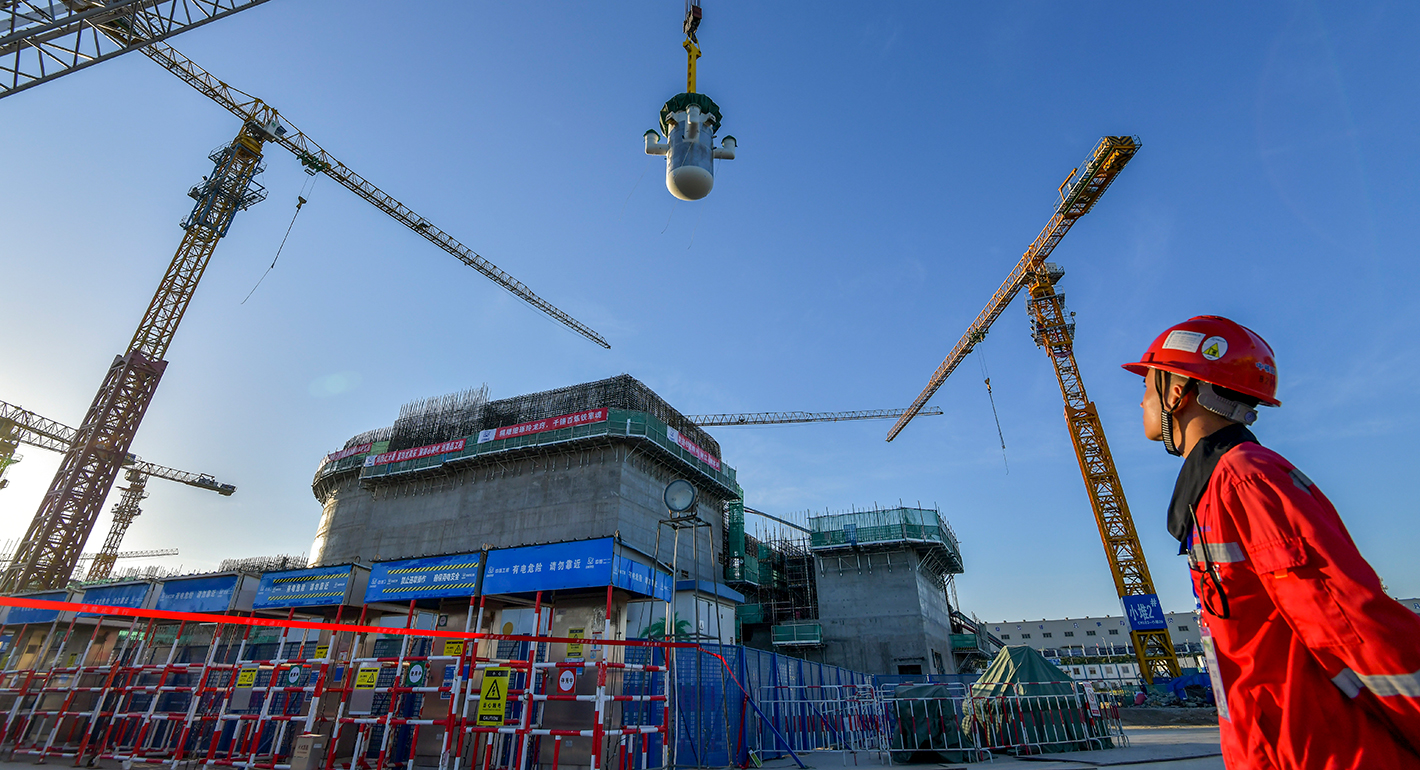
China has showcased its engineering prowess with small modular reactor demonstration projects. But turning these technological achievements into commercial success will be a greater challenge.

Tong Zhao

The Plaza Accord was not an externally imposed punishment of Japan but part of a broader restructuring that Japanese economists and policymakers themselves recognized was necessary. Its effects were undermined, however, when Tokyo responded to the resulting slowdown with policies that exacerbated investment, credit expansion, and the very imbalances the adjustment was intended to resolve.

Michael Pettis

The nuclear relationship between China and the United States is increasingly shaped by widening perception gaps rather than deliberate strategic design.
Tong Zhao
China’s banking crisis in the 2000s was resolved by transferring the costs to households through financial repression—a decision that recapitalized the banks while exacerbating the structural imbalances that continue to shape the Chinese economy today.
Michael Pettis