
For Malaysia, the conjunction that works is “and” not “or” when it comes to the United States and China.
Elina Noor
{
"authors": [
"Tiffany Ng"
],
"type": "other",
"centerAffiliationAll": "dc",
"centers": [
"Carnegie Endowment for International Peace"
],
"collections": [],
"englishNewsletterAll": "asia",
"nonEnglishNewsletterAll": "",
"primaryCenter": "Carnegie Endowment for International Peace",
"programAffiliation": "AP",
"programs": [
"Asia"
],
"projects": [],
"regions": [
"South Asia",
"Afghanistan",
"East Asia",
"China"
],
"topics": [
"Economy",
"Security"
]
}Source: Getty
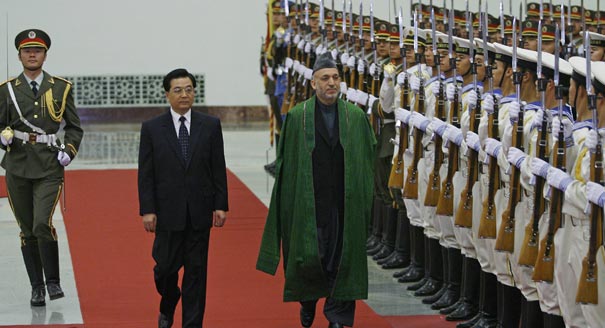
China's economic investment in Afghanistan provides an opportunity for Afghan development that could help stabilize the country—an outcome that would benefit not only Afghanistan and China, but also the United States.
Tiffany Ng
Former Junior Fellow, Asia Program
Carnegie does not take institutional positions on public policy issues; the views represented herein are those of the author(s) and do not necessarily reflect the views of Carnegie, its staff, or its trustees.
For Malaysia, the conjunction that works is “and” not “or” when it comes to the United States and China.
Elina Noor
ASEAN needs to determine how to balance perpetuating the benefits of technology cooperation with China while mitigating the risks of getting caught in the crosshairs of U.S.-China gamesmanship.
Elina Noor
In July 2025, Vietnam and China held their first joint army drill, a modest but symbolic move reflecting Hanoi’s strategic hedging amid U.S.–China rivalry.
Nguyễn Khắc Giang
Regulation, not embargo, allows Beijing to shape how other countries and firms adapt to its terms.
Alvin Camba
Rather than climate ambitions, compatibility with investment and exports is why China supports both green and high-emission technologies.
Mathias Larsen







