• Commentary
  • Research
  • Experts
  • Events
Carnegie China logoCarnegie lettermark logo
{
  "authors": [
    "Christopher Boucek"
  ],
  "type": "legacyinthemedia",
  "centerAffiliationAll": "dc",
  "centers": [
    "Carnegie Endowment for International Peace"
  ],
  "collections": [],
  "englishNewsletterAll": "menaTransitions",
  "nonEnglishNewsletterAll": "",
  "primaryCenter": "Carnegie Endowment for International Peace",
  "programAffiliation": "MEP",
  "programs": [
    "Middle East"
  ],
  "projects": [],
  "regions": [
    "Middle East",
    "Yemen"
  ],
  "topics": [
    "Security"
  ]
}

Source: Getty

In The Media

10 Years After Cole, Yemen Becomes Militant Hotbed

Yemen has become a hotbed of Islamic militancy and is now the home base for al-Qaeda in the Arabian Peninsula, which is arguably more of a global threat than the main branch of al-Qaeda.

Link Copied
By Christopher Boucek
Published on Oct 11, 2010

Source: NPR's All Things Considered October 11

MELISSA BLOCK, host: Ten years ago, when the U.S.S. Cole was attacked, Yemen was hardly considered a hotbed of terrorism. Over the past decade, it has become fertile ground for Islamic militancy, home base for the group al-Qaida in the Arabian Peninsula. Last year's attempted Christmas Day bombing of a Northwest Airlines flight over Detroit was linked to the group. And some terrorism experts now consider al-Qaida based in Yemen to be more of a threat to the U.S. than so-called al-Qaida Central, based in Afghanistan and Pakistan.

Christopher Boucek shares that view. He's an associate with the Carnegie Endowment for International Peace, who specializes in Islamic militancy and security issues in the Arabian Peninsula. Mr. Boucek, welcome to the program.
 
Mr. CHRISTOPHER BOUCEK (Scholar, Middle East Program, Carnegie Endowment for International Peace): Thank you.
 
BLOCK: How would you describe the strength of al-Qaida in Yemen 10 years ago at the time the U.S.S. Cole was attacked?
 
Mr. BOUCEK: Well, I think it's important to note that there's a long history of Islamic militancy and terrorism and political violence in Yemen, going back into the early '90s. And in fact, al-Qaida's first attack against an American target took place in Yemen in 1992.
 
So there has always been this kind of low-level violence, and a large number of Yemenis actually participated in the jihad against the Soviet Union in Afghanistan. So there's a very long history at work here.
 
BLOCK: Low level of violence, though, you're saying then. What about now?
 
Mr. BOUCEK: I think what we see now is that the situation has escalated dramatically. And since the creation of al-Qaida in the Arabian Peninsula last year, when the Saudi and the Yemeni affiliates all kind of merged to create one organization, the organization has become much more agile and lethal and opportunistic.
 
BLOCK: Well, there have been, over the years, U.S. airstrikes targeting al-Qaida in Yemen. Are those ongoing still?
 
Mr. BOUCEK: Well, according to published reports, these stopped several months ago, when a Yemeni official, a Yemeni government official, was killed inadvertently in one of these airstrikes. This official was actually trying to negotiate the surrender of several al-Qaida operatives.
 
So officially, these airstrikes have stopped. Unofficially, I'm sure that there's great cooperation and coordination between the Yemeni and the American government on counterterrorism issues.
 
BLOCK: You're talking about cooperation between the U.S. and the Yemeni governments, but it wasn't so long ago, I think, that the Yemeni government was seen as being complicit with al-Qaida or at least turning a blind eye to their presence in that country, right?
 
Mr. BOUCEK: Well, I think if you look at all of the problems going on in the country in terms of the economy, social issues, human security issues, unemployment, corruption, the civil war in the north, the southern secessionist movement, al-Qaida is very low on the priority for the Yemeni government. And hopefully, they're more focused on this issue than they have been in the past.
 
BLOCK: Why do you think that al-Qaida based in Yemen is more of a threat to this country than al-Qaida based in Afghanistan or Pakistan?
 
Mr. BOUCEK: Well, I think if you look at what's going on in South Asia, the senior leadership of al-Qaida has really suffered from this prolonged drone campaign. There's a huge American military presence right next door. The Pakistani military is increasingly active in addressing these issues. None of those factors are going on in Yemen.
 
There's not a visible or large military presence anywhere nearby to Yemen, and there's not an option for that. So I think what we see is that Yemen is providing the opportunity for militants to plot and plan and mount operations. Just last week, there was an operation, you know, inside the capital against a British diplomatic convoy, the second time this year.
 
So I think the situation not only is worsening, but the movement in Yemen is taking advantage of the absence of the government's ability to crack down on terrorism.
 
BLOCK: I've been talking with Christopher Boucek. He's with the Carnegie Endowment's Middle East Program and co-author of the book Yemen on the Brink. Mr. Boucek, thanks very much.
 
Mr. BOUCEK: Thank you very much.

About the Author

Christopher Boucek

Former Associate, Middle East Program

Boucek was an associate in the Carnegie Middle East Program where his research focused on security challenges in the Arabian Peninsula and Northern Africa.

    Recent Work

  • Q&A
    Yemen After Saleh’s Return and Awlaki’s Exit

      Christopher Boucek

  • Q&A
    Rivals—Iran vs. Saudi Arabia

      Christopher Boucek, Karim Sadjadpour

Christopher Boucek
Former Associate, Middle East Program
Christopher Boucek
SecurityMiddle EastYemen

Carnegie does not take institutional positions on public policy issues; the views represented herein are those of the author(s) and do not necessarily reflect the views of Carnegie, its staff, or its trustees.

More Work from Carnegie China

  • Commentary
    China’s Mediation Offer in the Thailand-Cambodia Border Dispute Sheds Light on Beijing’s Security Role in Southeast Asia

    The Thai-Cambodian conflict highlights the limits to China's peacemaker ambition and the significance of this role on Southeast Asia’s balance of power.

      Pongphisoot (Paul) Busbarat

  • Trump and Xi on a red background
    Commentary
    Emissary
    China Is Determined to Hold Firm Against Trump’s Pressure

    Beijing believes that Washington is overestimating its own leverage and its ability to handle the trade war’s impacts. 

      • Sheena Chestnut Greitens

      Rick Waters, Sheena Chestnut Greitens
  • Commentary
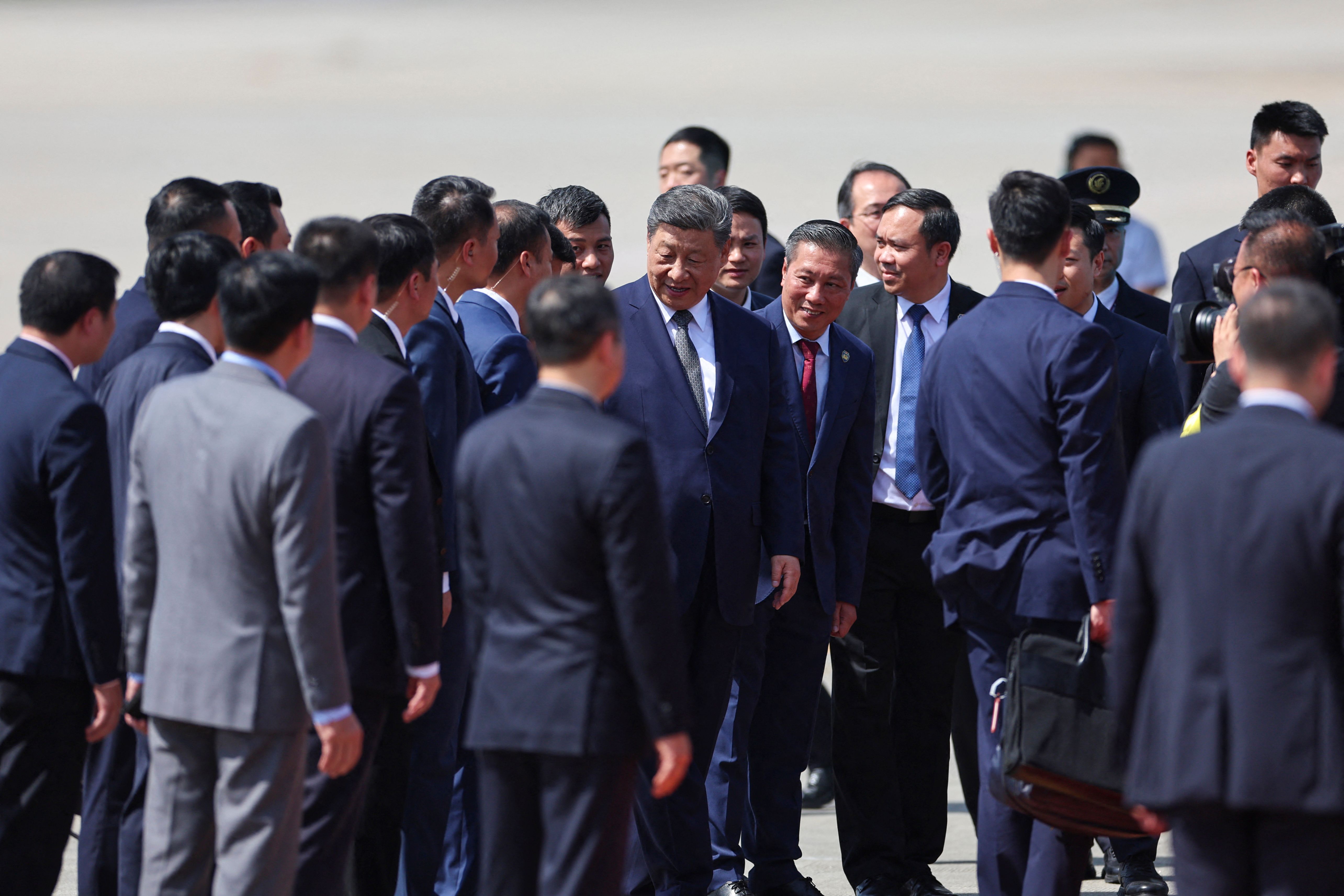
    A Second Trump Term: Will Southeast Asia Tilt Toward China?

    Tapping our network of China experts in the region, Carnegie China offers this latest “China Through a Southeast Asian Lens” report to offer preliminary assessments of whether the U.S. effort to reshape the global trading order will lead countries in the region to tilt toward Beijing. 

      • +6

      Selina Ho, Khin Khin Kyaw Kyee, Joseph Ching Velasco, …
  • Research
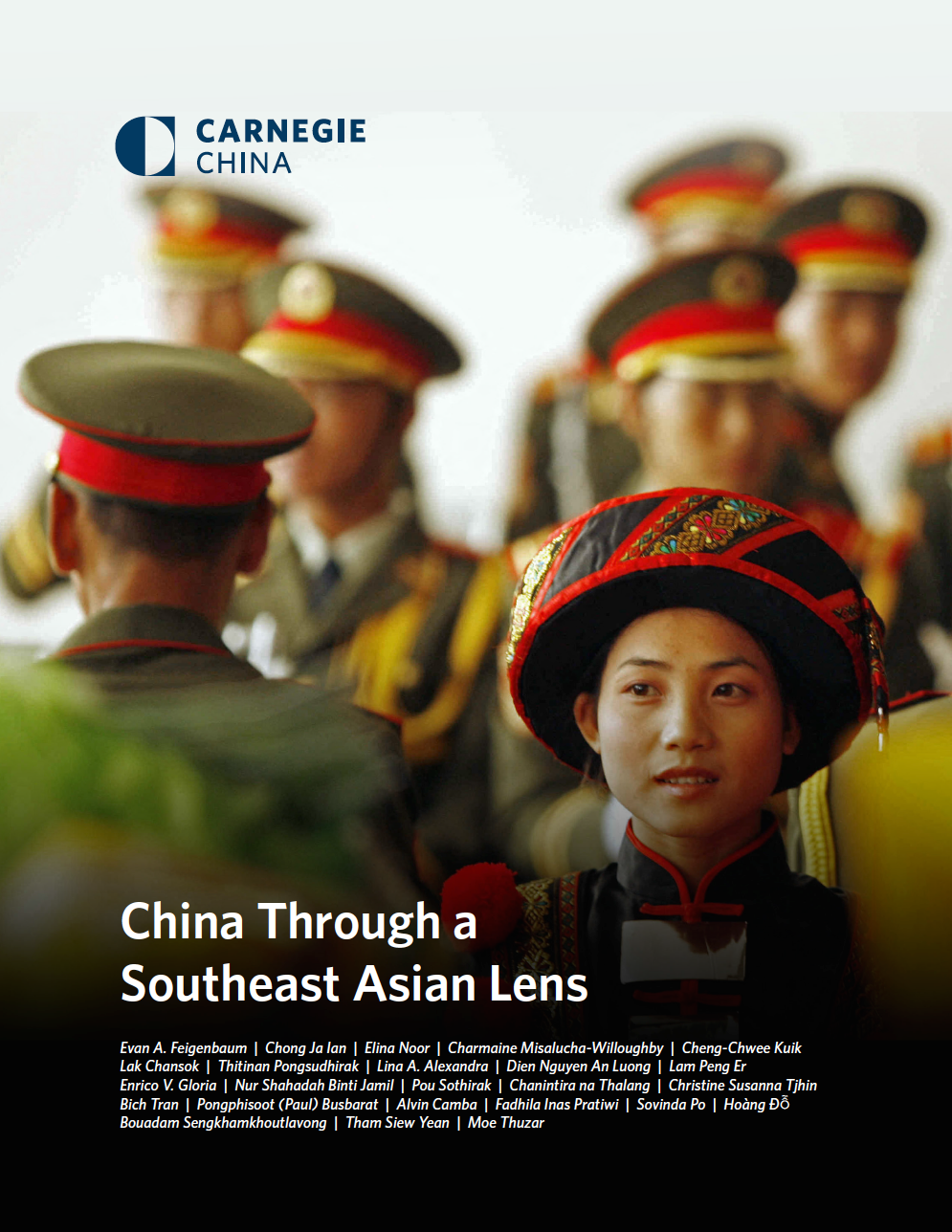
    China Through a Southeast Asian Lens

    Because strategic, economic, and ideological perceptions of China contain multiple, sometimes contradictory facets in Southeast Asia, receptions of and responses to Beijing diverge across and within state lines.


      Evan A. Feigenbaum, Chong Ja Ian, Elina Noor

  • Article
    Northeast Asia Is for Deterrence and Southeast Asia Is (Mostly) for Freeriding: Appreciating Divergent East Asian Approaches to Order, Uncertainty, and Contestation

    Most Southeast Asian states behave as if the actions of their Northeast Asian neighbors and the Philippines will be sufficient to maintain a regional status quo from which they can benefit.

      Chong Ja Ian

Get more news and analysis from
Carnegie China
Carnegie China logo, white
Keck Seng Tower133 Cecil Street #10-01ASingapore, 069535
  • Research
  • About
  • Experts
  • Events
  • Contact
  • Careers
  • Privacy
  • For Media
Get more news and analysis from
Carnegie China
© 2026 Carnegie Endowment for International Peace. All rights reserved.