

In The Media
David Rothkopf
{
  "authors": [
    "David Rothkopf"
  ],
  "type": "legacyinthemedia",
  "centerAffiliationAll": "",
  "centers": [
    "Carnegie Endowment for International Peace",
    "Carnegie Europe",
    "Malcolm H. Kerr Carnegie Middle East Center"
  ],
  "collections": [],
  "englishNewsletterAll": "",
  "nonEnglishNewsletterAll": "",
  "primaryCenter": "Carnegie Endowment for International Peace",
  "programAffiliation": "",
  "programs": [],
  "projects": [],
  "regions": [
    "North America",
    "United States"
  ],
  "topics": [
    "Political Reform"
  ]
}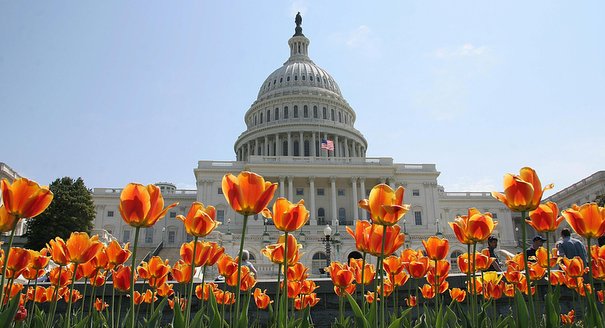
Source: Getty
One positive outcome from the recent set of documents released by WikiLeaks would be a comprehensive review and reform of the culture of secrecy that seems to have pervaded the U.S. government.
Source: The Financial Times

This is not immediately obvious, because the WikiLeaks affair has stirred up a storm of swirling, competing hypocrisies. On one level we have the hypocrisies revealed in the cables: of allies criticising each other; enemies posing as friends; and leaders pretending to their people that crass, criminal, duplicitous allies can also be dependable friends.
But such deceptions have always been commonplace in diplomacy, and should therefore produce little surprise. They confirm that the world is a nasty place, in which advancing national interests often involves working with bad guys, playing adversaries against one another, and accepting odious behaviour in the hope of avoiding something much worse.
Then there are the billowing hypocrisies surrounding the release of the documents. These include the self-congratulatory arguments of the leakers: from the individual who stole the cables to the reckless team at WikiLeaks that took it upon themselves to make the documents public and in so doing put lives and sensitive operations at risk.
Next come the self-righteous claims of private media organisations, who feel that they can behave within self-determined ethical standards that trump the laws of the countries in which they work. And perhaps most galling of all there are the pious denunciations of government officials who decry the damage done by the leaks, but then defend the much worse damage done by their own policies and actions.
Of course, there are upsides. The leaks inadvertently reveal the formidable courage and capabilities of many diplomats. It should also be clear that a free press has not only the right but the responsibility to shed light in corners of government operations that are kept deliberately dark to cover up misjudgments and wrongdoing.
Yet to prevent further security breaches of this sort, the administration must address their attention not to a single misguided enlisted man, or to a mercurial Internet gadfly. Rather, they must recognise that there cannot be true secrecy in a system in which over 3m people have security clearances.
This is a system in which millions of documents each year are unnecessarily classified – even though, as a top general once asserted to me, well over 95 per cent of the information being classified is already publicly available. In shining a light on this, WikiLeaks fully reveals the perverse and flawed information culture within US government.
The secret to keeping secrets is to have fewer of them, shared among fewer people. And a massive, comprehensive review and reform of how America keeps, shares and thinks about its secrets is one of the few benefits this unfortunate incident could produce.

Former Visiting Scholar
David Rothkopf was a visiting scholar at the Carnegie Endowment as well as the former CEO and editor in chief of the FP Group.
Recent Work
David Rothkopf
David Rothkopf
Carnegie does not take institutional positions on public policy issues; the views represented herein are those of the author(s) and do not necessarily reflect the views of Carnegie, its staff, or its trustees.

The nuclear relationship between China and the United States is increasingly shaped by widening perception gaps rather than deliberate strategic design.

Tong Zhao

But their "principal to principal" model will only be as effective as the political strength of each leader back home.

Damien Ma

U.S. unpredictability has allowed China to capitalize on its positioning as the “responsible great power”. Paradoxically, the more China wins the perception game, the more likely expectations will rise for Beijing to deliver not just words but to demonstrate with its deeds.

Chong Ja Ian

For Malaysia, the conjunction that works is “and” not “or” when it comes to the United States and China.

Elina Noor

Regulation, not embargo, allows Beijing to shape how other countries and firms adapt to its terms.
Alvin Camba