Washington has an opportunity to rethink its policies and help Arab countries start real, but gradual, political reform. This would help create stability, peace, and democracy — all at the same time.
How the U.S. Can Back Mideast ReformWashington was caught unprepared by the unrest in the Arab world. While Arab leaders are trying to clamp down on domestic unrest, it’s essential to realize that business can’t continue as usual. The United States is now playing catch-up, reacting to developments. But it needs to get ahead of the curve in the region and help support the moves toward much-needed democratic reforms.
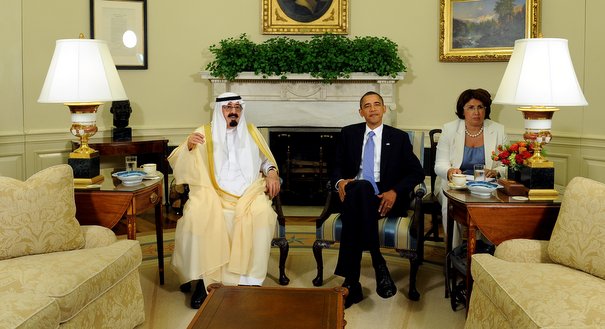
President Barack Obama has now called for a meaningful and peaceful transition of power to begin in Cairo right away. Unfortunately, the Obama administration first missed the boat on Egypt, making it difficult to change course in one week.
After ignoring the underlying issues for years, it is difficult for Washington to appear reliable to the Middle East unless its new policy is consistent, sustained and views reform as one of the key issues.
When Obama came into office, he rejected many of the previous administration’s policies. President George W. Bush was viewed as seeking to impose reform on the Arab world from the outside. The countries and people of the region justifiably resisted this policy — particularly after the war in Iraq and the sudden policy reversal that brought Hamas to power in the Palestinian territories and Muslim Brotherhood candidates into Egypt’s parliament.
So Obama changed course. His new approach placed almost no emphasis on Arab reform — giving many in the Middle East the impression that democracy and opening political systems in the region were no longer Washington’s priorities. This further damaged Washington’s credibility in the eyes of the Arab public.
While change should undeniably come from within, the Obama administration’s silence has contributed to — though not caused — the regression in the Arab reform process in recent years. So his opposite approach did not work either.
Washington should not impose reform by force — engagement à la big brother — or opt for total disengagement. Rather, it needs to walk a fine line between these two extremes.
There is no reason why the United States can’t engage Arab countries in a serious dialogue about a gradual, sustained reform process that can lead to a new political opening and enhanced power-sharing. This could help stabilize the Arab world and reduce the likelihood of future crises.
In the past, Washington focused on the Israeli-Palestinian peace process and other concerns in its relations with Arab countries rather than democratic reform. The strategic thinking seemed to be that if an Arab state like Egypt was moderate on the peace talks, Washington should soft-pedal concerns about that nation’s democratic progress.
But now, any new policy must encompass both issues. What good is an ally that loses popular support? That’s not going to help the peace process, allay worries about Iran or anything else.
The search for alternative leadership in Egypt and Tunisia is a direct result of the regimes’ policy of allowing no political space for the emergence of such leaders.
This has not prevented change from taking place. But it is imperative that such space be created, so that neither the United States nor Middle Eastern countries are faced with leadership vacuums that can complicate any orderly transition process. There is a clear need for political reform that helps create alternatives to the entrenched political elite and Islamist opposition.
The region’s autocratic leaders often argued that political systems require tight control to keep Islamists from taking power. But the upheavals in Tunisia and Egypt weren’t led by Islamists — they were directed by the people. And Islamists are unlikely to head any governments coming out of the crises. Regimes should not use the fear of Islam to justify repression, because closed systems leave citizens with no means to voice their wants and needs.
It is also clear that strong U.S. support and aid are not enough for regimes to hang onto power. Real stability will come not through authoritarian rule but through support for a home-grown political reform process that empowers the people of the region and helps them feel like citizens rather than subjects.
So far, U.S. support for reform has been largely through “democracy assistance programs,” which have done little more than support ad hoc programs that have not helped create a credible reform process. Both the Arab world and the United States must now stop pretending they are engaged in serious reform processes through these isolated programs that do not strengthen countries’ political institutions.
Instead, there is room for a collaborative, candid effort by Washington and the region to support a process that is holistic, not piecemeal. This requires a sustained, long-term strategy that can be agreed to with countries of the region — one longer than the four-year U.S. election cycle.
With the Mubarak regime coming to an end in Egypt, a revolution in Tunisia, the dismissal of the government in Jordan, protests in Yemen and the birth of a new nation in Sudan, it’s clear that Washington needs to adapt to the unstoppable changes under way in the Arab world.
Washington may have been surprised by the protests in Egypt, but it now has an opportunity to rethink its policies and help Arab countries start real, but gradual, political reform. This would help create stability, peace and democracy — all at the same time.
Marwan Muasher is vice president for studies at Carnegie, where he oversees research in Washington and Beirut on the Middle East. Muasher served as foreign minister (2002–2004) and deputy prime minister (2004–2005) of Jordan, and his career has spanned the areas of diplomacy, development, civil society, and communications.
Carnegie does not take institutional positions on public policy issues; the views represented herein are those of the author(s) and do not necessarily reflect the views of Carnegie, its staff, or its trustees.
The advantage that China has over other global powers, especially America, is that its foreign policy is closely aligned with those of many of the Middle Eastern countries.
The murder of George Floyd has underscored the deep inequities that have long plagued American society. In a note to the Carnegie community, Bill Burns reflects on Carnegie’s commitment to build a more just future here at home and around the world, without which peace will remain beyond our grasp.
While the world hoped this pandemic might lead to more cooperation between these two great powers, American and Chinese leaders instead fell into a blame game and allowed their increasing suspicions to guide their decision-making.