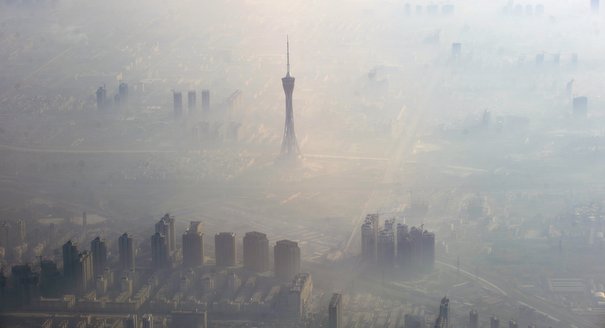
Just five years ago, no one anticipated China’s phenomenal rate of motorization. While all signs had been pointing to significant growth in the country’s vehicle fleet, recent projections are already out of date. Today, China is a driving force in global motorization. Future harmonious growth will depend on equitable and efficient measures that minimize the energy and environmental effects of China’s burgeoning transportation sector.
The number of cars in China was projected to increase six-fold in the first decade of the new millennium. Analysts estimated that it would take at least two decades for China’s automobile fleet to catch up to today’s U.S. fleet. And if fast-paced growth continued, China’s total motor vehicle fleet was expected to be on par with America’s fleet by 2030.
This reality did not materialize. Instead, China’s motorization vastly exceeded all expectations. Between 2000 and 2010, the nation’s car fleet grew by a factor of 20.
The total number of motor vehicles—cars, trucks, motorcycles, rural vehicles, and buses—ballooned from a projected 170 million to an estimated 270 million. Today, with its current vehicle fleet likely 60 percent larger than forecast just a few years ago, China has zoomed ahead of Japan and the EU nations and is poised to overtake the United States with its 250 million vehicles.
China’s vehicle growth is expected to continue, and possibly accelerate. Even if its annual gross domestic product growth rate declines from 10 to 7 percent, as projected by the International Monetary Fund and laid out in China’s 12th Five-Year Plan, some 600 million vehicles could fill China’s roads by 2030.
China’s unprecedented rate of motorization is a driving force of global proportions—one that has come to pass much sooner than expected. To consider the policy outlook vis-à-vis the surging size of China’s vehicle fleet, it is helpful to recall China’s transportation situation at the turn of the century, to look at a snapshot of where China’s motorization is today, and to consider potential fleet growth by 2020 and 2030, tracing the boundaries for both slower and rapid economic expansion.
The sheer numbers of and future projections for China’s vehicle fleet illuminate the energy and climate implications of China’s on-road transportation, both at home and abroad. Oil consumption, climate change, and air pollution will be pervasive concerns that China must reconcile as it motorizes.
Effective policy tools will be critical for China to manage its burgeoning motor vehicle fleet. In this respect, many opportunities for advancing new transportation technologies and strategies hold great promise:
- Advance clean fuel technologies through research, demonstration, and deployment; more effective regulatory standards; and financial incentives. Targets of opportunity include lowemission petroleum refineries, sustainable biofuels, and renewable hydrogen fuels.
- Commercialize and deploy clean and efficient electric vehicles (EVs) that pair battery development with smart grid advances. Targets of opportunity include light-weight EVs to maximize efficiency and vehicle range, fuel cell technologies, and carbon capture and storage for cleaner coal-fired power generation for a growing EV fleet.
- Tighten fuel economy and vehicle tailpipe standards and enhance monitoring and enforcement mechanisms. Targets of opportunity include vehicles with near-zero greenhouse gas emissions, improvements in light- and heavy-duty vehicle energy efficiency, and uniform fuel quality standards.
- Implement fiscal transportation policies that promote clean, efficient transportation choices. Targets of opportunity include new fuel taxes, pay-as-you-go user transportation fees, private vehicle taxation, and clean vehicle incentive programs.
- Implement transit-oriented land use policies and invest in public transit. Targets of opportunity include investments to strategically expand public transit, road pricing, prioritization of non-motorized transportation, and integrated transportation and land use development.