

Q&A
- +1
Amr Hamzawy, Andrew Leber, Eric Lob, …
{
  "authors": [
    "Marwan Muasher"
  ],
  "type": "legacyinthemedia",
  "centerAffiliationAll": "dc",
  "centers": [
    "Carnegie Endowment for International Peace",
    "Carnegie Europe",
    "Malcolm H. Kerr Carnegie Middle East Center"
  ],
  "collections": [
    "Arab Awakening"
  ],
  "englishNewsletterAll": "menaTransitions",
  "nonEnglishNewsletterAll": "",
  "primaryCenter": "Carnegie Endowment for International Peace",
  "programAffiliation": "MEP",
  "programs": [
    "Middle East"
  ],
  "projects": [],
  "regions": [
    "Middle East",
    "North Africa",
    "Egypt",
    "Gulf",
    "Levant",
    "Maghreb"
  ],
  "topics": [
    "Political Reform"
  ]
}
Source: Getty
The Arab Awakenings brought forth unprecedented reactions by the Arab League to the uprisings in Syria and Libya and has created an opportunity to strengthen the organization and bolster its ability to play a positive role in the region.
Source: Foreign Policy

So, even with all the criticisms, it is still fair to ask whether we are witnessing a new, more forceful Arab League? Traditionally, the organization has been extremely weak -- more by design than anything else. When the Arab League was founded in 1945, Arab states did not want it to infringe on their own sovereignty, and therefore insisted that the overwhelming bulk of its decisions had to be taken by unanimity.
Time and again, this has meant the Arab League was toothless in the face of adversity and unable to take any major political or economic decisions. Its contribution to the Arab world's development has been negligible. If you compare the Arab League to the European Union, the latter has evolved considerably more -- despite the fact that the European Economic Community, from which the EU evolved, was founded a decade later after the Arab League.
The Arab Awakening might change everything.
While the Arab League has very rarely taken decisions against member states, there has been a noticeable change in its pace and resolve in 2011. Approving the involvement of NATO forces in Libya was a major step -- without that decision, Muammar al-Qaddafi could very well still be in power today, with many more thousands killed. Furthermore, imposing sanctions on the Syrian regime for its killing of its people was the first time the Arab League has taken such actions against a member state.
If the Arab League had not moved on Syria, Assad could still claim legitimacy in the Arab world that he clearly doesn't enjoy today.
In today's globalized age, the international community is no longer staying silent when governments turn against their own people. The Arab League quickly realized that it could not just turn a deaf ear to what was happening, as it has in the past.
There are questions of whether the Arab League's newfound tenacity is due to the influence of some of its major players -- Saudi Arabia on Syria and Qatar on Libya -- or whether its newly found proactiveness is an indication of a willingness by member states to allow the League to play a more meaningful role in Arab affairs. Nevertheless, despite its feeble structure and history of weakness, the organization took action. This shows that the Arab League can be reformed to enhance its role in the development of the new Arab world.
Such reforms have been attempted in the past, but have always been stymied by a stubbornly persistent Arab system that did not want to depart from the status quo or cede sovereignty to the Arab League, or anyone else. This is now changing.
Politically, the Arab League can help set rules for governance that would enshrine the principles of pluralism, protection of personal rights, peaceful rotation of power, and tolerance toward all political forces -- as long as they subscribe to these notions.
Fears are high that Islamists will benefit from a system of "one man, one vote, one time" -- using democracy to come to power and subsequently denying others their democratic rights. But the current period is also a time when the political elites are still fighting change and using Islamists as a scare tactic. The Arab League can help set the rules of the game for all countries, and can help them learn from positive experiences in countries like Tunisia. And as the uprisings have presented severe economic challenges for countries in transition, the Arab League can help the region better integrate through trade, labor, and capital movement.
The Arab League should be seen as part of the solution instead of part of the problem by powerful countries that previously resisted change. Saudi Arabia, for instance, has had real concerns about where the transitions might lead. The Arab League can help assuage these fears by making the processes smoother and more peaceful.
The member countries should be driving this change. Arab League Secretary-General Nabil Elaraby came out of the post-Hosni Mubarak system in Egypt, and is well placed to drive these much-needed reforms.
But crisis shouldn't be the only call to action. The golden chance for reform needs to be acted on by putting proposals on the table. This is not only to cultivate the Arab League's capability to interfere against member states when killing takes place, but also to help push forward the evolution toward an economically integrated and politically diverse region.
For a long time, the Arab League was considered ineffective, and therefore shunned by the international community. Global leaders thought that there was no use in talking to the organization. This is an opportunity to change all that. The international community could not have moved on Libya without the Arab League, and it can't move today on Syria without it. Countries outside the region are still looking to the Arab League to do what they can't. If the Arab League does not act forcefully, it will have to face the unpleasant reality that it failed and pass the torch to the international community again.
Libya and Syria are showing that there are limits to what the international community can do without an Arab consensus. It's time to build a new Arab League that has teeth, and can take advantage of the Arab Awakening.

Vice President for Studies
Marwan Muasher is vice president for studies at Carnegie, where he oversees research in Washington and Beirut on the Middle East. Muasher served as foreign minister (2002–2004) and deputy prime minister (2004–2005) of Jordan, and his career has spanned the areas of diplomacy, development, civil society, and communications.
Recent Work



Amr Hamzawy, Andrew Leber, Eric Lob, …
Marwan Muasher
Carnegie does not take institutional positions on public policy issues; the views represented herein are those of the author(s) and do not necessarily reflect the views of Carnegie, its staff, or its trustees.
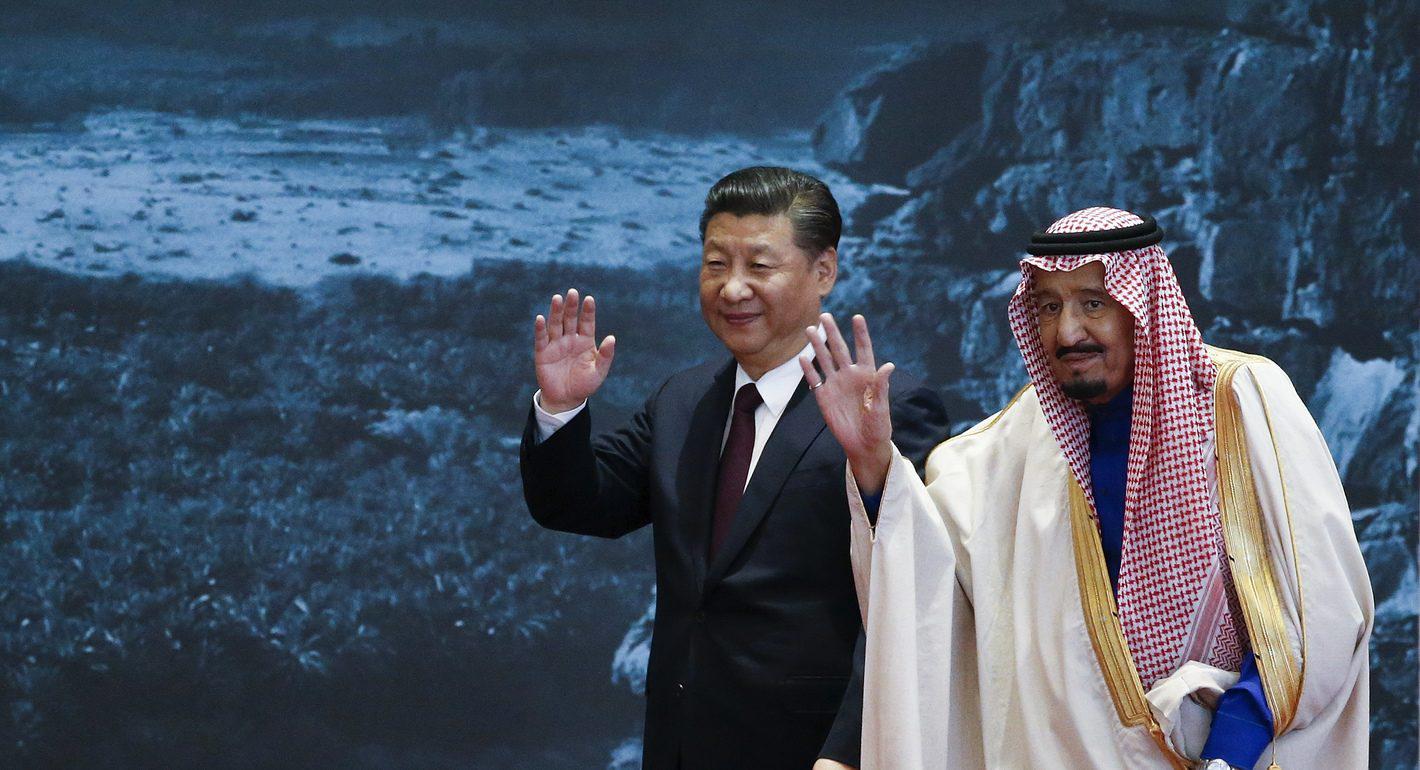
The advantage that China has over other global powers, especially America, is that its foreign policy is closely aligned with those of many of the Middle Eastern countries.



Jin Liangxiang, Maha Yahya, Hesham Alghannam

Transactional relationships are stable but can be shallow.


Paul Haenle, Maha Yahya, Benjamin Ho, …

It’s about managing oil prices, bread prices, and strategic partnerships.


Amr Hamzawy, Karim Sadjadpour, Aaron David Miller, …
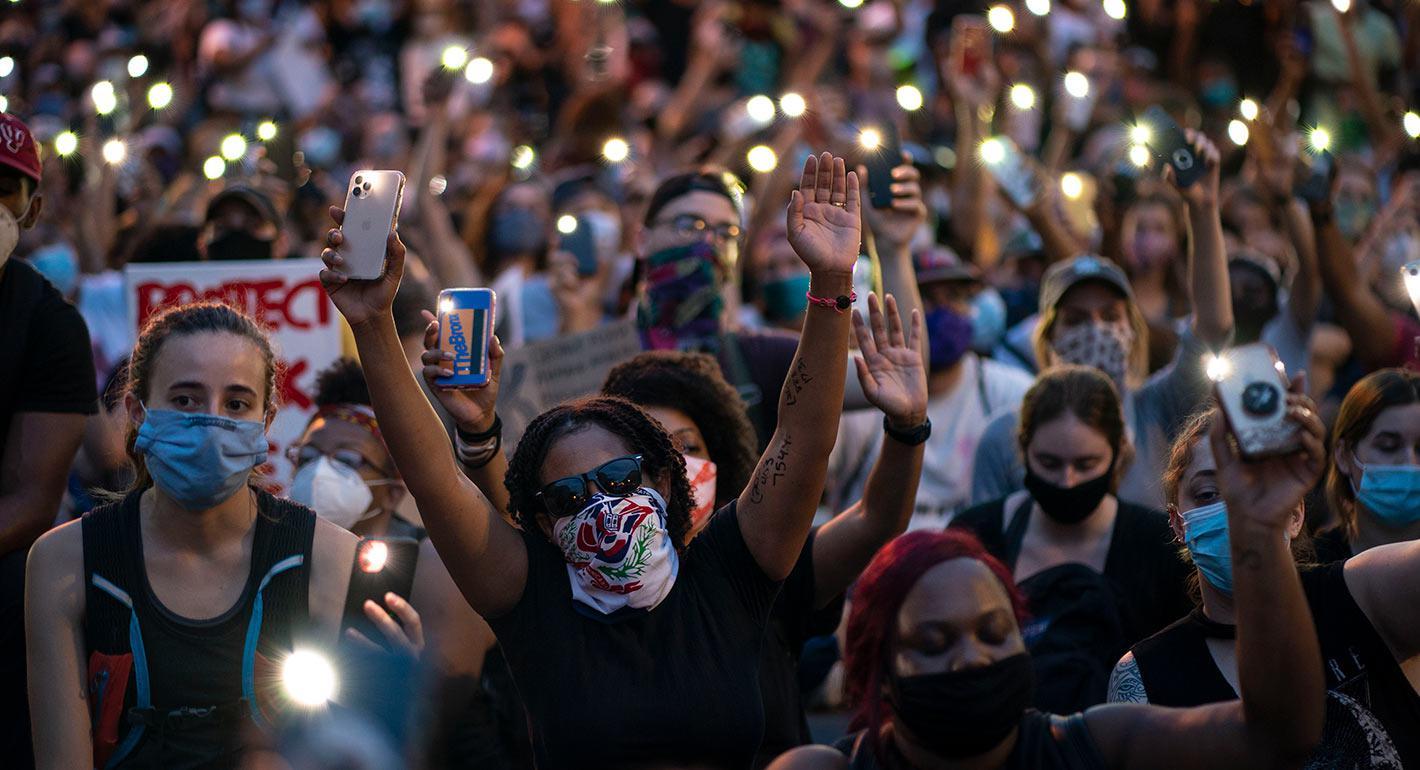
The murder of George Floyd has underscored the deep inequities that have long plagued American society. In a note to the Carnegie community, Bill Burns reflects on Carnegie’s commitment to build a more just future here at home and around the world, without which peace will remain beyond our grasp.

William J. Burns
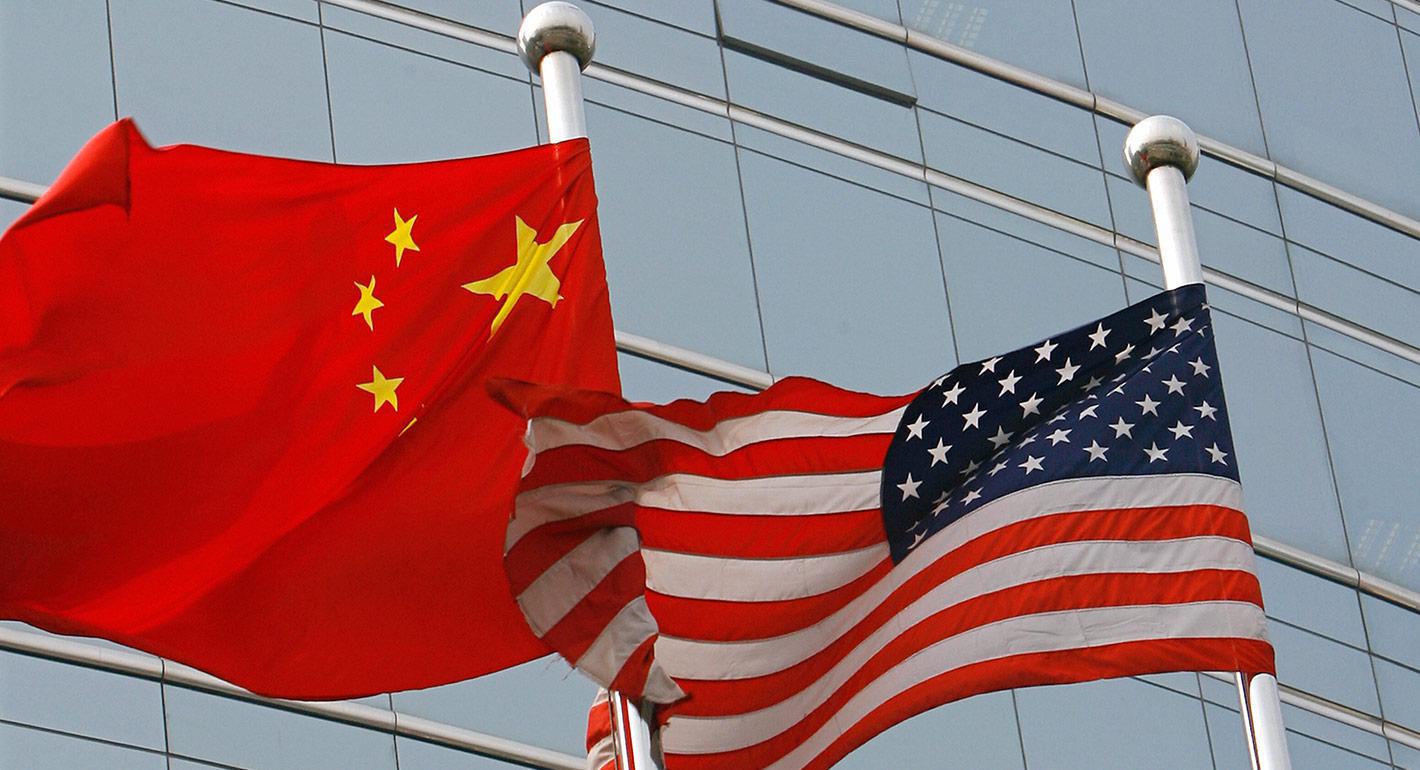
While the world hoped this pandemic might lead to more cooperation between these two great powers, American and Chinese leaders instead fell into a blame game and allowed their increasing suspicions to guide their decision-making.
Lyu Jinghua