

Commentary
Nathan J. Brown
{
  "authors": [
    "Nathan J. Brown"
  ],
  "type": "legacyinthemedia",
  "centerAffiliationAll": "dc",
  "centers": [
    "Carnegie Endowment for International Peace",
    "Malcolm H. Kerr Carnegie Middle East Center"
  ],
  "collections": [
    "Arab Awakening"
  ],
  "englishNewsletterAll": "menaTransitions",
  "nonEnglishNewsletterAll": "",
  "primaryCenter": "Carnegie Endowment for International Peace",
  "programAffiliation": "MEP",
  "programs": [
    "Middle East"
  ],
  "projects": [],
  "regions": [
    "Middle East",
    "Israel",
    "Palestine",
    "Levant"
  ],
  "topics": [
    "Political Reform",
    "Security"
  ]
}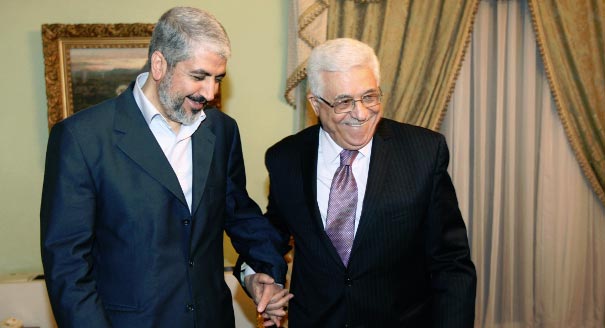
Source: Getty
At this point, Hamas and Fatah have reached only an agreement to agree. It remains to be seen how much more, if anything, they can accomplish.
Source: Journal of Turkish Weekly

A: The upheavals in the Arab world have definitely had a major impact on Palestinian’s way of thinking. A year ago, the leadership of both sides of the Palestinian split were worried about pressure from their own societies, but they successfully avoided that. But the changes in Egypt and Syria raise both threats and opportunities for Hamas; Fatah also realizes that the collapse of the peace process and of Mubarak regime must have an impact on their strategic vision.
But although it is clear that regional events will have an impact, it is not quite clear what that impact is, and both sides are badly divided within themselves about how to react.
At this point, all the two sides have accomplished is an agreement to agree. It is not clear to me if they can go further.
If there is a new round of pressure from Palestinian public opinion, especially on the issue of elections, then I think that reconciliation may actually take on more meaning. But that does not seem to be happening.
A: Fayyad may stay on as finance minister--and the US has insisted that he remains even as prime minister.
I think the personal focus on Fayyad is ironic, since the very same forces that insist on his continuing in office were those who touted his building of institutions. If he were actually successful, much less would depend on a specific individual.
But I also think that Fayyad is not the main obstacle to reconciliation. There are some in Fatah who resent him because he is not a member; there are some in Hamas who resent him because of the suppression of Hamas in the West Bank. But he is not the main issue.
A: Fayyad himself never promised that technocratic state building itself would lead to independence or statehood, so he was less of a Fayyadist than many of his Western supporters. At this point, he can claim credit for some pockets of better administration and more security inside cities. But there is no political or diplomatic progress to speak of, robbing those accomplishments of any foundation or sustainability.
Abu Mazin does not have a lot of options left. His diplomatic efforts have largely been blocked; the peace process is dead; and reconciliation is proceeding slowly and endangers his financial base. I do not see any way forward for him.
The PA is likely to continue because so many parties have an investment in it--for Israelis, it relieves them of the burdens of occupation; for Palestinians it provides tens of thousands of jobs; for Americans and Europeans, it provides the illusion of a process.
But if the PA continues, it is no longer tied to any viable national strategy for Palestinians.
A: I do not think the Netanyahu government is interested in a two-state solution. It is not interested in a fight with the US, so it cooperates with US diplomacy, but it does not seem to think a two state solution is either possible or desirable.
Fatah-Hamas reconciliation would offer the Netanyahu government some relieve from the pressure of a diplomatic process. But it would also allow reemergence of Hamas in the West Bank. And it might lead Israel to move against the PA, which would create further problems, especially if the PA began to decay as a result.
Overall, then, reconciliation would be a bit of mixed bag for the current Israeli leadership. But their major focus right now is not on Palestinians but on Iran.
A: Neither side is ready for elections. Since 2007, Hamas has lost much of its popular support, and Fatah has fallen further into decay. If there were elections--which still seems unlikely--, Hamas’s greater discipline and organization would probably help it recover much quickly than Fatah. But it is not clear how well it would do, because it is apparent to most Palestinians that Hamas does not have a viable long term strategy.
This interview originally appeared in the Journal of Turkish Weekly.

Nonresident Senior Fellow, Middle East Program
Nathan J. Brown, a professor of political science and international affairs at George Washington University, is a distinguished scholar and author of nine books on Arab politics and governance, as well as editor of five books.
Recent Work
Nathan J. Brown
Nathan J. Brown
Carnegie does not take institutional positions on public policy issues; the views represented herein are those of the author(s) and do not necessarily reflect the views of Carnegie, its staff, or its trustees.

The Thai-Cambodian conflict highlights the limits to China's peacemaker ambition and the significance of this role on Southeast Asia’s balance of power.

Pongphisoot (Paul) Busbarat
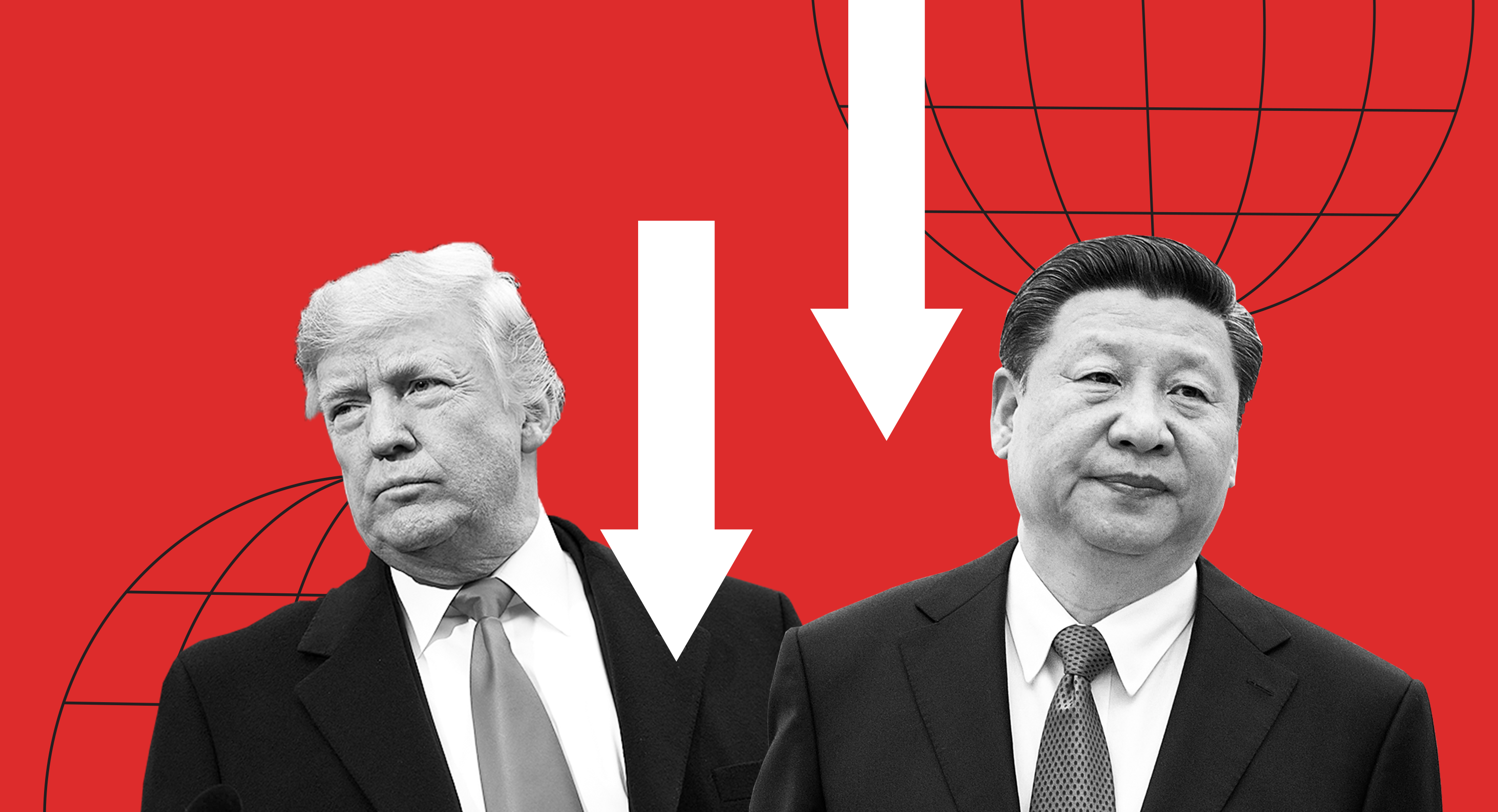
Beijing believes that Washington is overestimating its own leverage and its ability to handle the trade war’s impacts.


Rick Waters, Sheena Chestnut Greitens
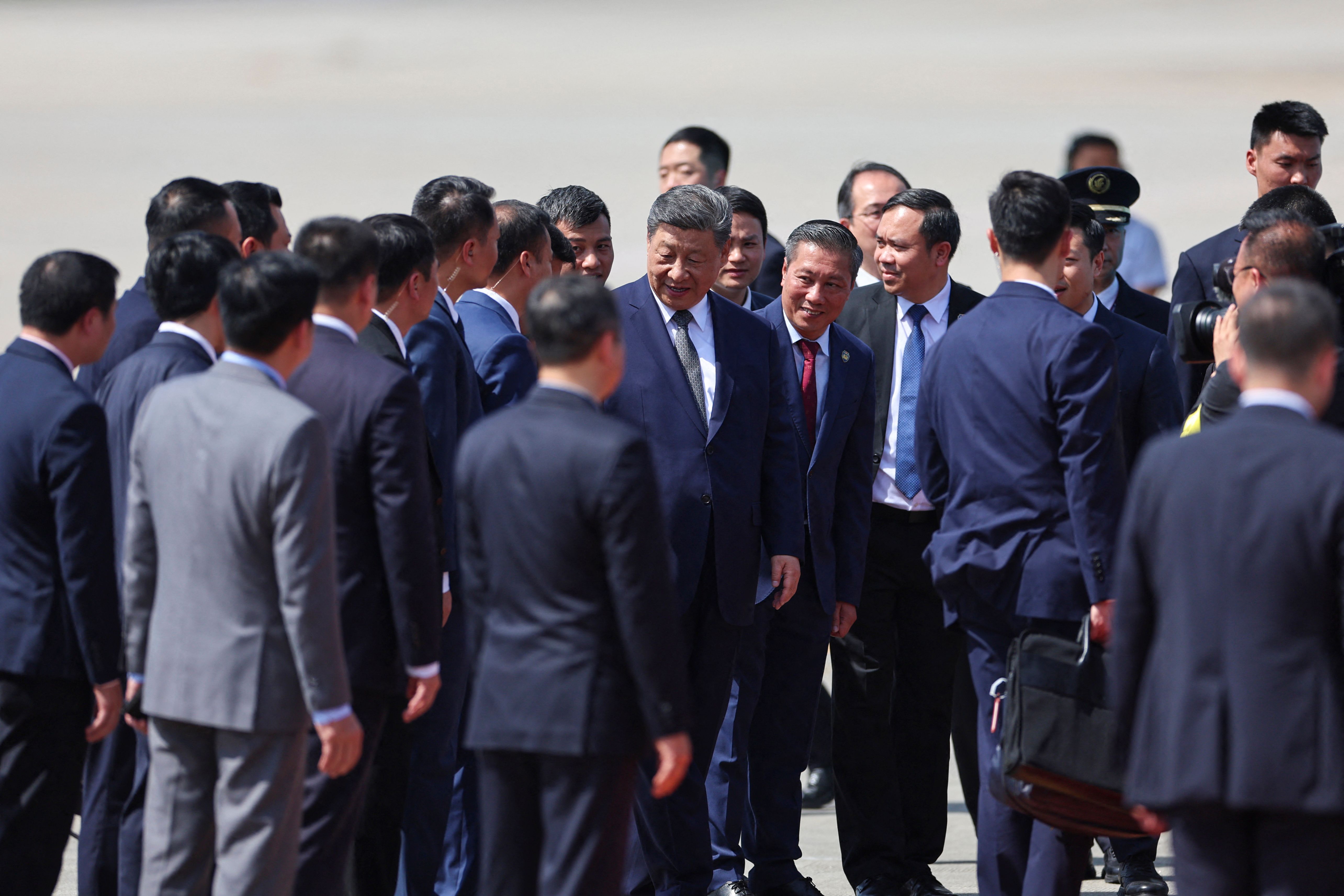
Tapping our network of China experts in the region, Carnegie China offers this latest “China Through a Southeast Asian Lens” report to offer preliminary assessments of whether the U.S. effort to reshape the global trading order will lead countries in the region to tilt toward Beijing.



Selina Ho, Khin Khin Kyaw Kyee, Joseph Ching Velasco, …

Because strategic, economic, and ideological perceptions of China contain multiple, sometimes contradictory facets in Southeast Asia, receptions of and responses to Beijing diverge across and within state lines.



Evan A. Feigenbaum, Chong Ja Ian, Elina Noor

Most Southeast Asian states behave as if the actions of their Northeast Asian neighbors and the Philippines will be sufficient to maintain a regional status quo from which they can benefit.
Chong Ja Ian