

Paper
Yezid Sayigh
{
  "authors": [
    "Yezid Sayigh"
  ],
  "type": "legacyinthemedia",
  "centerAffiliationAll": "dc",
  "centers": [
    "Carnegie Endowment for International Peace",
    "Malcolm H. Kerr Carnegie Middle East Center"
  ],
  "collections": [
    "Arab Awakening"
  ],
  "englishNewsletterAll": "menaTransitions",
  "nonEnglishNewsletterAll": "",
  "primaryCenter": "Malcolm H. Kerr Carnegie Middle East Center",
  "programAffiliation": "MEP",
  "programs": [
    "Middle East"
  ],
  "projects": [],
  "regions": [
    "Egypt",
    "North Africa"
  ],
  "topics": [
    "Political Reform"
  ]
}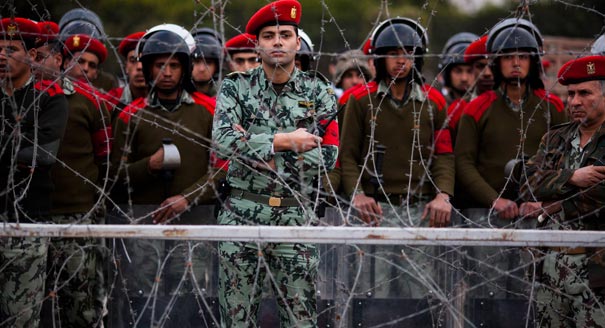
Source: Getty
If the Egyptian government has instigated the sudden crisis with the United States in anticipation of a domestic confrontation, then the worrying implication is that it is actively preparing to go on the offensive and trigger such a confrontation.
Source: Foreign Policy

Nor can there be the slightest doubt that Egypt's ruling Supreme Council of the Armed Forces (SCAF) is directly behind the attempt. The evidence is twofold. None of the three interim cabinets that have taken office since the SCAF assumed power in February 2011 has been able to undertake policy initiatives in any public sphere without military approval. Additionally, no mere civilian would be allowed to jeopardize United States military assistance worth $1.3 billion annually on his or her own initiative, as Minister of International Cooperation Fayza Abul-Naga has seemingly done.
It might seem perverse for the SCAF to pick a fight with the United States, which is already threatening to suspend its assistance. However, the campaign against pro-democracy activists and NGOs is not the badly misjudged action of a military council flailing desperately as it struggles to retain control of Egypt's transitional process and protect its special powers and exclusions from civilian oversight. Rather, it is a calculated ploy.Egypt is rapidly approaching a moment of truth: between February 22, when the last round of elections is held for its Shura Council (consultative upper house of parliament), and June 30 at the latest, it will draft and ratify a new constitution and elect a new president of the republic. The winners of the recent elections for the parliament's lower house -- led by the Muslim Brotherhood's Freedom and Justice Party -- are determined to play their legally mandated role in forming the technical committee that will draft the constitution. They are also pressing for a fundamental reform of Egypt's all-powerful presidency, towards a balanced presidential-parliamentary system of shared executive powers.
The SCAF, conversely, has sought to marginalize parliament on every level. It won an early victory by compelling the Freedom and Justice Party to acknowledge that formation of the next interim government is the prerogative of the military council. More recently, the SCAF claimed that the presidential powers it wields include the right to appoint 90 of the 270 members of the incoming Shura Council, diluting the role of the Lower House in selecting the members of the constitution drafting committee. The Supreme Election Commission ruled that it has no authority to do so, however: the Shura Council will function with the 180 elected members until the new president takes office and appoints the remaining 90.
This leaves the SCAF almost wholly reliant on resisting any diminution of Egypt's presidential system, in the hope that the next occupant of the country's highest office will be amenable to its influence and use his powers to protect its interests. Yet even if one of several former generals, who have already announced their intention to run, becomes Egypt's next president, there is no assurance that the informal arrangements that previously underpinned the SCAF's cozy relationship with former President Hosni Mubarak can be replicated fully or operate indefinitely.
The stakes are high for the SCAF: to ensure that the defense budget, military economic enterprises, U.S. military assistance, and top command appointments remain beyond meaningful civilian oversight and control; to exercise veto power over national defense policy; and, above all, to preserve the permanent immunity of armed forces personnel, whether active or retired, from prosecution under civil laws.
A more formal legal mandate is needed. But the extra-parliamentary "Tahrir forces" that defeated the SCAF's attempt to promote "supra-constitutional principles" enshrining its powers and prerogatives last November, are determined to prevent it from exercising any residual sovereign authority. The Muslim Brotherhood, which has trodden very cautiously on the subject so far, is equally keen to defend parliamentary powers. In late January its Supreme Guide, Mohammad Badie, stressed that parliament has the right to hold all state institutions accountable, the military above all, and to determine, even reduce, the defense budget. Its proposal for a "safe exit" for the SCAF -- no prosecution for errors or criminal acts committed during its rule, in return for uncontested and complete handover of power -- has angered the Tahrir forces, which demand full accountability for the past. But it nonetheless underlines that new rules must govern relations between the armed forces and civilian authorities in future.
The SCAF's options are narrowing, and time is running short. It appears to be bracing for direct confrontation with its domestic opponents, especially as its illiberal secular allies have failed completely to help broaden its margin for maneuver by posing a credible counterweight to either the Tahrir forces or the parliamentary parties.
This is why picking a fight with the U.S. is timely. If a confrontation looms at home, then taking on the U.S. effectively knocks it out of play as a factor in the local balance of power at just the right moment. After all, the SCAF will not have forgotten that it was a shift in U.S. policy that tipped the scales decisively against Mubarak a year ago, ushering it into power.
It may seem counter-intuitive for the SCAF to seek to improve its chances by running the risk of a suspension of U.S. assistance. Much of the commentary in the U.S. so far has assumed that the SCAF is complacently confident that assistance will not be cut, because the U.S. needs the Egyptian armed forces to uphold the peace treaty with Israel and, secondarily, to maintain a security screen along the border with Gaza. This is true, but misses the point: just how damaging would a suspension actually be?
From the SCAF's perspective, suspension of U.S. military assistance would be politically significant, but have limited impact. For one thing, the bulk is spent on U.S. military goods and services, and does not enter the Egyptian treasury or army funds at all. It is believed that companies acting as fronts for certain Egyptian senior officers win part of the contracts funded by U.S. assistance to cover transport, insurance, and brokerage, but this represents a small portion of the much larger hidden income streams controlled by the armed forces inside Egypt itself, none of which will be affected.
At worst, suspension means that delivery of U.S. weapons and equipment not already paid for will stop, slowing some Egyptian rearmament or re-equipment programs, but hardly paralyzing the armed forces. Besides, the SCAF has no intention of waging war with anyone, least of all Israel, and so it can afford to forgo further U.S. supplies so long as the suspension is temporary, which it inevitably will be. In the meantime, it can trumpet its refusal to bow to U.S. pressure to the Egyptian public, using crude nationalism to justify its attempt to control the remaining stages of the transitional process and pre-determine its outcome.
It could be that a floundering SCAF has simply misjudged badly in raising the stakes with the United States so high. But if it has indeed instigated the sudden crisis with the United States in anticipation of a domestic confrontation, then the further, more worrying implication is that it is actively preparing to go on the offensive and trigger one. In this case, its decision to deploy tanks and soldiers around Egypt in order to secure public order and maintain the peace during the nationwide strikes and civil disobedience on the first anniversary of Mubarak's ouster, on February 11, is a reflection of a growing trend and a harbinger of things to come.

Senior Fellow, Malcolm H. Kerr Carnegie Middle East Center
Yezid Sayigh is a senior fellow at the Malcolm H. Kerr Carnegie Middle East Center in Beirut, where he leads the program on Civil-Military Relations in Arab States (CMRAS). His work focuses on the comparative political and economic roles of Arab armed forces, the impact of war on states and societies, the politics of postconflict reconstruction and security sector transformation in Arab transitions, and authoritarian resurgence.
Recent Work
Yezid Sayigh
Yezid Sayigh
Carnegie does not take institutional positions on public policy issues; the views represented herein are those of the author(s) and do not necessarily reflect the views of Carnegie, its staff, or its trustees.
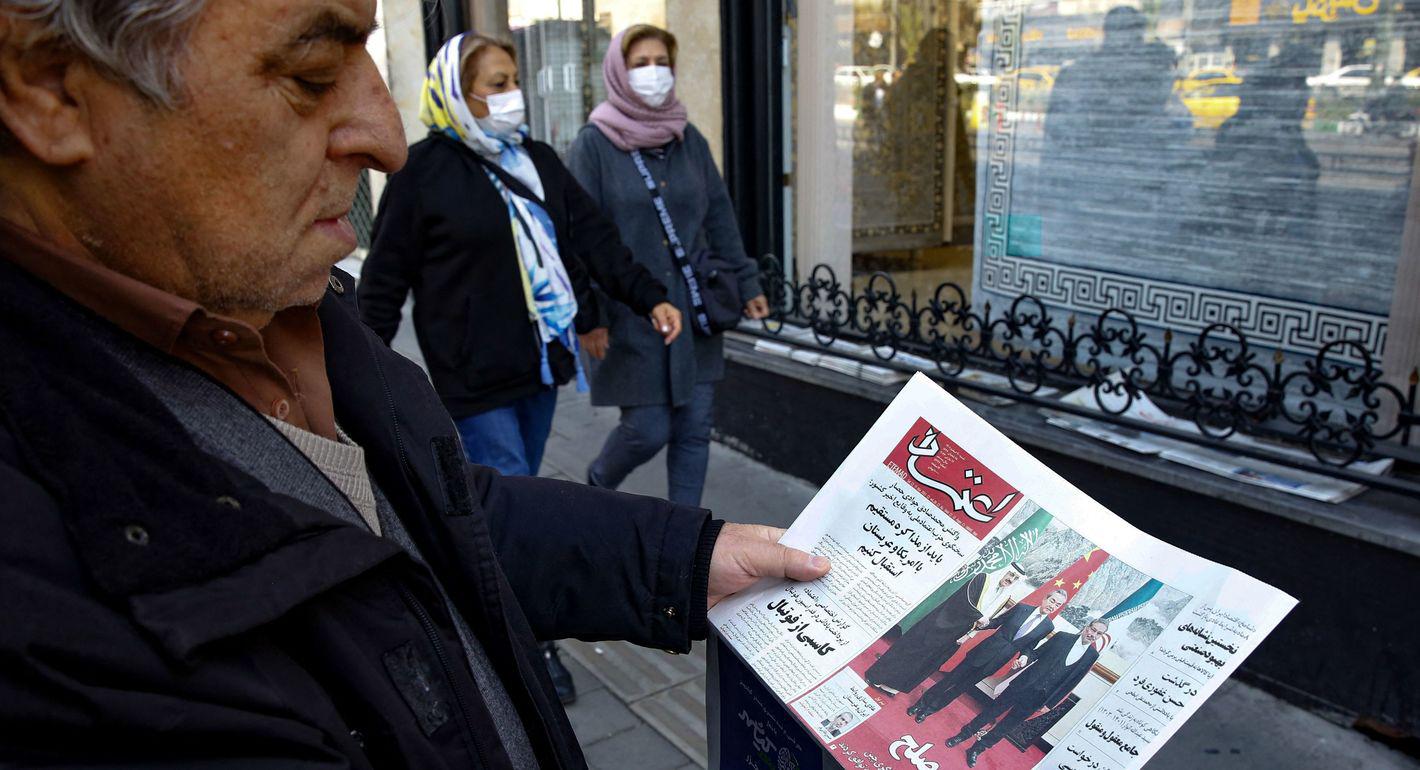
Transactional relationships are stable but can be shallow.


Paul Haenle, Maha Yahya, Benjamin Ho, …
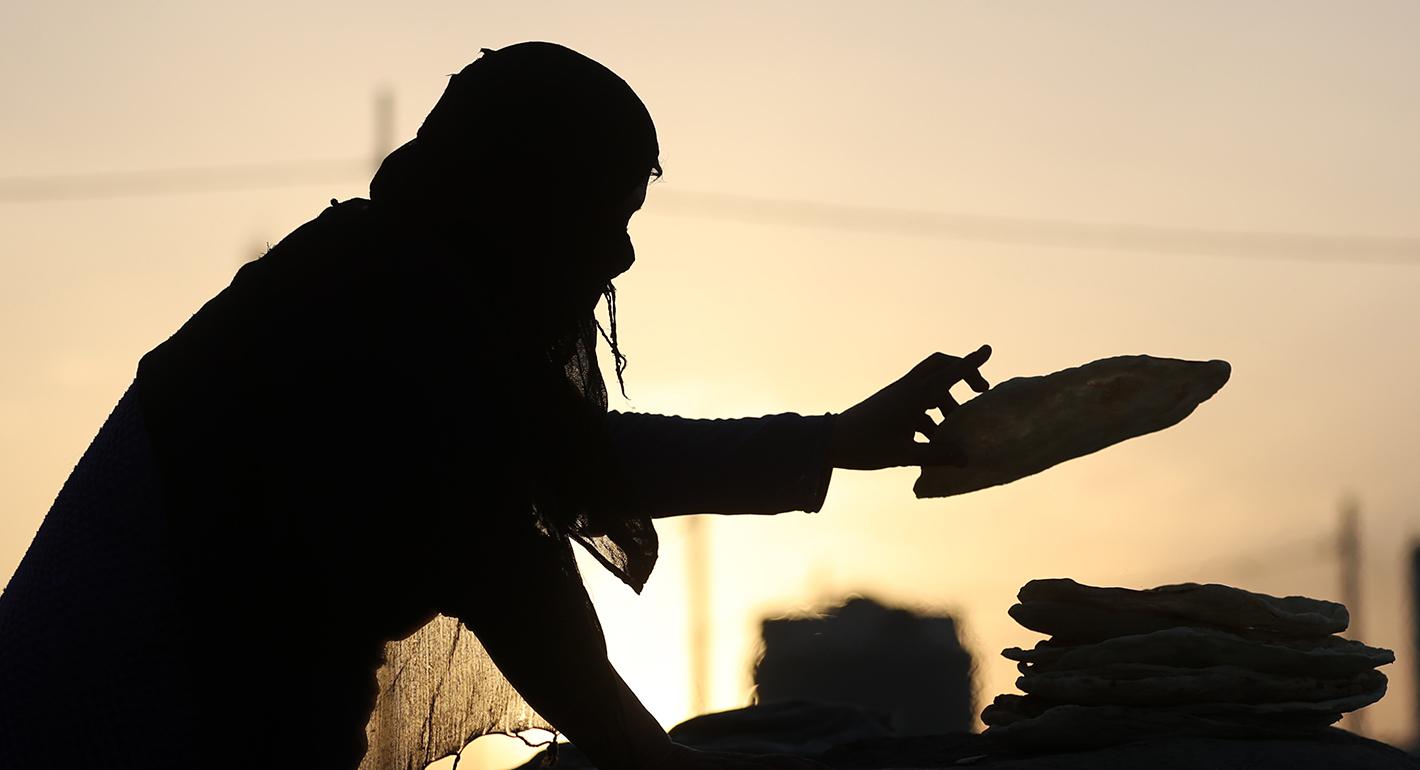
It’s about managing oil prices, bread prices, and strategic partnerships.



Amr Hamzawy, Karim Sadjadpour, Aaron David Miller, …
The murder of George Floyd has underscored the deep inequities that have long plagued American society. In a note to the Carnegie community, Bill Burns reflects on Carnegie’s commitment to build a more just future here at home and around the world, without which peace will remain beyond our grasp.
William J. Burns
While the world hoped this pandemic might lead to more cooperation between these two great powers, American and Chinese leaders instead fell into a blame game and allowed their increasing suspicions to guide their decision-making.
Lyu Jinghua
Biological viruses and computer malware differ in important respects. They have considerable potential to spread widely, invading, disrupting and destroying their targets.
Ariel (Eli) Levite, Lyu Jinghua