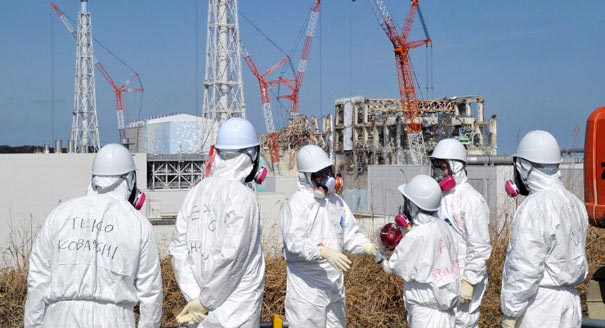
If Tokyo Electric Power and the Japanese nuclear safety agency had followed international standards and best practice, the Fukushima accident could have been prevented.
On March 11, 2011, a massive tsunami inundated the Fukushima Daiichi Nuclear Power Station in Japan causing the worst nuclear accident since Chernobyl. Over 300,000 people were evacuated and a vast swath of land will be unusable for decades. The cleanup could run into hundreds of billions of dollars. Unsurprisingly, critics of nuclear power have seized upon the accident to argue that because nature is unpredictable, nuclear power is simply too risky.
One year later, however, it is becoming increasingly clear that the combined earthquake and tsunami that precipitated the Fukushima accident was not an “act of God” or Japan’s bad luck. The potential risks of tsunamis to nuclear power plants are well understood and a set of international standards has been developed to mitigate those risks.
Yet, despite Japan’s history of tsunamis, the Nuclear and Industrial Safety Agency, Japan’s nuclear regulator, did not apply those standards. It failed to review studies of tsunami risks performed by the plant’s owner, Tokyo Electric Power, known as Tepco. It also failed to ensure the development of tsunami-modeling tools compliant with international standards.
Tepco was also negligent. It knew of geological evidence that the region surrounding the plant had been periodically flooded about once every thousand years. In 2008, it performed computer simulations suggesting that a repeat of the devastating earthquake of 869 would lead to a tsunami that would inundate the plant. Yet it did not adequately follow up on either of these leads.
The biggest risk that tsunamis pose to nuclear plants is the destruction of their power supplies. Without electricity, a reactor cannot be cooled and a meltdown can result. This is exactly what happened at Fukushima. A similar event might have been triggered in France in December 1999, when the Blayais nuclear power plant was flooded.
Recognizing this risk, European states examined their nuclear plant designs for vulnerabilities. They then equipped their plants with more emergency electricity supplies and protected them to better withstand a whole range of hard-to-predict extreme hazards.
Tepco and Japan’s nuclear safety agency were well aware of the European experience. Fukushima would have survived if they followed Europe’s lead and improved the plant’s design.
In short, had Tepco and the nuclear safety agency followed international standards and best practice, the Fukushima accident would have been prevented.
Looking forward, the obvious question is whether other countries with nuclear power have learned from Japan’s mistakes. Since the accident, the nuclear industry has touted new reactors with improved, “passive” safety systems that can provide emergency cooling without an electricity supply. While safer, new reactors are welcome, what about the world’s 440 or so operating reactors?
In the United States, where almost a quarter of these reactors are located, the nuclear industry has focused on improving accident management, that is, in preventing a meltdown in a plant where key safety systems have been damaged by a natural disaster. Power plant owners are enhancing procedures developed after 9/11 to thwart a terrorist attack on a nuclear power plant.
It’s less clear, however, whether they and the nuclear regulator are equally focused on the critical importance of robust design in making plants less vulnerable to calamities in the first place. Improvements in design can be expensive. Yet enhanced accident management and improvements in design are not an either/or choice. Both improve safety. Both are needed.
European states have recognized this. Their regulators have subjected 124 reactors to “stress tests.” These confirmed the value of the plant design improvements ordered after the Blayais incident. What’s more, they identified further upgrades to plants’ physical defenses that are needed in order to prevent unexpected external hazards from causing serious damage. France alone will require its 58 reactors to make improvements that might cost $10 billion.
Meanwhile, Europe has important lessons to learn from the United States. For instance, the U.S. regulator appears set to order a comprehensive reassessment of the external threats faced by all plants in America. While some European states have recently undertaken such an exercise, others have not. They all need to take action.
In the final analysis, however, the debate under way about U.S. and European safety efforts after Fukushima is a testament to the relative transparency of their regulators and nuclear industries. In no other state with nuclear reactors — China, India and Russia among them — is it possible to properly assess the strengths and weaknesses of their approaches to enhancing safety since the accident. This opacity historically characterized Japan’s nuclear sector. If countries are serious about learning lessons from Fukushima, they need to start by opening their nuclear programs to the outside scrutiny.
Hibbs is a Germany-based nonresident senior fellow in Carnegie’s Nuclear Policy Program. His areas of expertise are nuclear verification and safeguards, multilateral nuclear trade policy, international nuclear cooperation, and nonproliferation arrangements.
Carnegie does not take institutional positions on public policy issues; the views represented herein are those of the author(s) and do not necessarily reflect the views of Carnegie, its staff, or its trustees.
The Plaza Accord was not an externally imposed punishment of Japan but part of a broader restructuring that Japanese economists and policymakers themselves recognized was necessary. Its effects were undermined, however, when Tokyo responded to the resulting slowdown with policies that exacerbated investment, credit expansion, and the very imbalances the adjustment was intended to resolve.
The nuclear relationship between China and the United States is increasingly shaped by widening perception gaps rather than deliberate strategic design.
Chinese biotech companies have been on the receiving end of U.S. economic coercion. Yet their responses have differed significantly because firm and state interests are not uniformly aligned. For Washington, treating all Chinese tech firms the same, irrespective of their actual interests, risks pushing them farther into Beijing’s corner.
Across Asia, China is better positioned to withstand energy shocks from the fallout of the Iran war. Its abundant coal capacity can ensure stability in the near term. Yet at the same time, the country’s energy transition away from coal will make it even less vulnerable during the next shock.
The Thai-Cambodian conflict highlights the limits to China's peacemaker ambition and the significance of this role on Southeast Asia’s balance of power.