

Article
Deborah Gordon, Stephen D. Ziman
{
  "authors": [
    "Deborah Gordon"
  ],
  "type": "legacyinthemedia",
  "centerAffiliationAll": "dc",
  "centers": [
    "Carnegie Endowment for International Peace"
  ],
  "collections": [],
  "englishNewsletterAll": "ctw",
  "nonEnglishNewsletterAll": "",
  "primaryCenter": "Carnegie Endowment for International Peace",
  "programAffiliation": "SCP",
  "programs": [
    "Sustainability, Climate, and Geopolitics"
  ],
  "projects": [
    "Carnegie Oil Initiative"
  ],
  "regions": [
    "North America",
    "United States"
  ],
  "topics": [
    "Climate Change"
  ]
}
Source: Getty
Given oil's dangerous monopoly power over American mobility, it is time to reinvent U.S. habits, innovate technologically, and adopt bold new policies aimed at reducing the use of oil.
Source: U.S. News

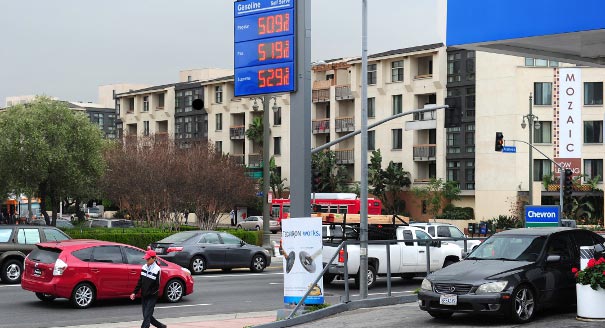
No matter how many billions of dollars oil companies rake in, the world market, not individual oil producers, sets the price of oil. Likewise, there is little, if anything, U.S. presidents—or their political opponents—can do to ward off $4 per gallon gasoline.
The reality is that oil supply concerns in Iran, Nigeria, and other trouble spots married with heightened oil demand in China, India, and other burgeoning nations will largely determine what Americans pay for gasoline. We can drill doggedly in our own backyards, but the price of gasoline will remain more a matter of speculation over externally-driven factors than tapping new sources of oil at home.America is at an oil crossroads, emotionally and financially. We can continue griping about gasoline and maintain false hopes of controlling crude oil prices. Or we can face the truth, stop subsidizing oil with hard-earned taxpayer dollars, and abandon extreme efforts in search of new oil supplies. Surviving $4 gasoline depends on sipping oil and providing fuel substitutes, not subsidizing and promoting petroleum production.
As the world's largest oil consumer, home to a transportation system that is a whopping 94 percent dependent on oil, the United States is precariously positioned. Conventional thinking—the more we drill at home, the better off we'll be—is dangerously misguided. No matter where in the world oil is found, the price is tied to the global market.
Moreover, much of the heavier new oil supplies found in the western hemisphere yield diesel and fuel oil that is destined primarily for export markets. New heavier oils are not well suited for consumption by American cars and jets. So drilling closer to home will do much more to pad the oil industry's deep pockets than bring down prices at the pump.
Since business-as-usual isn't likely the answer, and may make matters worse, it's time for unconventional thinking.
America is desperately in need of an oil policy that reduces dependence on petroleum, regardless of the source. The more fuel efficient our cars become and the faster we diversify into new transportation fuels, the brighter our energy and economic future will be.
President Obama already set in motion the first part of the solution. Tomorrow's cars and trucks will consume less fuel than those they replace. And despite rising gas prices—or perhaps because of it—automakers' new vehicle line-ups contain some of the most fuel-efficient vehicles in industry history.
In the next five years, new cars and trucks will use 20 percent less fuel per mile driven. And by 2025, new cars will average about 50 miles per gallon, nearly double levels initially mandated for 1985. Sticking to the president's plan, or even accelerating it, will be key.
But there is much more to be done. America can no longer rely on oil alone to fuel mobility. We need to step up the transition to oil alternatives by moving to hybrid-electric and electric vehicles, and using advanced biofuels.
Electricity can be generated by a diverse array of clean energy sources, leaving oil out of the power mix. And biofuels can be made from many different nonoil sources, including algae, grasses, woody crops, wastes, and various other nonfood feed stocks.
High gasoline prices help motivate the shift away from oil. But a market transformation will take direct policy action, for example, through a price stabilizing oil security fee or other fiscal measures. Oil is entrenched in America. Moving away from perpetual oil dependence to a robust, diversified fuel system will take clear, enduring policy action.
Americans are justifiably anxious about what the future holds when it comes to gasoline prices. But many motorists are beginning to appreciate that anger over pump prices will not relieve pain at the pump. Nor will political promises.
Oil markets have globalized to the point where prices are beyond our control. Given oil's dangerous monopoly power over our mobility, it's time to entirely reinvent our habits, innovate technologically, and adopt bold new policies aimed at reducing the use of oil and substituting instead of subsidizing and searching for oil. This is how America will ultimately survive $4 gasoline.

Former Director and Senior Fellow, Energy and Climate Program
Gordon was director of Carnegie’s Energy and Climate Program, where her research focuses on oil and climate change issues in North America and globally.
Recent Work
Deborah Gordon, Stephen D. Ziman
Deborah Gordon, Smriti Kumble, David Livingston
Carnegie does not take institutional positions on public policy issues; the views represented herein are those of the author(s) and do not necessarily reflect the views of Carnegie, its staff, or its trustees.

But their "principal to principal" model will only be as effective as the political strength of each leader back home.

Damien Ma

U.S. unpredictability has allowed China to capitalize on its positioning as the “responsible great power”. Paradoxically, the more China wins the perception game, the more likely expectations will rise for Beijing to deliver not just words but to demonstrate with its deeds.

Chong Ja Ian

For Malaysia, the conjunction that works is “and” not “or” when it comes to the United States and China.

Elina Noor
Regulation, not embargo, allows Beijing to shape how other countries and firms adapt to its terms.

Alvin Camba
Beijing believes that Washington is overestimating its own leverage and its ability to handle the trade war’s impacts.


Rick Waters, Sheena Chestnut Greitens