

In The Media
Vikram Nehru
{
  "authors": [
    "Vikram Nehru"
  ],
  "type": "legacyinthemedia",
  "centerAffiliationAll": "dc",
  "centers": [
    "Carnegie Endowment for International Peace",
    "Carnegie Europe"
  ],
  "collections": [],
  "englishNewsletterAll": "asia",
  "nonEnglishNewsletterAll": "",
  "primaryCenter": "Carnegie Endowment for International Peace",
  "programAffiliation": "AP",
  "programs": [
    "Asia"
  ],
  "projects": [],
  "regions": [
    "Southeast Asia",
    "Myanmar",
    "Asia"
  ],
  "topics": [
    "Political Reform",
    "Democracy",
    "Foreign Policy"
  ]
}
Source: Getty
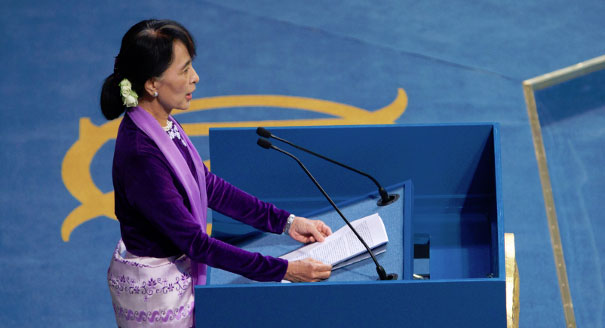
As Burma moves away from domestic authoritarianism and international isolation, Aung San Suu Kyi will have to represent the people's aspirations as an opposition leader in parliament and support Burma's interests abroad.
Source: Wall Street Journal

The world has been transfixed by Burma's sudden, dramatic opening, and heartened by Ms. Suu Kyi's new role in parliament. She is deservedly an international symbol of courageous, non-violent opposition to military rule, having fought bravely for human rights and political freedoms while enduring house arrest for 15 of the last 20 years.
But for Burma's economic and political transition to succeed, Ms. Suu Kyi will have to evolve as well. As the country moves away from domestic authoritarianism and international isolation, Ms. Suu Kyi will have to represent the people's aspirations as opposition leader in parliament and support Burma's interests abroad. And that might mean encouraging foreign investors even if the country's economic policies and institutions are badly in need of overhaul.The move from resistance icon to insider is always challenging, as Ms. Suu Kyi's recent trip (her first abroad since 1988) to Bangkok for the World Economic Forum shows. President Thein Sein, the architect of Burma's reforms, was slated to speak at the same forum as Ms. Suu Kyi, but had not been informed of her trip. He hastily canceled his own, so as not to run the risk of being upstaged.
At the forum itself, Ms. Suu Kyi sent an unfortunate message when she warned foreign investors that Burma's courts remain too weak to implement laws and the government is not transparent. Her speech seemed to suggest that economic development is not a priority until the rule of law is established. But it is unlikely the country's impoverished workers and peasants agree.
She could have delivered a more nuanced message instead. Such as: while Burma is justifiably reviewing its policies toward foreign investment in the extractive industries (oil, gas, gems, minerals), it warmly welcomes foreign investment in manufacturing, especially in labor-intensive export industries, and in tourism to help earn foreign exchange and provide jobs.
More importantly, the speech should have indicated how the party she helped found, the National League for Democracy, would press the government to introduce much-needed reforms to help jumpstart the economy. There are, after all, many urgent reforms that require the immediate attention of the government—from increasing power generation to providing more public transport to improving the investment climate for manufacturing.
After winning 43 of the 45 parliamentary seats contested in the by-elections held earlier this year, Ms. Suu Kyi and the NLD must now come to grips with these concrete issues. They need to have a clear understanding of the country's priorities and engage with the government to tackle them. The NLD must be willing to work with local communities, participate in the process of development and use expertise where available to identify the best way to address the country's myriad challenges.
Ms. Suu Kyi is undoubtedly correct that the rule of law must be established to provide the foundations for a just and prosperous society, but she hasn't said how will she lead the NLD to bring this about. The more immediate problems facing the poor must be addressed—the NLD needs to demonstrate it has the strategies and the capabilities to reduce poverty and jumpstart development.
The outcome of the by-elections gave a strong indication that if the 2015 elections are free and fair, the NLD will sweep the polls irrespective of the current government's performance in the intervening years. The next three years will therefore be a critical period for the NLD to prepare itself for the task of running the country.
The party needs to flesh out and test its stance on human rights, tensions in ethnic minority areas, relations with the military and the appropriate role of the private sector, foreign investors and the government in the development process. For example, following the recent ethnic violence between Rakhine Buddhists and Muslim Rohingyas in Burma's northwest, Ms. Suu Kyi said this week the country's citizenship laws should be clarified. But when asked directly whether the stateless Rohingyas ought to be considered Burmese, she said "I do not know." A firmer response to these kinds of challenges will be needed.
In short, the NLD must get serious about establishing its credibility as a competent and organized government-in-waiting that has the vision, the discipline and respect for the rule of law the current ruling party lacks. And by being a constructive partner with President Thein Sein and other reform-minded members of the government, the NLD will be able to earn their trust in return, which will ultimately allow it to assume power peacefully.
Ms. Suu Kyi is rightly idolized by her people and the world. Leveraging this goodwill to bring about real and lasting change to her country will be an even greater accomplishment than her courageous stand for human rights and freedom waged against all odds over the last two decades.
This article was originally published in the Wall Street Journal.
Former Nonresident Senior Fellow, Asia Program
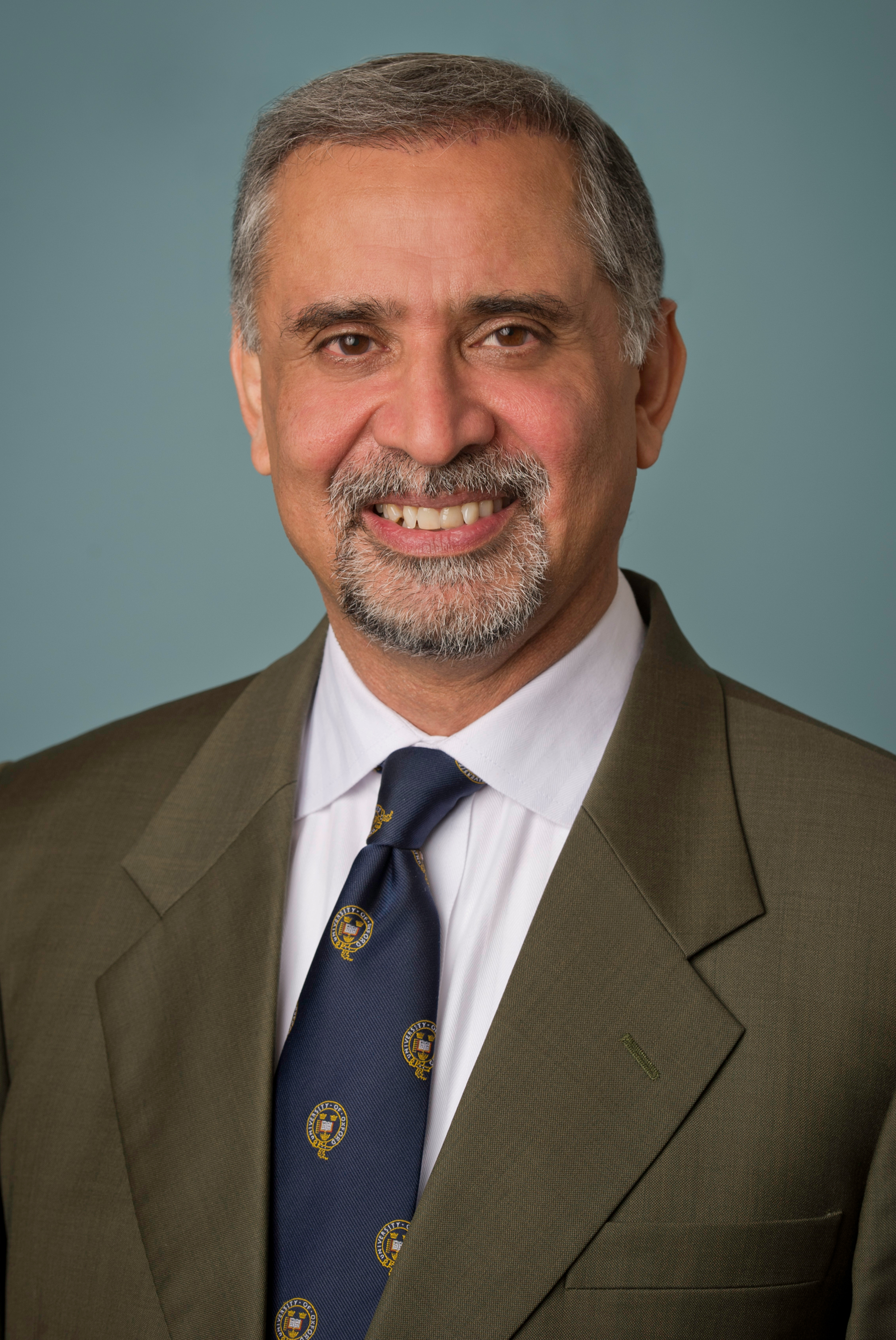
Nehru was a nonresident senior fellow in the Carnegie Asia Program. An expert on development economics, growth, poverty reduction, debt sustainability, governance, and the performance and prospects of East Asia, his research focuses on the economic, political, and strategic issues confronting Asia, particularly Southeast Asia.
Recent Work
Vikram Nehru
Vikram Nehru
Carnegie does not take institutional positions on public policy issues; the views represented herein are those of the author(s) and do not necessarily reflect the views of Carnegie, its staff, or its trustees.

China’s banking crisis in the 2000s was resolved by transferring the costs to households through financial repression—a decision that recapitalized the banks while exacerbating the structural imbalances that continue to shape the Chinese economy today.

Michael Pettis

Chinese biotech companies have been on the receiving end of U.S. economic coercion. Yet their responses have differed significantly because firm and state interests are not uniformly aligned. For Washington, treating all Chinese tech firms the same, irrespective of their actual interests, risks pushing them farther into Beijing’s corner.

Xue Gong

But their "principal to principal" model will only be as effective as the political strength of each leader back home.

Damien Ma

U.S. unpredictability has allowed China to capitalize on its positioning as the “responsible great power”. Paradoxically, the more China wins the perception game, the more likely expectations will rise for Beijing to deliver not just words but to demonstrate with its deeds.

Chong Ja Ian

Hanoi and Beijing have long treated each other as distant cousins rather than comrades in arms. That might be changing as both sides draw closer to hedge against uncertainty and America’s erratic behavior.

Nguyễn Khắc Giang