

Commentary
Judy Dempsey
{
  "authors": [
    "Judy Dempsey"
  ],
  "type": "legacyinthemedia",
  "centerAffiliationAll": "",
  "centers": [
    "Carnegie Endowment for International Peace",
    "Carnegie Europe"
  ],
  "collections": [],
  "englishNewsletterAll": "",
  "nonEnglishNewsletterAll": "",
  "primaryCenter": "Carnegie Europe",
  "programAffiliation": "",
  "programs": [],
  "projects": [],
  "regions": [
    "Europe"
  ],
  "topics": []
}
Source: Getty
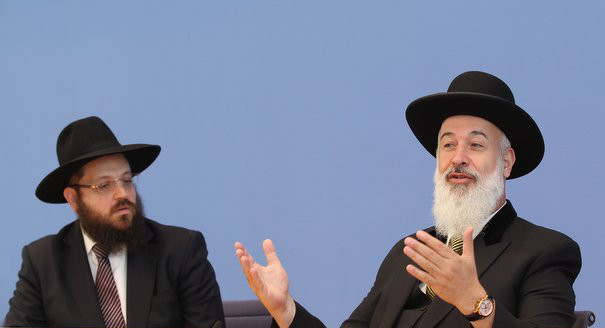
A court in Cologne decided that circumcision amounted to bodily injury. German Jewish leaders regard this as an assault on the essence of their religious identity.
Source: New York Times
IMGXYZ13488IMGZYXThe Jewish Hospital, in the bustling district of Wedding that also is home to a large Turkish community, has for years been providing a special service to Jews and Muslims.
“About 140 boys were circumcised last year,” said Gerhard Nerlich, the hospital’s spokesman. Circumcision was never an issue, he said, until June. That was when a court in Cologne, confronted with a case in which a small boy suffered complications following the procedure, decided that circumcision amounted to bodily injury.
“The fundamental right of the child to bodily integrity outweighed the fundamental rights of the parents,” the court ruled.
Fearing prosecution, doctors across Germany stopped performing circumcisions even though the Cologne ruling was not binding for the rest of the country. “We have done none since,” Mr. Nerlich said. The Cologne decision also created deep anxiety among Germany’s Jewish and Muslim communities about their place in society.Turkish community leaders say the ruling is an attack on their culture and religion. German Jewish leaders regard it as an assault on the essence of their religious identity. They said they felt as if they were living in an alien Germany.
“It’s as if the German authorities are telling us that our traditions are wrong,” said Ayse Demir, deputy director of the Turkish community in Germany who was born and raised in Germany.
Stephan J. Kramer, secretary general of the Central Council of Jews in Germany, was much more critical. “Germans are now lecturing the Jews about how we should treat our children, about the dangers of circumcision, about how the baby feels pain,” he said. “It’s as if they think we are barbarians, that we are indifferent to how the child feels,” Mr. Kramer said.
Under Jewish law, males must be circumcised on the eighth day after birth, either in a hospital or by a mohel, a Jew or rabbi who is trained as a circumciser. Muslim boys are circumcised later and generally in hospitals.
“Making a decision about circumcision is very difficult for the family,” said Ms. Demir, a secular Muslim who has a teenage son. “But I really think the state should not interfere.”
The German justice minister, Sabine Leutheusser-Schnarrenberger, is now drafting a law to keep circumcision legal. This is no easy task. At issue is how a Western secular society, with its emphasis on the protection of the individual, can reconcile that responsibility with religious rituals.
“It’s a very, very sensitive issue,” said a Justice Ministry official who spoke anonymously because the topic was so controversial. Ms. Leutheusser-Schnarrenberger, the official added, has to find a balance between three constitutional principles: freedom of religion; the rights of parents; and a person’s right to his physical integrity.
Other European countries are questioning circumcision as organizations for the protection of children insist that it is the state’s duty to shield children from physical injury.
Norway recently proposed that Jews and Muslims replace circumcision with a symbolic ritual. Some lawmakers also called for a minimum age of 18 so that parents could not decide. In Sweden, all circumcisions have to be carried out within the first two months of a child’s life with an anesthetic and performed by a registered physician. In the Netherlands, the Royal Dutch Medical Association has urged religious leaders to consider alternative rites that are not irreversible and are not painful for the child.
Jewish leaders are perplexed. They wonder whether these trends signal some kind of anti-Semitism that is concealed by medical and legalistic arguments.
With the history of the Holocaust behind it, the thinking goes, Germany owes it to the 200,000 or so Jews who live there that they be allowed to practice their religion unhindered. At the same time, Germany must remain a welcoming country for its four million Muslims.
Chancellor Angela Merkel has stepped into the debate. Rudolf Teuwel, a special adviser who serves as a liaison with churches and religious communities, recently wrote to the Rabbinical Center of Europe, which advises rabbis. Germany has a “special obligation” to cultivate Jewish culture and Judaism, he stated. “The chancellor is grateful that the Jews have once again found a homeland in Germany.”
Charlotte Knobloch, a leading member of the Jewish community who chose to remain in Germany after 1945, is no longer sure. “For six decades I have had to justify myself because I stayed in Germany, as a remnant of a destroyed world, as a sheep among wolves,” Ms. Knobloch wrote in Süddeutsche Zeitung, a leading daily newspaper.
“I always willingly carried this burden. I was firmly convinced that this country and these people deserved it. Now, for the first time, my basic convictions are starting to shake. For the first time, I feel resignation. I seriously ask if the country still wants us.”

Nonresident Senior Fellow, Carnegie Europe
Judy Dempsey is a nonresident senior fellow at Carnegie Europe
Recent Work
Judy Dempsey
Judy Dempsey
Carnegie does not take institutional positions on public policy issues; the views represented herein are those of the author(s) and do not necessarily reflect the views of Carnegie, its staff, or its trustees.
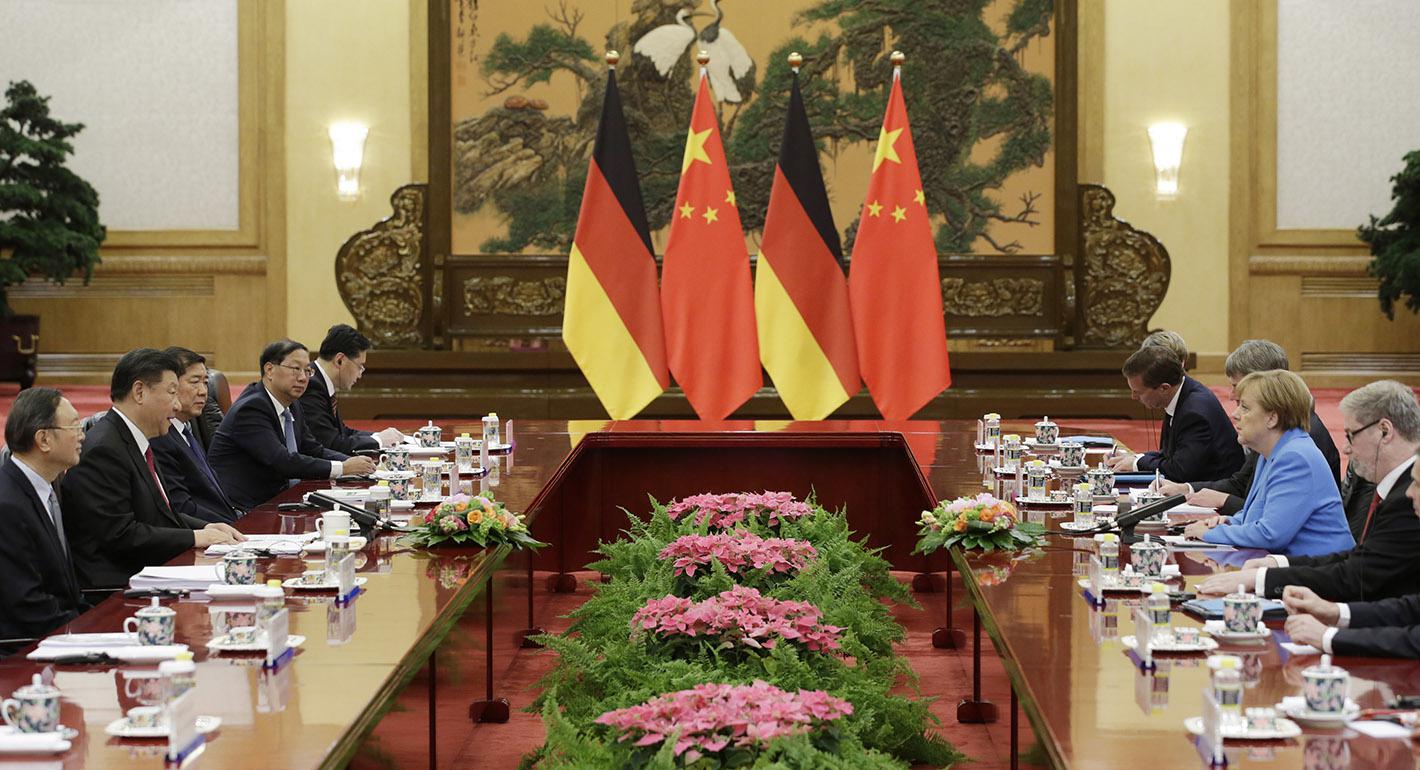
As the United States confronts China more directly, Merkel is exploring deeper cooperation with Xi. Economic upheaval from the coronavirus could reinforce the temptation in Berlin to keep Beijing close.
Noah Barkin
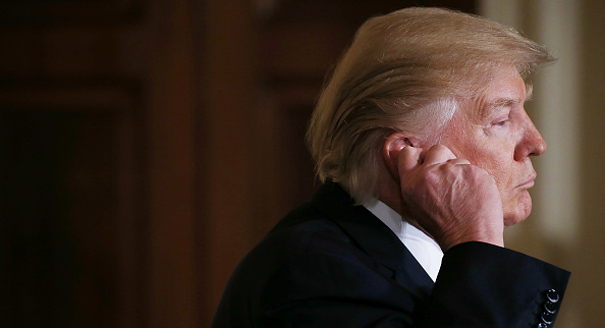
The 2017 G20 summit exposed the United States' isolation on the key issues of climate and trade.

Marc Pierini
A selection of experts answer a new question from Judy Dempsey on the foreign and security policy challenges shaping Europe’s role in the world.
Judy Dempsey
Europe may need to start planning for defense of the continent without the United States, but first it should do its utmost to prevent Trump from turning his back on NATO.
Tomáš Valášek
Citizens across Europe are taking to the streets and the Internet to counter the Euroskeptic and anti-immigrant messages of far-right populists and nationalists.
Caroline de Gruyter