

Research
- +10
Rosa Balfour, Frances Z. Brown, Yasmine Farouk, …
{
  "authors": [
    "Moisés Naím"
  ],
  "type": "legacyinthemedia",
  "centerAffiliationAll": "",
  "centers": [
    "Carnegie Endowment for International Peace"
  ],
  "collections": [],
  "englishNewsletterAll": "",
  "nonEnglishNewsletterAll": "",
  "primaryCenter": "Carnegie Endowment for International Peace",
  "programAffiliation": "",
  "programs": [],
  "projects": [],
  "regions": [
    "North America",
    "South America"
  ],
  "topics": [
    "Economy"
  ]
}
Source: Getty
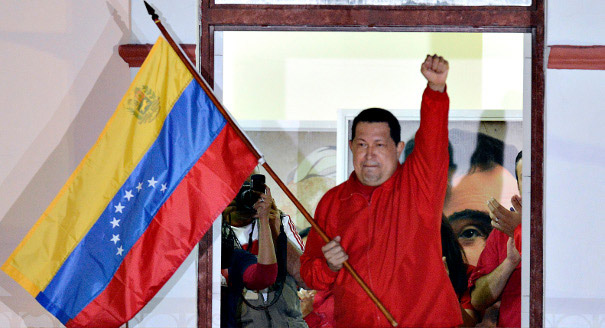
In the aftermath of Hugo Chávez’s latest victory in Venezuela, four main issues are likely to grab the attention of the government and the nation.
Source: El País

Hugo Chávez’s health. The president is not well. Multiple surgeries and repeated treatments with radiation and chemotherapy have failed to cure him. In top official circles in several countries the consensus is that the Venezuelan president’s health is precarious, and that the likelihood that he will be cured is small. The evolution of his health will mold the country’s political evolution in the next few years. Biology may be more important than ideology in shaping Venezuela’s path in coming years. The president knows this; so does his inner circle.
Succession anxieties. Hugo Chávez has just designated as vice president Nicolás Maduro, one of his closest collaborators. In view of the leader’s precarious health, this appointment is now more important than in the past, and it is safe to assume that succession was one of the president’s considerations in making this decision. But Maduro is not the only one with the opportunity, and the desire, to succeed Chávez. Several others among the president’s allies have the credentials, the money and the links with military and political groups and other influential international actors. These other aspirants will not passively watch as one of their contenders takes over from the president. They know that the pattern set by Hugo Chávez implies that once in power you do whatever necessary to keep it. And that it is possible to hold on to it for decades. What is at stake is the biggest political prize in the Americas. Under Hugo Chavez’s rules, not even the president of the United States has so much unchecked power as the Venezuelan head of state.
The president’s finger or the people’s votes? Who gets to decide who will rule Venezuela if Hugo Chavez can’t? The Venezuelan Constitution establishes that if the president cannot carry out his functions, elections must be held. Given the circumstances, this is a very inconvenient law for Hugo Chávez. In his 13 years in power, whenever a law has been inconvenient to him, the president has changed it. There is no reason to expect that he will not do the same in this case. In the president’s absence, the ideal outcome for Chávez and for the continuance of his political project would be for the vice-president (unilaterally picked by the president) to conclude the term until 2019.
What to do? In view of the fact that President Chavez controls the National Assembly, the Supreme Court and every other center of power, if he decides to change the Constitution it is hard to see how civil society and other political forces can prevent it. The only hope is that democratic leaders throughout the world will raise their voices in protest, demanding that Chávez renounce his dynastic pretensions and allow his successor to be elected by the people, rather than personally appointing him. It will be an opportunity for, say, Dilma Rousseff or Lula da Silva to break the deafening silence that they have maintained concerning Hugo Chavez’s penchant for undemocratic practices. It is more than high time to stop congratulating him, and to start demanding that he respects the basic principles of democracy that these two leaders claim to cherish.

Distinguished Fellow
Moisés Naím is a distinguished fellow at the Carnegie Endowment for International Peace, a best-selling author, and an internationally syndicated columnist.
Recent Work



Rosa Balfour, Frances Z. Brown, Yasmine Farouk, …
Moisés Naím
Carnegie does not take institutional positions on public policy issues; the views represented herein are those of the author(s) and do not necessarily reflect the views of Carnegie, its staff, or its trustees.

The Plaza Accord was not an externally imposed punishment of Japan but part of a broader restructuring that Japanese economists and policymakers themselves recognized was necessary. Its effects were undermined, however, when Tokyo responded to the resulting slowdown with policies that exacerbated investment, credit expansion, and the very imbalances the adjustment was intended to resolve.

Michael Pettis
China’s banking crisis in the 2000s was resolved by transferring the costs to households through financial repression—a decision that recapitalized the banks while exacerbating the structural imbalances that continue to shape the Chinese economy today.
Michael Pettis

In the latest Five-Year Plan, the Chinese president cements the shift to an innovation-driven economy over a consumption-driven one.

Damien Ma

Rather than climate ambitions, compatibility with investment and exports is why China supports both green and high-emission technologies.

Mathias Larsen
“Involution” is a new word for an old problem, and without a very different set of policies to rein it in, it is a problem that is likely to persist.
Michael Pettis