

Q&A
- +1
Sheena Chestnut Greitens, Oriana Skylar Mastro, Yukon Huang, …
{
  "authors": [
    "Yukon Huang"
  ],
  "type": "legacyinthemedia",
  "centerAffiliationAll": "dc",
  "centers": [
    "Carnegie Endowment for International Peace",
    "Carnegie China"
  ],
  "collections": [],
  "englishNewsletterAll": "asia",
  "nonEnglishNewsletterAll": "",
  "primaryCenter": "Carnegie China",
  "programAffiliation": "AP",
  "programs": [
    "Asia"
  ],
  "projects": [
    "Carnegie Oil Initiative"
  ],
  "regions": [
    "East Asia",
    "China"
  ],
  "topics": [
    "Economy"
  ]
}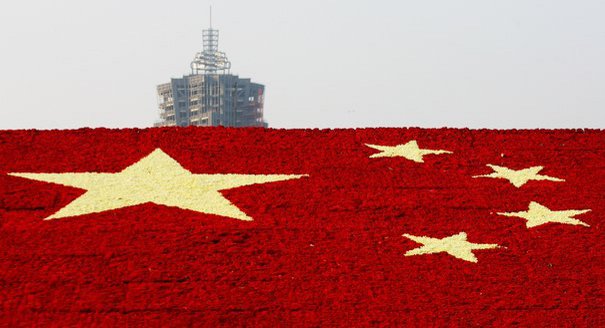
Source: Getty
China will become more "normal" in 2013, moving away from its unbalanced, unsustainable, and uncoordinated economic structure. However, this will make China more susceptible to business cycles and could undermine its current authoritarian model.
Source: Financial Times

China was an abnormal economy with its state-led capitalist approach that produced double-digit growth rates, no major financial crises and average wage increases of 12 per cent annually for decades. But the drivers of this impressive economic transformation will no longer be available to the new leadership. Beijing cannot simply open the monetary floodgates to stimulate the economy as was done in previous downturns.
Rates of growth in the 7-8 per cent range will become the norm and the key question is whether growth will be of higher quality – more balanced, sustainable and coordinated?China is in fact already rebalancing – internally, externally and spatially. Internally, if consumption continues to increase at 9 per cent annually and investment growth declines from over 15 per cent to 6-7 per cent, the consumption and investment shares of the economy will become more “normal”. Externally, the current account balance will also continue to moderate as domestic demand increases with urbanisation and investors diversify by shifting more of their funds abroad. China will also become spatially more balanced as the interior will grow much faster than the coast and urbanisation will accelerate.
China’s growth can also be more financially and environmentally sustainable with further reforms. Actions to strengthen the banking sector are already underway but its fiscal system needs to be transformed to take on more responsibility for channeling resources. And China’s Five Year Plan provides a platform to achieve environmental sustainability by sharply increasing energy efficiency and curbing pollution.
In a normal market-driven economy, coordination is less about the state managing all key activities but more about strengthening its regulatory role to give the private sector room to spur innovation and efficiency.
But as a normal economy, China also becomes more vulnerable to business cycles. It can no longer maintain stability by controlling key economic prices such as interest and exchange rates and limiting capital movements. Its vested interests will be grounded less in the links between the Communist party and the state-owned banks and enterprises but as in the west China will become more vulnerable to private interests and “crony capitalism”.
Without state-led investment taking the lead, the economy will be susceptible to Keynesian risks of lack of demand. Corporate profits will be squeezed by higher interest rates and rising wages. Efficiency will be more important than capacity in the future.
Normality will also undermine the authoritarian nature of the old model which served China well when the priority was simply to push out more infrastructure investment and ensure that the requisite resources were available. China will now need a less heavy-handed administrative system that will promote entrepreneurship All this will call into question the existing governance system and may well prove to be the catalyst for far-reaching political reforms.

Senior Fellow, Asia Program
Huang is a senior fellow in the Carnegie Asia Program where his research focuses on China’s economy and its regional and global impact.
Recent Work


Sheena Chestnut Greitens, Oriana Skylar Mastro, Yukon Huang, …

Yukon Huang, Isaac B. Kardon, Matt Sheehan

China’s political future will be shaped between now and next October. As the Communist Party enters its intense “campaign season” to prepare for a major political transition in 2027, reading Beijing's actions and responses may become more difficult as domestic politics weigh on its behavior more than usual.

Damien Ma

China has showcased its engineering prowess with small modular reactor demonstration projects. But turning these technological achievements into commercial success will be a greater challenge.

Tong Zhao

The Plaza Accord was not an externally imposed punishment of Japan but part of a broader restructuring that Japanese economists and policymakers themselves recognized was necessary. Its effects were undermined, however, when Tokyo responded to the resulting slowdown with policies that exacerbated investment, credit expansion, and the very imbalances the adjustment was intended to resolve.

Michael Pettis

The nuclear relationship between China and the United States is increasingly shaped by widening perception gaps rather than deliberate strategic design.
Tong Zhao
China’s banking crisis in the 2000s was resolved by transferring the costs to households through financial repression—a decision that recapitalized the banks while exacerbating the structural imbalances that continue to shape the Chinese economy today.
Michael Pettis