

In The Media
Lahcen Achy
{
  "authors": [
    "Lahcen Achy"
  ],
  "type": "legacyinthemedia",
  "centerAffiliationAll": "",
  "centers": [
    "Carnegie Endowment for International Peace",
    "Malcolm H. Kerr Carnegie Middle East Center"
  ],
  "collections": [],
  "englishNewsletterAll": "",
  "nonEnglishNewsletterAll": "",
  "primaryCenter": "Malcolm H. Kerr Carnegie Middle East Center",
  "programAffiliation": "",
  "programs": [],
  "projects": [],
  "regions": [
    "Maghreb"
  ],
  "topics": [
    "Political Reform",
    "Economy"
  ]
}
Source: Getty
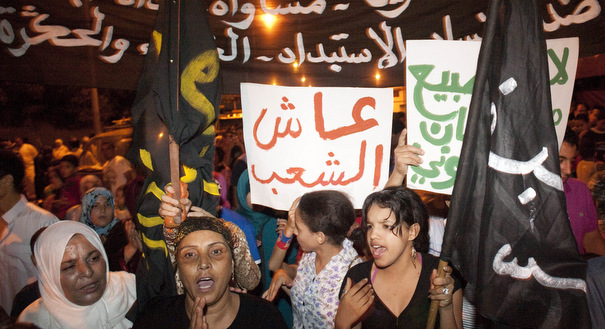
The year 2012 began optimistically in Morocco, with a new government and constitution coming into force. But 2012 did not live up to expectations, and major reforms are still needed.
Source: Al-Hayat

The Moroccan economy grew at a rate of 5 percent in 2011 and was projected to grow 4.8 percent last year in the government’s 2012 Public Finance Act. But according to the latest estimates, economic growth rates did not exceed 3 percent in 2012 because of a decline in agricultural production, especially grain production, which fell by 40 percent as a result of poor rainfall. The government’s budget deficit also deteriorated further and is expected to have fallen from 6 percent of GDP in 2011 to around 7 percent by the end of 2012.
The current account deficit grew as well, peaking at around 10 percent of GDP in 2012. This was the result of continuously increasing prices for oil and consumer goods, the weak performance of Moroccan exports, and drops in tourism revenues and remittances from Moroccans living abroad.These conditions resemble the Moroccan economy of the 1980s—an economic landscape that triggered austerity policies carried out under a structural adjustment program and that left bad memories in Moroccans’ minds.
It is not fair to blame the Justice and Development Party alone for the economy’s underperformance in 2012. This result is the direct outcome of decades of economic policies that were dependent on the distribution of rents and privileges to a minority of businessmen. This prevented the development of a diversified and competitive economy strong enough to withstand external upheavals.
Moreover, despite Morocco’s new constitution, the Justice and Development Party has faced numerous obstacles that prevented it from fully exercising its executive powers to fight the rentier economy and corruption. This is mainly a result of the strong direct and indirect interference that monarchical circles continue to exert in key decisionmaking processes.
And because the government is a coalition that includes three other parties—which all formed part of previous governments—the Justice and Development Party was not solely responsible for managing public affairs. Cooperation between the coalition government’s different camps was missing, but making reforms requires a cohesive government that can unite in the face of resistance from those who benefit from the status quo.
However, the Justice and Development Party is still accountable for the economy’s poor results in 2012, for two main reasons.
First, the party’s promises to the electorate were made despite its prior knowledge of the vulnerability of the Moroccan economy.
Second, the political and institutional obstacles to moving from a nepotistic, rent-based economy to one based on production and competition requires a strong and comprehensive approach, alternative policies, and new legislation. Trumpeting slogans and publicizing lists of those who benefit from rents and privileges under the current legislation is not enough to make a difference. Such an approach has diverted the government’s focus and may hinder the reform process.
The challenges facing the government in 2013 remain considerable. They include structural economic imbalances, the absence of real opportunities to reduce and reallocate public spending, and the limited financial resources available to the government, which relied on $1.5 billion in external loans during the last weeks of 2012.
Reforming the subsidy system for fuel and other consumer goods is another key issue that can no longer be postponed. In 2012, the subsidies budget exceeded $5 billion, accounting for a full 22 percent of the government’s overall budget—compared with just 16 percent for the government’s capital expenditures.
These challenges come in the midst of declining confidence among households and investors alike. Household confidence indicators saw a 9 percent drop during the third quarter of 2012 compared with the same period in 2011. This indicator is of paramount importance, as household consumption—which accounts for almost 60 percent of total demand in Morocco—has always been a key engine of economic growth.
On the investment front, the stock market index fell by 15 percent in 2012. Meanwhile, banking credit for private sector has declined over the past six months, following a significant increase of over 10 percent between 2010 and 2011.
In its 2013 Public Finance Act, the government forecast that the economy would grow 4.5 percent in 2013. But taken together, the facts of 2012 indicate that the current projection will prove to be overly optimistic.
This article was originally published in Al-Hayat in Arabic.

Former Nonresident Senior Associate, Middle East Center
Achy is an economist with expertise in development, institutional economics, trade, and labor and a focus on the Middle East and North Africa.
Recent Work
Lahcen Achy
Lahcen Achy
Carnegie does not take institutional positions on public policy issues; the views represented herein are those of the author(s) and do not necessarily reflect the views of Carnegie, its staff, or its trustees.

China has showcased its engineering prowess with small modular reactor demonstration projects. But turning these technological achievements into commercial success will be a greater challenge.

Tong Zhao

The Plaza Accord was not an externally imposed punishment of Japan but part of a broader restructuring that Japanese economists and policymakers themselves recognized was necessary. Its effects were undermined, however, when Tokyo responded to the resulting slowdown with policies that exacerbated investment, credit expansion, and the very imbalances the adjustment was intended to resolve.

Michael Pettis
China’s banking crisis in the 2000s was resolved by transferring the costs to households through financial repression—a decision that recapitalized the banks while exacerbating the structural imbalances that continue to shape the Chinese economy today.
Michael Pettis

In the latest Five-Year Plan, the Chinese president cements the shift to an innovation-driven economy over a consumption-driven one.

Damien Ma

Rather than climate ambitions, compatibility with investment and exports is why China supports both green and high-emission technologies.

Mathias Larsen