

Research
- +10
Rosa Balfour, Frances Z. Brown, Yasmine Farouk, …
{
  "authors": [
    "Moisés Naím"
  ],
  "type": "legacyinthemedia",
  "centerAffiliationAll": "",
  "centers": [
    "Carnegie Endowment for International Peace"
  ],
  "collections": [],
  "englishNewsletterAll": "",
  "nonEnglishNewsletterAll": "",
  "primaryCenter": "Carnegie Endowment for International Peace",
  "programAffiliation": "",
  "programs": [],
  "projects": [],
  "regions": [
    "North America",
    "South America"
  ],
  "topics": [
    "Political Reform",
    "Economy"
  ]
}
Source: Getty
Since 1983, Venezuela has suffered 10 massive devaluations and during Hugo Chávez’s presidency, the bolivar has been devalued by 992 percent.
Source: Financial Times
In most of Latin America, February means carnival, and carnival means costumes and dancing in the streets. Venezuela is no exception, save for the fact that carnival also means a devaluation of the currency is highly possible. Since 1983, the country has suffered 10 massive devaluations. Seven were announced during the carnival holidays. It happened again last week, when the government announced a devaluation of more than 30 per cent against the US dollar. This means that during Hugo Chávez’s presidency, the bolivar has been devalued by 992 per cent.
The measure will fall short of correcting the country’s profound macroeconomic imbalances. The currency is woefully misaligned. Before the carnival devaluation, a burger at McDonald’s cost $12, two pounds of chicken $13 and a Volkswagen Golf $45,000. Buying a car – even if you can afford those exorbitant prices – is very difficult. Shortages are common for many staples – rice, oil, flour, milk, medicines and toilet paper – and cars. Even would-be buyers with money in hand need to join long waiting lists.Once they succeed, however, they become the beneficiary of another huge distortion, this time in the other direction. At 12 cents a gallon, Venezuelans can fill their tanks with the world’s cheapest petrol, thanks to a subsidy costing $21bn a year – 7 per cent of gross domestic product.
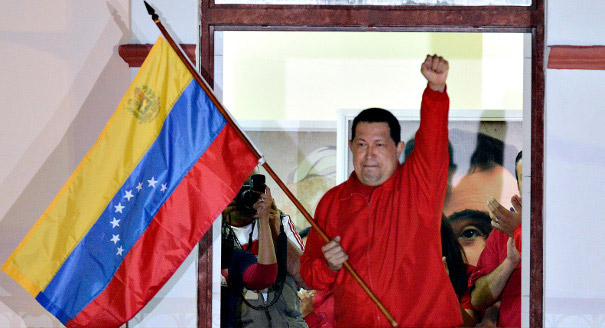
The devaluation was a powerful reminder that, sooner or later, the economic laws of gravity end up determining political calculations. There is rarely a good political moment to devalue, but doing so while Mr Chávez is so sick he could not even attend his inauguration and has not been seen or heard in public for more than two months, has to go down as one of the worst-timed devaluations ever.
And yet, it happened. The imperative to devalue was driven by a combination of bad policies and ideological necrophilia: love for ideas that should be long dead, and have been tried before with disastrous consequences.
Consider the legacy of the devaluation of the bolivar since Mr Chávez came to power in 1999. Easy credit and public spending has fuelled booming demand, while state controls have choked supply. In 2012 alone the money supply expanded 62 per cent, while public spending grew 52 per cent. Meanwhile, controls on prices, imports, foreign exchange and interest rates ensured that supply fell behind demand. The result is one of the world’s highest inflation rates – currently more than 20 per cent and set to rise higher.
Ideological zealotry and a penchant for grabbing private companies and putting them in the hands of inept or corrupt political operatives has also destroyed what was left of the export capacity of the country. Of the $100bn of Venezuelan exports a year, only 3 per cent are non-oil products – and the bulk of these are from state-owned companies. That is why this devaluation will not boost exports. Even with a more competitive exchange rate there is virtually no export capacity left.
What, then, lies ahead for this long-suffering country? More economic turmoil will feed social unrest and political conflict. Most informed observers doubt Mr Chávez will be able to govern again. While the process through which his successor will be selected remains unclear, the name of the next Venezuelan leader is already known: Nicolas Maduro, the vice-president and heir anointed by Mr Chávez in his last television appearance, in December. But as an acting president or as an elected one, Mr Maduro will have to deal with the steepest decline in living standards and the harshest economic constraints that the country has suffered in decades.
Mr Maduro and his allies have already ratcheted up the polarising rhetoric that has served Mr Chávez so well. Shortages are the fault of private sector speculators and the instability is stoked by the antipatriotic opposition in cahoots with foreign enemies, they say. More expropriations, stricter controls and a more aggressive repression of opposing voices are to be expected. But repression and polarising diatribes may not be enough to retain popular support if they are not soaked in massive public spending. And Mr Maduro not only lacks Mr Chávez’s charisma – he will also lack the money.

Distinguished Fellow
Moisés Naím is a distinguished fellow at the Carnegie Endowment for International Peace, a best-selling author, and an internationally syndicated columnist.
Recent Work



Rosa Balfour, Frances Z. Brown, Yasmine Farouk, …
Moisés Naím
Carnegie does not take institutional positions on public policy issues; the views represented herein are those of the author(s) and do not necessarily reflect the views of Carnegie, its staff, or its trustees.

The Plaza Accord was not an externally imposed punishment of Japan but part of a broader restructuring that Japanese economists and policymakers themselves recognized was necessary. Its effects were undermined, however, when Tokyo responded to the resulting slowdown with policies that exacerbated investment, credit expansion, and the very imbalances the adjustment was intended to resolve.

Michael Pettis
China’s banking crisis in the 2000s was resolved by transferring the costs to households through financial repression—a decision that recapitalized the banks while exacerbating the structural imbalances that continue to shape the Chinese economy today.
Michael Pettis

In the latest Five-Year Plan, the Chinese president cements the shift to an innovation-driven economy over a consumption-driven one.

Damien Ma

Rather than climate ambitions, compatibility with investment and exports is why China supports both green and high-emission technologies.

Mathias Larsen
“Involution” is a new word for an old problem, and without a very different set of policies to rein it in, it is a problem that is likely to persist.
Michael Pettis