

Paper
George Perkovich
{
  "authors": [
    "George Perkovich"
  ],
  "type": "legacyinthemedia",
  "centerAffiliationAll": "dc",
  "centers": [
    "Carnegie Endowment for International Peace"
  ],
  "collections": [
    "U.S. Nuclear Policy"
  ],
  "englishNewsletterAll": "ctw",
  "nonEnglishNewsletterAll": "",
  "primaryCenter": "Carnegie Endowment for International Peace",
  "programAffiliation": "NPP",
  "programs": [
    "Nuclear Policy"
  ],
  "projects": [],
  "regions": [
    "North America",
    "United States"
  ],
  "topics": [
    "Nuclear Policy"
  ]
}
Source: Getty
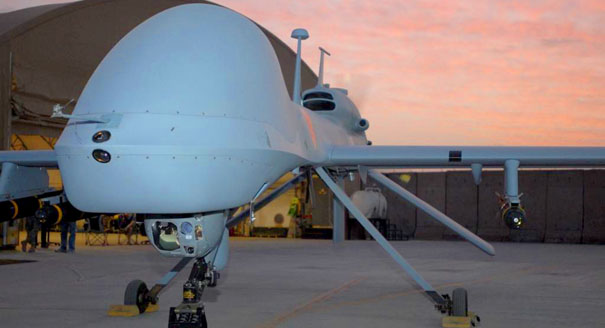
The drone debate should stimulate more careful thinking about the potential use of nuclear weapons.
Source: Politico
President Barack Obama is preparing to update the agenda he announced in Prague four years ago to stem nuclear proliferation and reduce the arsenals of nuclear weapons around the world. Proponents and opponents will fixate on the number of nuclear weapons he will propose to cut in the U.S. and Russian arsenals. But any such number will be marginal. More important are the criteria for using nuclear weapons, especially first use. Here the recent debate over drones can be instructive.
Democratic and Republican senators are pounding Obama and his nominee for CIA director, John Brennan, for more information on the decision-making process for launching drones against individuals. Yet the administration has been more transparent about the circumstances in which it uses drones than it or any other administration has been about the criteria for using nuclear weapons. The drone debate should stimulate more careful thinking about the potential use of nuclear weapons.
Ten months ago, Brennan gave the Obama administration’s first detailed exposition of the policy behind “targeted” drone strikes. Brennan laid out these principles because a host of other nations are seeking drone technology and some will succeed. The United States is setting precedents, so Brennan said, “If we want other nations to adhere to high and rigorous standards for their use, then we must do so as well. We cannot expect of others what we will not do ourselves.”The United States follows the “basic principles of the law of war,” which require that attacks must be necessary, must spare civilians from harm and not create disproportionate damage. Drone strikes, Brennan said, are necessary insofar as their targets have definite military value and cannot be reached by other means without causing more loss of life and property. They are discriminating, in Brennan’s words, respecting “the idea that only military objectives may be intentionally targeted and that civilians are protected from being intentionally targeted.” Targeted strikes meet the just-war criterion of proportionality as well — “the anticipated collateral damage” of an action cannot far exceed the expected military advantage to be gained.
These principles are central to the just conduct of war, as is respect for humanitarian law. The debate over these issues is vital to America’s internal identity and well-being, and to its standing in the world. The care being taken in deciding when to use weapons as precise and sparing of civilian casualties as drones, makes it remarkable that no such debate is being conducted over the use of infinitely more destructive and indiscriminate nuclear weapons.
The United States now deploys about 2,000 nuclear weapons of various types. Most of these weapons are targeted at their Russian counterparts.
In order to destroy Russia’s nuclear weapons before they could destroy us, the United States relies on options to strike first. Russia knows this, so has incentives to launch its nuclear weapons before our weapons arrive to destroy theirs. In a crisis, both countries would feel great pressure to strike first, which in turn makes both vulnerable to false warnings and other miscalculations.
Neither has done like China and relied on deterrence through retaliation with a relatively small arsenal. China has only about 60 nuclear weapons that could hit the United States, and a policy of no first use. (North Korea, the other potential target of U.S. nuclear forces, may have up to 10 weapons but no missiles that can reach the United States.) Chinese strategists worry, however, that the United States is seeking a combination of nuclear weapons, long-range conventional strike weapons and missile defenses to be able to conduct a disarming first strike against it.
On what basis could the United States object if China and other potential nuclear competitors sought to mimic our nuclear doctrine and build up their nuclear forces so as to threaten first strikes? Would we not rather avoid this? Under what circumstances would the first use of nuclear weapons be the only means of achieving a necessary military objective and be discriminating in their effects? How would the first use of nuclear weapons conform to the high and rigorous standards of proportionality that the United States sets for using force? These questions are being asked when it comes to drones but not U.S. nuclear weapons.
When the president renews his nuclear agenda in the coming weeks, he should clarify that the only legitimate circumstance for using nuclear weapons would be as a last resort in response to threats to the survival of the United States or if its allies are threatened. He should call on all states to reaffirm the 67-year taboo against the first use of nuclear weapons and the corollary obligation not to threaten the survival of other nations.
As long as nuclear weapons remain, they can be used. And as long as this is the case, “We cannot expect of others what we will not do ourselves.”

Japan Chair for a World Without Nuclear Weapons, Senior Fellow
George Perkovich is the Japan Chair for a World Without Nuclear Weapons and a senior fellow in the Carnegie Endowment for International Peace’s Nuclear Policy Program. He works primarily on nuclear deterrence, nonproliferation, and disarmament issues.
Recent Work
George Perkovich
George Perkovich
Carnegie does not take institutional positions on public policy issues; the views represented herein are those of the author(s) and do not necessarily reflect the views of Carnegie, its staff, or its trustees.

But their "principal to principal" model will only be as effective as the political strength of each leader back home.

Damien Ma

U.S. unpredictability has allowed China to capitalize on its positioning as the “responsible great power”. Paradoxically, the more China wins the perception game, the more likely expectations will rise for Beijing to deliver not just words but to demonstrate with its deeds.

Chong Ja Ian

For Malaysia, the conjunction that works is “and” not “or” when it comes to the United States and China.

Elina Noor

Regulation, not embargo, allows Beijing to shape how other countries and firms adapt to its terms.

Alvin Camba
Beijing believes that Washington is overestimating its own leverage and its ability to handle the trade war’s impacts.


Rick Waters, Sheena Chestnut Greitens