

For Malaysia, the conjunction that works is “and” not “or” when it comes to the United States and China.
Elina Noor
{
"authors": [
"Paul Haenle",
"Ian Bremmer",
"Jin Canrong",
"Wang Yizhou",
"Ritula Shah"
],
"type": "legacyinthemedia",
"centerAffiliationAll": "",
"centers": [
"Carnegie Endowment for International Peace",
"Carnegie China"
],
"collections": [
"U.S.-China Relations",
"China’s Foreign Relations"
],
"englishNewsletterAll": "",
"nonEnglishNewsletterAll": "",
"primaryCenter": "Carnegie China",
"programAffiliation": "",
"programs": [],
"projects": [],
"regions": [
"East Asia",
"China"
],
"topics": [
"Security",
"Global Governance"
]
}Source: Getty
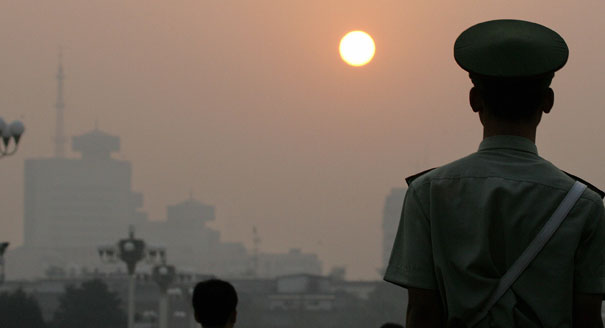
North Korean nuclear issues, territorial disputes, and the relationship with the United States are the key issues affecting China’s foreign policy in 2013.
Source: BBC
Speaking to BBC Radio 4 The World Tonight, Carnegie’s Paul Haenle, Eurasia Group’s Ian Bremmer, Peking University’s Wang Yizhou, and Renmin University’s Jin Canrong explained that strategic mistrust and a lack of understanding between China and the United States and China and Japan could have far-reaching repercussions for the rest of the world if not addressed. Territorial disputes between China and neighboring countries like Vietnam are another pressure affecting China’s foreign relations.
As China grows to become a more important global player, defining the country’s foreign policy and the way in which it wants to be perceived in the region and beyond will become an increasingly important task for China’s policymakers. Equally, they added, it still remains unclear how much China considers current global norms and standards to be in its best interest and whether China will fulfill the role of the “responsible stakeholder” so desired by other major powers.
Former Maurice R. Greenberg Director’s Chair, Carnegie China
Paul Haenle held the Maurice R. Greenberg Director’s Chair at the Carnegie Endowment for International Peace and is a visiting senior research fellow at the East Asian Institute, National University of Singapore. He served as the White House China director on the National Security Council staffs of former presidents George W. Bush and Barack Obama.
Ian Bremmer
Jin Canrong
Wang Yizhou
Ritula Shah
Carnegie does not take institutional positions on public policy issues; the views represented herein are those of the author(s) and do not necessarily reflect the views of Carnegie, its staff, or its trustees.
For Malaysia, the conjunction that works is “and” not “or” when it comes to the United States and China.
Elina Noor
ASEAN needs to determine how to balance perpetuating the benefits of technology cooperation with China while mitigating the risks of getting caught in the crosshairs of U.S.-China gamesmanship.
Elina Noor
In July 2025, Vietnam and China held their first joint army drill, a modest but symbolic move reflecting Hanoi’s strategic hedging amid U.S.–China rivalry.
Nguyễn Khắc Giang
Regulation, not embargo, allows Beijing to shape how other countries and firms adapt to its terms.
Alvin Camba
Rather than climate ambitions, compatibility with investment and exports is why China supports both green and high-emission technologies.
Mathias Larsen







