

Article
Pierre Goldschmidt
{
  "authors": [
    "Pierre Goldschmidt"
  ],
  "type": "legacyinthemedia",
  "centerAffiliationAll": "dc",
  "centers": [
    "Carnegie Endowment for International Peace"
  ],
  "collections": [
    "Iranian Proliferation",
    "U.S. Nuclear Policy"
  ],
  "englishNewsletterAll": "ctw",
  "nonEnglishNewsletterAll": "",
  "primaryCenter": "Carnegie Endowment for International Peace",
  "programAffiliation": "NPP",
  "programs": [
    "Nuclear Policy"
  ],
  "projects": [],
  "regions": [
    "North America",
    "United States",
    "Middle East",
    "Iran"
  ],
  "topics": [
    "Nuclear Policy"
  ]
}
Source: Getty
There’s mounting concern over the Iranian nuclear program. Is Tehran simply playing cat and mouse with the international community and buying time until it is ready to develop a nuclear weapon?
Source: BBC
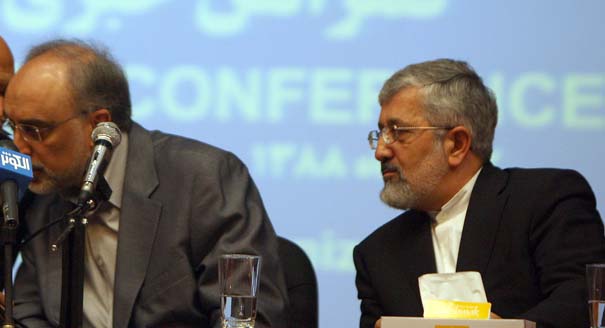
Carnegie's Pierre Goldschmidt talked to the BBC's File on 4 reporter Rob Broomby about the latest developments on the Iran nuclear issue.
There's mounting concern over the Iranian nuclear programme. Is Tehran simply playing cat and mouse with the international community and buying time until it is ready to develop a nuclear weapon? Evidence is emerging that Iran is co-operating with North Korea, a country which has already developed its own weapon. The latest report from the UN's international watchdog, the IAEA, is due out next month - but has the IAEA been strong enough in its dealings with Tehran and Pyongyang?
Reporter Rob Broomby charts the history of concealment of Iran's nuclear activities and its refusal to abandon the most controversial parts of its programme, despite numerous UN Security Council resolutions and a raft of sanctions. In a detailed interview with File on 4, Iran's ambassador dealing with nuclear matters, Ali Ashgar Soltanieh, denies his country is a "serial offender". But can protestations of innocence be taken seriously when Iran still refuses inspectors access to key sites and documents?
The programme also examines the role of the IAEA in dealing with Iran and hears from former nuclear inspectors, ex-Whitehouse officials, diplomats and experts. Is the Agency up to the job of preventing states from acquiring the bomb? Pierre Goldschmidt told the BBC that the IAEA needs more clout to do its job. "The first thing to do to prevent further nuclear preparation is to increase the authority and the means of the IAEA," Goldschmidt said.
Former Nonresident Senior Associate, Nuclear Policy Program
Goldschmidt was a nonresident senior associate at the Carnegie Endowment.
Recent Work
Pierre Goldschmidt
Pierre Goldschmidt
Carnegie does not take institutional positions on public policy issues; the views represented herein are those of the author(s) and do not necessarily reflect the views of Carnegie, its staff, or its trustees.

But their "principal to principal" model will only be as effective as the political strength of each leader back home.

Damien Ma

U.S. unpredictability has allowed China to capitalize on its positioning as the “responsible great power”. Paradoxically, the more China wins the perception game, the more likely expectations will rise for Beijing to deliver not just words but to demonstrate with its deeds.

Chong Ja Ian
For Malaysia, the conjunction that works is “and” not “or” when it comes to the United States and China.

Elina Noor
Regulation, not embargo, allows Beijing to shape how other countries and firms adapt to its terms.
Alvin Camba
Beijing believes that Washington is overestimating its own leverage and its ability to handle the trade war’s impacts.

Rick Waters, Sheena Chestnut Greitens