

Commentary
Yukon Huang, Isaac B. Kardon, Matt Sheehan
{
  "authors": [
    "Yukon Huang"
  ],
  "type": "legacyinthemedia",
  "centerAffiliationAll": "dc",
  "centers": [
    "Carnegie Endowment for International Peace"
  ],
  "collections": [],
  "englishNewsletterAll": "asia",
  "nonEnglishNewsletterAll": "",
  "primaryCenter": "Carnegie Endowment for International Peace",
  "programAffiliation": "AP",
  "programs": [
    "Asia"
  ],
  "projects": [],
  "regions": [
    "East Asia",
    "China"
  ],
  "topics": [
    "Economy",
    "Trade"
  ]
}
Source: Getty
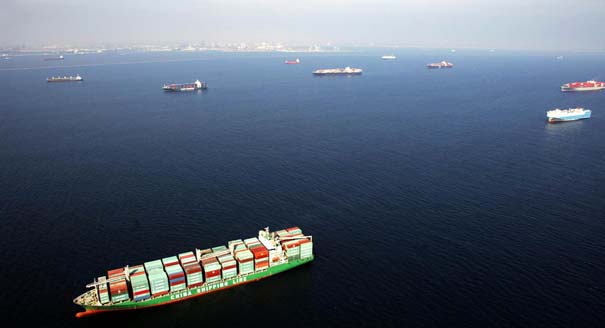
China is giving more consideration to the possibility of joining the Trans-Pacific Partnership.
Source: Channel News Asia
The process of reforming and opening up the Chinese economy has accelerated under the new leadership, said Carnegie's Yukon Huang, speaking on Channel NewsAsia. The reappointment of Zhou Xiaochuan as central bank director sends a positive signal in this regard, and specific policies to liberalize interest rates, encourage more capital inflows, and open entry to foreign banks have already been introduced.
With respect to trade liberalization, Huang said that perspectives on the Trans-Pacific Partnership deal are shifting in China. Beijing realizes that of the three major trade agreements under negotiation (the TPP, the ASEAN-led Regional Comprehensive Economic Parternship, and the U.S.-EU Transatlantic Trade and Investment Partnership), the TPP discussions are most advanced and have potentially important impacts on international trade norms. Several sensitive issues that are of interest to China are being negotiated in the TPP, including treatment of state-owned enterprises, government procurement policy, and labor and environmental standards.
It was previously thought that China was not ready to move on these issues, Huang said, but leaders in Beijing increasingly realize that every country has sensitive trade issues. He cited the example of protected agricultural sectors in Canada, the United States, and Japan, all members of the TPP negotiations. Developing countries are much more inclined to support open trade regimes than they were a decade ago, Huang added. This gives China more confidence to enter the TPP, as its policies are no more restrictive than others and it is even more keen on open trade.

Senior Fellow, Asia Program
Huang is a senior fellow in the Carnegie Asia Program where his research focuses on China’s economy and its regional and global impact.
Recent Work

Yukon Huang, Isaac B. Kardon, Matt Sheehan
Yukon Huang, Genevieve Slosberg

China’s banking crisis in the 2000s was resolved by transferring the costs to households through financial repression—a decision that recapitalized the banks while exacerbating the structural imbalances that continue to shape the Chinese economy today.

Michael Pettis

Chinese biotech companies have been on the receiving end of U.S. economic coercion. Yet their responses have differed significantly because firm and state interests are not uniformly aligned. For Washington, treating all Chinese tech firms the same, irrespective of their actual interests, risks pushing them farther into Beijing’s corner.

Xue Gong

China’s latest energy plan explicitly calls for integrating data centers into the electricity system, particularly connecting them to green energy. It appears Beijing wants to use compute as a source of domestic demand to absorb renewables excess capacity.

Damien Ma

But their "principal to principal" model will only be as effective as the political strength of each leader back home.
Damien Ma

U.S. unpredictability has allowed China to capitalize on its positioning as the “responsible great power”. Paradoxically, the more China wins the perception game, the more likely expectations will rise for Beijing to deliver not just words but to demonstrate with its deeds.

Chong Ja Ian