

Paper
Christopher S. Chivvis, Rohan Mukherjee, Milan Vaishnav
{
  "authors": [
    "Milan Vaishnav"
  ],
  "type": "legacyinthemedia",
  "centerAffiliationAll": "dc",
  "centers": [
    "Carnegie Endowment for International Peace"
  ],
  "collections": [],
  "englishNewsletterAll": "ctw",
  "nonEnglishNewsletterAll": "",
  "primaryCenter": "Carnegie Endowment for International Peace",
  "programAffiliation": "SAP",
  "programs": [
    "South Asia"
  ],
  "projects": [],
  "regions": [
    "South Asia",
    "India"
  ],
  "topics": [
    "Political Reform",
    "Economy"
  ]
}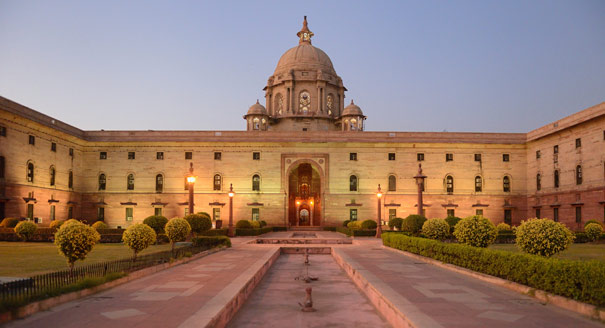
Source: Getty
It is easy to be awestruck by the sweeping changes that have transformed India’s political economy in recent decades. But these changes, paradoxically, are taking place amidst a great deal of continuity.
Source: Political Science Quarterly
It is easy to be awestruck by the sweeping changes that have transformed India’s political economy in recent decades. India’s economy, once rooted in autarky and socialism, has embraced market capitalism. Politics are no longer monopolized by the Congress party; instead, there is robust political competition at the national, state, and local levels. India’s society has also made great strides, as traditionally disadvantaged groups have successfully clamored for greater political voice. These changes, paradoxically, are taking place amidst a great deal of continuity. Economic reforms are a work in progress, with the state reluctant to fully relinquish its reins. The Congress Party still looms large in national politics, whereas the “silent revolution” of India’s lower castes has been met with fierce resistance by traditionally dominant groups.
India Today admirably captures this tension between progress and inertia, and provides a readable synthesis of contemporary India’s politics, economics, and society. As the authors write, “India today is a scene of great change. But it is hard not to be struck as well by how much has not changed” (p. 304). The book is cleverly structured around 14 interesting and timely questions. This creative framework not only makes the book extremely readable, but also allows it to function as a handy reference for scholars interested in particular thematic issues, such as “When and Why Did India Take Off?” or “Has the Rise of Hindu Nationalism Halted?” The chapters themselves employ what the authors refer to as a “T‐shaped” framework: they begin by providing possible answers to the question raised in the chapter’s title that can be derived from the comparative literature.The authors then do a deep‐dive into the issue from an Indian context. In essence, each chapter is a self‐contained literature review, guiding readers through the most‐seminal pieces on a given topic. The authors do well to avoid monocausal explanations of complex phenomena. For example, on the rise of Maoist violence in India’s countryside, the authors provide a nuanced view, arguing that the traditional “greed,” “grievance,” and “feasibility” explanations emerging from the conflict literature interact in the Indian case. Corbridge, Harriss, and Jeffrey also prove that they are willing to go against the grain on certain topics, namely, India’s economic rise. The conventional narrative around India’s economic performance in the immediate post‐independence era, espoused by economists such as Jagdish Bhagwati, speaks of the “failure” of Nehruvian socialist policies, leading to an extended period when India’s economy plodded along at a “Hindu rate of growth.” The authors back a revisionist account, which suggests that Nehru’s statist policies actually laid the groundwork for India’s takeoff by investing in strong institutions and safeguarding the country’s territorial integrity. Thus, “India’s accumulated institutional advantages were sufficiently great by the 1970s … for the country to turn even small pro‐capitalist policy shifts into large economic gains” in the 1980s and 1990s (p. 45).
The volume suffers from minor sins of both omission and commission, which are unavoidable given the sweep of contemporary history the authors seek to cover. One danger of writing a book on the contemporary period is the inability to fully grapple with the burgeoning social science scholarship on India. The book also fails to take up issues of India’s foreign policy, which too has seen significant shifts since 1947. Finally, the chapter titled “Does India Have a Civil Society?” suffers from excessive jargon and is not in keeping with the book’s overall accessibility.
All told, however, India Today is highly recommended for comparative political scientists as well as members of the broader public interested in the great debates taking place in India today. Indeed, the extensive 51-page bibliography itself makes this book a worthwhile companion.
This article originally appeared in Political Science Quarterly, Vol. 128, No. 3, Fall 2013.

Director and Senior Fellow, South Asia Program
Milan Vaishnav is a senior fellow and director of the South Asia Program and the host of the Grand Tamasha podcast at the Carnegie Endowment for International Peace. His primary research focus is the political economy of India, and he examines issues such as corruption and governance, state capacity, federalism, and electoral behavior. He also conducts research on the Indian diaspora.
Recent Work


Christopher S. Chivvis, Rohan Mukherjee, Milan Vaishnav



Sophia Besch, Eric Ciaramella, Steve Feldstein, …
Carnegie does not take institutional positions on public policy issues; the views represented herein are those of the author(s) and do not necessarily reflect the views of Carnegie, its staff, or its trustees.

The Plaza Accord was not an externally imposed punishment of Japan but part of a broader restructuring that Japanese economists and policymakers themselves recognized was necessary. Its effects were undermined, however, when Tokyo responded to the resulting slowdown with policies that exacerbated investment, credit expansion, and the very imbalances the adjustment was intended to resolve.

Michael Pettis
China’s banking crisis in the 2000s was resolved by transferring the costs to households through financial repression—a decision that recapitalized the banks while exacerbating the structural imbalances that continue to shape the Chinese economy today.
Michael Pettis

In the latest Five-Year Plan, the Chinese president cements the shift to an innovation-driven economy over a consumption-driven one.

Damien Ma
Rather than climate ambitions, compatibility with investment and exports is why China supports both green and high-emission technologies.

Mathias Larsen
“Involution” is a new word for an old problem, and without a very different set of policies to rein it in, it is a problem that is likely to persist.
Michael Pettis