

In The Media
David Rothkopf
{
  "authors": [
    "David Rothkopf"
  ],
  "type": "legacyinthemedia",
  "centerAffiliationAll": "",
  "centers": [
    "Carnegie Endowment for International Peace",
    "Malcolm H. Kerr Carnegie Middle East Center"
  ],
  "collections": [
    "Iranian Proliferation"
  ],
  "englishNewsletterAll": "",
  "nonEnglishNewsletterAll": "",
  "primaryCenter": "Carnegie Endowment for International Peace",
  "programAffiliation": "",
  "programs": [],
  "projects": [],
  "regions": [
    "North America",
    "United States",
    "Middle East",
    "Iran"
  ],
  "topics": [
    "Security",
    "Foreign Policy",
    "Nuclear Policy",
    "Arms Control"
  ]
}
Source: Getty
The existence of this six-month deal creates a very clear deadline by which Iran must commit to steps that will demonstrably end its efforts to develop nuclear weapons.
Source: Foreign Policy
The reflexive reaction of Iran hawks to condemn the interim accord struck in Geneva this weekend is as wrongheaded as the triumphal assessments of those suggesting it ushers in a new, more hopeful era in the region's history. This deal, hard-won as it has been, is just a tentative if hopeful step down a long and twisting road fraught with dangers.
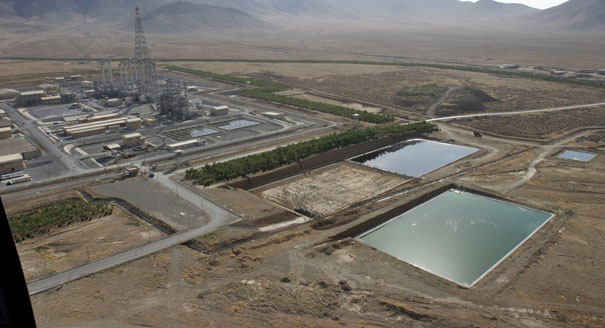
For the hawks to suggest that the deal freezing Iranian uranium-enrichment efforts above the 5 percent level, halting work on the heavy-water reactor near Arak, and granting daily inspections to Iran's centrifuge-laden facilities at Natanz and Fordow makes matters more dangerous in the short term is just indefensible on its face. Absent such a deal, all enrichment and technological advancement efforts would continue unabated and without inspections. Iran would almost certainly move more quickly toward having a bomb without this deal than with it.
Moreover, were Iran to cross a perceived red line on its path to having a bomb, taking military action against that country without having exhausted every possible diplomatic channel would be extremely unpopular in the United States and worldwide. The political resistance to taking action would make a slower response or lower level of support than ideal more likely. This would thereby make the success of such an effort less likely.The existence of this six-month deal gives a very clear deadline by which Iran must commit to steps that will enduringly and demonstrably end its efforts to develop nuclear weapons. The Iranians will also have to commit to an inspection program that ensures they are following through on their commitments. Whether you believe the Iranian promises or not, having a deadline will not only focus the attention of negotiators on the more important work of a permanent deal, but also put at imminent risk what is now the signature achievement of Iran's new Rouhani administration (and by extension an initiative associated with Supreme Leader Ali Khamenei, who must have given it his OK). While hawks in the United States have seized upon and denounced Iran's "victory dance" following the deal, they have to recognize that a failure of this initiative -- which would result in worse sanctions and possible military action -- would be seen as a serious setback for Iran's leadership. While the country's most important leaders don't answer to the people, Rouhani does and for him, and even for Iran's Supreme Leader, the damage to their credibility would take a huge toll on their international standing and weaken them at home.
A failure to successfully translate this interim deal into an end to Iran's suspected nuclear weapons program would also be damaging for President Barack Obama. But he knows that he will not be able to win congressional support for a long-term deal unless it is very specific and buttoned-down regarding eliminating the threat of Iran's rollout of a bomb in the near term. At this moment, the president, the secretary of state, and their teams are seen as having taken a risky tack, and if it fails, history will forever mark them as appeasers, naifs who were played by Tehran. The only way to avoid a damaging outcome is a long-term deal that works in the eyes of its critics.
It should also be noted that the Iran negotiations, coming as they do at the same time as the Syria negotiations, contain other risks that cut both ways for the United States, Iran, and the other parties to both sets of negotiations. If Iran appears to be acting in bad faith or if this deal goes sour, the international community will have the option of punishing Iran's leaders by withdrawing support for their desired outcome in the Syria talks -- either keeping their long-term ally, President Bashar al-Assad, in place or accepting a successor regime that preserves their interests and influence in that country. On the other hand, if Iran actually makes real progress on the nuclear deal, the country may be rewarded at the Syria negotiating table. Of course, none of this will be explicit or even discussed. But it is the nature of diplomacy to link such things if they are proceeding in parallel.
It is within such linkages -- intersections with the region's other fault-line issues -- that we also see precisely the reasons why those who are hailing the deal as a breakthrough should be cautious. Even were a long-term deal to be struck verifiably ending Iran's program to develop a nuclear weapons capability, which would eliminate one major threat to the region, it would not only not necessarily reduce other major threats associated with Iran's other foreign-policy initiatives, ambitions, and tactics, but it could make those threats worse.
If Iran were to verifiably forswear the bomb but gain more legitimacy, a blessing for it having protracted influence in Syria, for example, its destabilizing role as a would-be regional hegemon will only be strengthened. Iran has been a threat for decades without having nuclear weapons. It can continue to be one for decades to come without having those weapons.
Of further concern is that by warming to Iran, the United States is incurring the ire of the allies upon which its entire Middle East policy has relied since essentially the Iranian revolution. Israel, Egypt, and Saudi Arabia have been pillars of that often uneasy but surprisingly stable three-decade long partnership. But right now, U.S. relations with all of these countries are in the worst shape they have been during the last 30 years. That is due in part to muddled and misguided U.S. policy toward the current regime in Egypt. But it is also exacerbated by Obama's steady and (as the White House has been clear to communicate via leaks and other means) long-term effort to open a new channel with Iran -- the one enemy that unites the Israelis and the Sunni Arab states.
Any hint of support for Iranian goals in Syria would only exacerbate this (the Saudis and Gulf states have been supporting the more "moderate" opposition in that country in its battle with the Assad regime). Further, it is easy to see America's withdrawal from Iraq as having opened up an opportunity for growing Iranian influence there (because it has done just that without our real opposition). And our withdrawal from Afghanistan could do the same in the western part of that country.
Therefore, one possible outcome of this deal is an Iran that has a ratified right to a civilian nuclear program, including some kind of enrichment programs, and thereby has an ever greater capability regarding nuclear technology -- but that also becomes stronger throughout the Middle East. Those important long-term allies of the United States that have been dealing with the Iranians since time immemorial fear this outcome is not something to be taken lightly.
There are other geopolitical consequences of such a shift in the region's balance of power. Longtime U.S. allies might grow considerably less cooperative with the United States, thereby creating a partnership vacuum, and seek other major-power partners. And should they view a post-deal Iran as a greater threat, they might embark on military programs to counter the threat that in themselves increase danger in the region.
Part of the way to avoid such an outcome is for the United States to work very closely with the Saudis, the Gulf states, and the Israelis in defining the terms of an Iran deal they can live with. Clearly, they cannot be allowed to dictate all the terms of such an arrangement, but we will need and want these countries on its side for the long term precisely because they form the counterbalance to Iranian regional ambitions that we should view as aligned with its interests for the region.
The truth is, the first phase of this deal was not well pre-sold. This is no doubt in part because some of the negotiations were taking place in secret (though reports suggest they were well known to the Saudis and the Israelis as many so-called "secrets" are). As the deal continues to move forward over the next six months, the next phase will require as much in the way of diplomacy among our allies that are not part of the P5 + 1 process as those that are.
It will also be important to send a clear message to the Iranians that we will continue to oppose their efforts at regional hegemony. One way to do that will be a tough stand in Syria talks that adamantly opposes any place for the Assad regime or its hand-chosen successors in the fate of that fractured country. Another will be to publicly restore our ties with our unhappy allies via other means -- having a coherent Egypt policy would help. Secretary of State John Kerry seems to be hewing closer to one than the White House has recently. Let's hope he can seize the lead on this.
Finally, of course, we must recognize that the solution to this problem lies not with hawks or with doves. It relies on having those who would pose a threat to us and our allies know that we possess the resolve and the will to act as a hawk even as we are guided by the aspirations of a dove. While listening to the shrill debate in Washington between the two groups is disturbing, if we are interested in advancing U.S. interests worldwide as we have in the past, we should do everything we can to remind friends and enemies alike that both are part of our national character, both drive our foreign policy -- the doves when possible, the hawks when necessary.

Former Visiting Scholar
David Rothkopf was a visiting scholar at the Carnegie Endowment as well as the former CEO and editor in chief of the FP Group.
Recent Work
David Rothkopf
David Rothkopf
Carnegie does not take institutional positions on public policy issues; the views represented herein are those of the author(s) and do not necessarily reflect the views of Carnegie, its staff, or its trustees.
China has showcased its engineering prowess with small modular reactor demonstration projects. But turning these technological achievements into commercial success will be a greater challenge.

Tong Zhao

The nuclear relationship between China and the United States is increasingly shaped by widening perception gaps rather than deliberate strategic design.
Tong Zhao

But their "principal to principal" model will only be as effective as the political strength of each leader back home.

Damien Ma

U.S. unpredictability has allowed China to capitalize on its positioning as the “responsible great power”. Paradoxically, the more China wins the perception game, the more likely expectations will rise for Beijing to deliver not just words but to demonstrate with its deeds.

Chong Ja Ian

Hanoi and Beijing have long treated each other as distant cousins rather than comrades in arms. That might be changing as both sides draw closer to hedge against uncertainty and America’s erratic behavior.

Nguyễn Khắc Giang