

Commentary
But their "principal to principal" model will only be as effective as the political strength of each leader back home.
Damien Ma
{
  "authors": [
    "Pavel Koshkin",
    "Alexey Malashenko"
  ],
  "type": "legacyinthemedia",
  "centerAffiliationAll": "dc",
  "centers": [
    "Carnegie Endowment for International Peace",
    "Carnegie China",
    "Carnegie Russia Eurasia Center"
  ],
  "collections": [
    "China’s Foreign Relations"
  ],
  "englishNewsletterAll": "ctw",
  "nonEnglishNewsletterAll": "",
  "primaryCenter": "Carnegie Russia Eurasia Center",
  "programAffiliation": "russia",
  "programs": [
    "Russia and Eurasia"
  ],
  "projects": [
    "Eurasia in Transition"
  ],
  "regions": [
    "South Asia",
    "Afghanistan",
    "Central Asia",
    "Russia"
  ],
  "topics": [
    "Foreign Policy"
  ]
}
Source: Getty
While NATO’s withdrawal from Afghanistan could have dangerous implications for the region, some measure of instability might benefit Russia, which could use it as evidence of the importance of Russia’s military and political presence in the Central Asia.
Source: Russia Direct
In an interview with Russia Direct, Carnegie Moscow Center’s expert in religion and security Alexey Malashenko analyzes the strategic interests of Moscow and Washington in Afghanistan and provides a framework for understanding the most challenging geopolitical risks in the region. In addition, he explains why the U.S. failed in its campaign in Afghanistan and warns against China’s increasing role in the region.
After all, after the withdrawal, there will new political elites and leaders elected [as a result of upcoming presidential elections], and this transition period is going to be difficult to adjust to. Anyway, I don’t think that stability will come immediately after elections in Afghanistan. All the old controversies will remain. Besides, we have another concern: the Taliban. But the problem is that nobody seems to really understand who the Talibs are. There are reported to be four groups of Talibs while others argue that there are five groups of Talibs.
At the same time, there is an opinion that the Taliban are a kind of myth, intended to create the image of a common enemy. There are some lone wolves who can bring together a group of people, but there is not a solid [Taliban] movement that can impact the situation in the region. That’s why there is no clarity in expectations: there is only clarity that there will be no democracy in Afghanistan, and that there will be a mess there.
The problem is aggravated by the fact that up to 80 percent of Afghan territory is controlled by the Taliban, according to different estimates. For Americans, it is a problem, because they wanted to bring order there and failed.
A.M.: Regarding Moscow’s concerns, the situation is also very complicated. When Russian President Vladimir Putin or Russia’s Foreign Minister says that we want stability because Afghanistan poses a threat, the question comes to my mind: For whom does Afghanistan pose a real threat? For Russia? It’s hardly likely, unless we talk about drug trafficking. For Kazakhstan? I don’t think so either. In reality, Afghanistan poses a bigger threat for frontier countries like Uzbekistan and Tajikistan. Not because there will be an influx of militants who might wreak havoc in the region, but because there will be an inflow of refugees and migrants. In addition, the victory of the Taliban – which will become obvious after the U.S. withdrawal – will encourage local Islamists throughout the region. But there won’t be any Islamic revolutions either in Tajikistan or Uzbekistan.
And what are Russia’s stakes here? On one hand, Russia is afraid that this gamble in Afghanistan will contribute to weakening the current regimes of Tajikistan, Uzbekistan or Kyrgyzstan with which Moscow has established good relations. I don’t think that Islamic radicalism will come to Kazan from Afghanistan, which is too far from Tatarstan: There are other ways for this. But there is another problem: Russia may be interested in instability in the region because Afghanistan may be seen as a warning sign for the political regimes in the Central Asia and a good reason to confirm the importance of Russia’s military and political presence in the region.
When experts from the Collective Security Treaty Organization (CSTO) talk about the external threat posed by the region, they mean only Afghanistan, not NATO or China. So, Afghanistan is a good reason for the Central Asia countries to stick together with Russian and the CSTO, which can bring stability. That’s why Russia has a kind of ambivalent and, at the same time, cynical attitude to Afghanistan.
A.M.: If the Americans wanted to achieve democracy in this tribal state, it is nonsense. I believe that they failed to achieve their goals strategically and ideologically. Actually, it will be clear what they achieved and what they didn’t only after their full withdrawal when those people, whom they taught to negotiate, stay in the country. So far, it’s too early to make any predictions and remains to be seen what specific results they achieved.
A.M.: The most challenging risk is drug trafficking. And the second risk is that Afghanistan will once again turn into a hotbed of extremism and terrorism. At the same time, we shouldn’t exaggerate this threat.
A.M.: Actually, to learn lessons from the Soviet campaign in Afghanistan, it is quite enough to read the Afghan memoirs of our officers who fought there, because now there is a myth that for the Afghan people, it was easier to find common ground and get along with Soviet soldiers. There was reported to be mutual respect between them and Soviet soldiers built hospitals there (like the Americans are building roads now). And because of such myths, Americans failed to take into account the major lesson [from the Soviet experience]: Don’t get involved!
In reality, I was surprised that the Americans decided to get into the region. The U.S. president didn’t have a choice and wanted to demonstrate his power. However, he got the nation into such a quagmire and now the U.S. can’t get out of it. At any rate, their withdrawal will be seen as a defeat both in the U.S. and elsewhere. This is the tragedy of [current U.S. President Barack] Obama. Now that he is paying for Iraq, we see how reluctant he is to meddle in Syria. On top of that, he has to shoulder the burden of Afghanistan.
A.M.: Absolutely.
A.M.: If we have such collaboration, God bless it. Objectively, Russia and the U.S. should collaborate and this collaboration is more beneficial for Moscow than for Washington given their recent mutual squabble. I see any attempts to impose the idea that we are surrounded by enemies while living in a fortress under siege as simply a tool of domestic policy to manipulate people.
A.M.: Karzai is hardly likely to repeat his predecessor’s fate because Najibullah is a warrior. If he had been supported, it is unclear how history would have ended. Karzai is a gambler, he has business, stakes to lose. He has a refuge to run away to while Najibullah didn’t have [such shelter].
A.M.: Pakistan, India and China. If India and Pakistan keep trying to sort out their relationship, China’s influence will come to the region sooner or later because the Taliban is hardly likely to take a stand against Beijing. And it is typical of China’s foreign policy that we have already seen in Africa: While other countries settle controversies in their relations, China comes and increases its influence [by pouring money into the region]. Their policy is, ‘We don’t meddle in your squabbles, but you won’t be able to make it without our money.’ The same tactic may be applied in Afghanistan.
A.M.: There will be a geopolitical triangle. And each side will use it to breed strife [within this triangle]. I think this is going to be a long-standing game, and it will last as long as Russia has nuclear weapons. For example, politically it is now much more reasonable for China to stick with Russia.
China clearly understands its role in the world: The Chinese have plans not for five years, but for 50 years and they are fulfilling these plans gradually. They are pretty wise. They admit their mistakes and correct them. They have a giant energy sector. Consistency, a gradual approach and hard work -- all of these factors will contribute to China’s success in the near future.
Pavel Koshkin
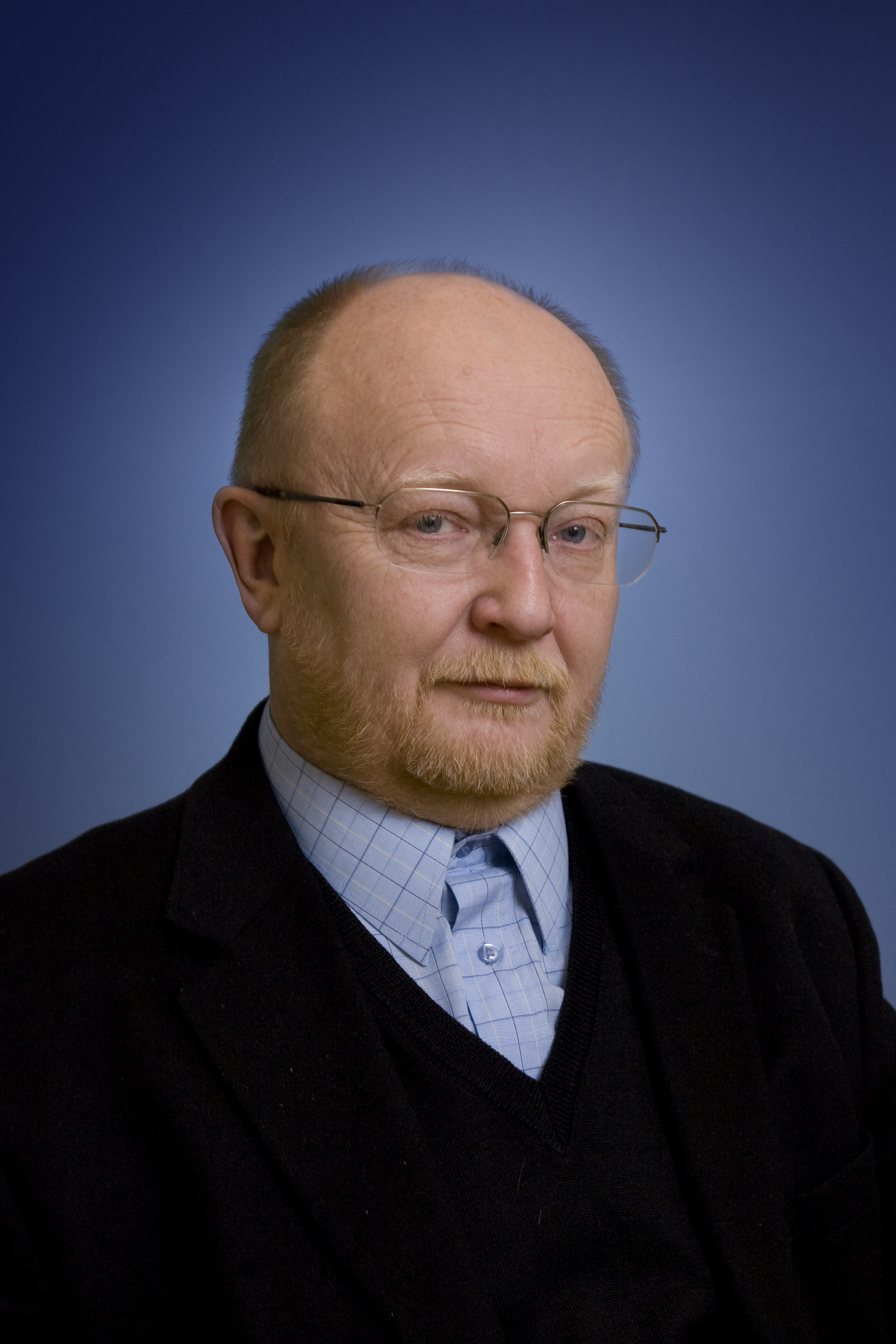
Former Scholar in Residence, Religion, Society, and Security Program
Malashenko is a former chair of the Carnegie Moscow Center’s Religion, Society, and Security Program.
Carnegie does not take institutional positions on public policy issues; the views represented herein are those of the author(s) and do not necessarily reflect the views of Carnegie, its staff, or its trustees.

But their "principal to principal" model will only be as effective as the political strength of each leader back home.

Damien Ma

U.S. unpredictability has allowed China to capitalize on its positioning as the “responsible great power”. Paradoxically, the more China wins the perception game, the more likely expectations will rise for Beijing to deliver not just words but to demonstrate with its deeds.

Chong Ja Ian

Hanoi and Beijing have long treated each other as distant cousins rather than comrades in arms. That might be changing as both sides draw closer to hedge against uncertainty and America’s erratic behavior.

Nguyễn Khắc Giang

Across Asia, China is better positioned to withstand energy shocks from the fallout of the Iran war. Its abundant coal capacity can ensure stability in the near term. Yet at the same time, the country’s energy transition away from coal will make it even less vulnerable during the next shock.
Damien Ma

Malaysia’s chairmanship sought to fend off short-term challenges while laying the groundwork for minimizing ASEAN’s longer-term exposure to external stresses.

Elina Noor