

Article
Wang Tao
{
  "authors": [
    "Wang Tao"
  ],
  "type": "legacyinthemedia",
  "centerAffiliationAll": "",
  "centers": [
    "Carnegie Endowment for International Peace",
    "Carnegie China"
  ],
  "collections": [],
  "englishNewsletterAll": "",
  "nonEnglishNewsletterAll": "",
  "primaryCenter": "Carnegie China",
  "programAffiliation": "",
  "programs": [],
  "projects": [],
  "regions": [
    "East Asia",
    "China"
  ],
  "topics": [
    "Climate Change"
  ]
}
Source: Getty
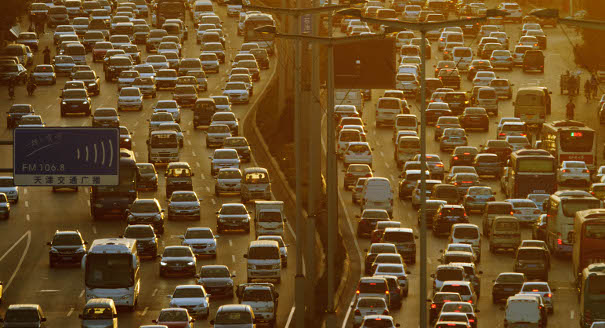
High levels of smog persist throughout China due to weak enforcement of current environmental regulations. Environmental protection agencies are understaffed and do not have the power to oppose government officials that prioritize GDP growth over environmental protection.
Source: CCTV World Insight
High levels of smog persist throughout China due to weak enforcement of current environmental regulations. In an interview with CCTV’s World Insight, Carnegie-Tsinghua’s Wang Tao explained the various causes of this problem. He pointed out that environmental protection agencies are understaffed and do not have the power to oppose government officials that prioritize GDP growth over environmental protection.
Wang proposed a number of short-term solutions, such as utilizing newer technology that reduces emissions from factories and vehicles as well as ensuring that regulations are enforced. In the long term, though, he said that China needs to reduce its energy reliance on coal and increase the use of other energy sources such as nuclear, hydroelectric, and solar power. Questions remain over how Chinese authorities will create policy incentives and establish the infrastructure necessary for China to decrease its reliance on coal and work toward lower levels of smog. The public, Wang concluded, could play a significant role in exerting necessary pressure on Chinese authorities to address this issue of pollution. He added that lower vehicle usage and electricity consumption by the Chinese public will also have an impact on reducing pollution.
This video inteview was originally aired on CCTV World Insight.
Former Nonresident Scholar, Carnegie-Tsinghua Center for Global Policy
Wang Tao was a nonresident scholar in the Energy and Climate Program based at the Carnegie–Tsinghua Center for Global Policy.
Recent Work
Wang Tao
Wang Tao, Yang Yifang
Carnegie does not take institutional positions on public policy issues; the views represented herein are those of the author(s) and do not necessarily reflect the views of Carnegie, its staff, or its trustees.

But their "principal to principal" model will only be as effective as the political strength of each leader back home.

Damien Ma

U.S. unpredictability has allowed China to capitalize on its positioning as the “responsible great power”. Paradoxically, the more China wins the perception game, the more likely expectations will rise for Beijing to deliver not just words but to demonstrate with its deeds.

Chong Ja Ian

Hanoi and Beijing have long treated each other as distant cousins rather than comrades in arms. That might be changing as both sides draw closer to hedge against uncertainty and America’s erratic behavior.

Nguyễn Khắc Giang

Across Asia, China is better positioned to withstand energy shocks from the fallout of the Iran war. Its abundant coal capacity can ensure stability in the near term. Yet at the same time, the country’s energy transition away from coal will make it even less vulnerable during the next shock.
Damien Ma

In the latest Five-Year Plan, the Chinese president cements the shift to an innovation-driven economy over a consumption-driven one.
Damien Ma