

Commentary
Bayram Balci
{
  "authors": [
    "Bayram Balci"
  ],
  "type": "legacyinthemedia",
  "centerAffiliationAll": "dc",
  "centers": [
    "Carnegie Endowment for International Peace"
  ],
  "collections": [],
  "englishNewsletterAll": "menaTransitions",
  "nonEnglishNewsletterAll": "",
  "primaryCenter": "Carnegie Endowment for International Peace",
  "programAffiliation": "MEP",
  "programs": [
    "Middle East"
  ],
  "projects": [],
  "regions": [
    "Caucasus",
    "Russia",
    "Eastern Europe",
    "Ukraine"
  ],
  "topics": [
    "Political Reform",
    "Foreign Policy"
  ]
}
Source: Getty
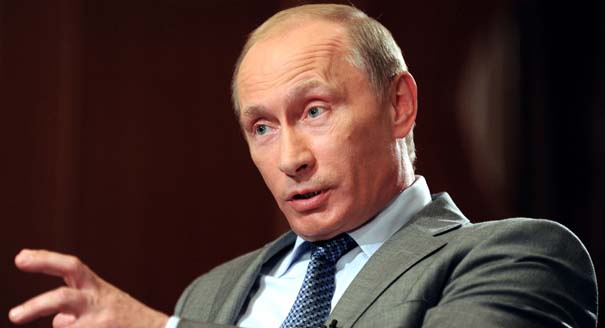
Putin’s gambit in Ukraine will certainly give him prestige in his country and a strategic advantage in the Black Sea, but it could weaken Russia’s position in the rest of the former Soviet empire.
Source: Foreign Policy Journal
After three months of intense protests, Ukrainian pro-West demonstrators managed to topple President Viktor Yanukovytch, whose policy had turned toward Russia. As a result of this popular coup, Russia, under the pretext of defending the “threatened” Russian population, intervened in Crimea, annexing this Ukrainian autonomous province after a majority of the Crimean people voted in a referendum for accession to Russia (the referendum was boycotted by a significant portion of the population).
This is the most serious Russian intervention in a former Soviet Republic, more significant than the Russian military action in Georgia in 2008. The current Russian action in Ukraine will have considerable repercussions in the relations between Russia and the rest of the world, and most significantly on its relations with the republics in the Caucasus and Central Asia regions that Moscow considers as its near-abroad in its post imperialist policy.Indeed, in the Caucasus, remembering Georgia in 2008, Azerbaijan and Armenia are very concerned by this most recent Russian intervention in an independent former Soviet Republic. In Central Asia, Uzbekistan, Kazakhstan, Tajikistan, Kirgizstan, and to a lesser extent Turkmenistan observe this crisis with growing anxiety. Already complicated, Moscow’s relation with these republics, where there are also Russian minorities and military facilities – pretext for intervention in Ukraine – will suffer considerably.
At the beginning of this crisis that is affecting Russia’s image in the world, the dominant impression is that Russia is going to win Crimea and won’t be impressed by Western countries’ sanctions. However, this victory in the Black Sea will alienate the other part of Russian traditional near-abroad, the Caucasus and Central Asia. Putin’s gambit in Ukraine will certainly give him prestige in his country and a strategic advantage in the Black Sea, but it could weaken its position in the rest of the former Soviet empire where Russia is more than ever perceived as an aggressor and an unreliable ally. In that sense, on the long term and global level Putin is not ensured of being winner in this new old fashion cold war game. His game looks like Russian roulette.
Despite their apparent silence on what happened in Ukraine and Crimea, Post-Soviet leaders in the Caucasus and Central Asia have been considerably frightened for two reasons. First of all, the Euromaidan popular protest that ended with the toppling of President Yanukovytch reminded them that something similar could happen in their countries. And, secondly, the military action of Russian forces, or its local militias ally, in Crimea showed them that Russia has not changed and is still capable of having a military action in what it considers its sphere of influence, an ex-Soviet area.
When the Arab Spring started, many analysts – and I was among them[1] –predicted a possible spread to post-Soviet regimes that were very similar to the toppled Arab regimes, ageing leaders and corrupt elites with deep economic inequalities[2]. Actually this “Arab contamination” did not happen because of the differences between the Arab and post-Soviet societies, but also because of the difference between the two regions in terms of geopolitical realities.
However, despite these differences, post-Soviet strongmen took many measures to prevent similar popular uprisings, tightening control on social media and in some cases adopting some reforms[3]. But popular unrest with regime change is more worrying for these leaders when it happens in their post-Soviet sphere.
Indeed, the Georgian revolution in 2004 and Kirgiz regime changes in 2005 and 2010 were more disturbing than the remote political changes in the Arab world. From that perspective, the Maidan “revolution”, or the capacity of popular protests to oust an elected leader, Yanukovytch, had certainly caused sleeplessness nights to many leaders in Central Asia and the Caucasus[4]. As was predictable, the official media in these countries – Azerbaijan in the Caucasus and all Central Asian republics, except Kirghizstan where media is freer, official media did not cover the Maidan protests[5]. When it was, it was Moscow-style, presenting many of the protesters as fascists who wanted to topple a democratically elected leader with the support of West—a narrative that is largely true.[6]
In Uzbekistan and Kazakhstan where the leaders have the record for longevity, but are also oldest, the Maidan nightmare probably provoked the worst insomnia. In other countries like Kirghizstan and Georgia where power changes have already occurred, Maidan was not a nightmare at all. However, Putin’s Crimean intervention after Maidan revolution is going to be more than a nightmare for them.
The reason is simple: as in Ukraine, almost all of these countries have important Russian minorities and host Russian military facilities, the two most important excuses, in addition to the specific situation of Ukraine, that have been used by Putin to intervene in Ukraine. In the mind of local elites, what happened in Ukraine can occur in their country in case of a major crisis similar to the Ukrainian one.
Indeed, Kazakhstan has many reasons to fear a similar scenario in its territory. More than 25 % of its population is Russian. In addition, it has a long border (more than 4000 miles) with Russia and in its northern provinces are mainly populated by ethnic Russians. For some Russian nationalists, among them Sojenitsinie and Dugin, these northern provinces of Kazakhstan should be “returned” to Russia[7].
Moreover, as in Crimea, Russia has in Kazakhstan a military facility with the Baïkonour space center. In Armenia, Russia has a military base, as in Kirghizstan near Bishkek (Kant base) and in Tajikistan where the 201st Motor Rifle Division controls the border with Afghanistan. In Azerbaijan Russia has not longer a military base and its Russian minority is not very significant, but more than a million of Azerbaijani migrant workers live in Russia and they send remittances to their families. Similarly, Russia has economic power over Uzbekistan, Tajikistan and Kirghizstan as their economies also rely on the remittances sent by their diasporas living in Russia[8].
Following the Russian intimidation with the deployment of armed men without apparent identification in Crimea – whether to protect the Russian minority or to guarantee the security of its fleet – among all Caucasian and Central Asian regimes there is a strong feeling that Putin actually wants to recreate the former Soviet Union. In that sense, their independence is threatened, and it is probable that the Russian leader has lost his colleagues trust, if he ever had it.
Since their independence, these countries have been keen to remain in the Russian sphere. This did not reflect a desire to remain close to their former big brother or a sign of particular love for Putin but rather because Russia (and China) has never judged their human rights and democratic credentials while the EU and US have always linked cooperation with them to their progress in democracy and human rights[9].
In fact, there is a sign that the Crimean crisis will be a turning point in the relations between Russia and its post-Soviet allies. More than during the Georgian war where Russia intervened to help an Ossetian minority (and not only Russians), the Crimean case and Putin’s will to protect his brothers on this peninsula will affect his image in Central Asia and the Caucasus. And the most troubling for him, his heroic action in Crimea will make his dreams in Eurasia impossible. More precisely he can forget his Eurasian Union project that he spent many years promoting among many post-soviet States.
Since he came to power in 2000, Putin has never hidden his many ambitions for his country. He not only wanted to end Russian humiliation on the international stage and reconstruct its economy, but he also wanted to return Russia to its former global power status[10]. Publicly he lamented the end of the Soviet Union, calling it “a major geopolitical disaster of the century”[11]. He has not advocated for recreation but has promoted the establishment of a new structure, the Eurasian Union, a superpower under the Russian leadership, a sort of European Union without democracy[12].
In this strategy Russia, Belarus and Kazakhstan are the main pillars. Ukraine should have a key place in this Union, as well as other post-soviet countries, like Armenia, Tajikistan and Kirghizstan. Since Russia is annexing a part of Ukraine it is naïve to think that Ukraine (which was torn between East and West) will support Putin’s Eurasian idea. Kazakhstan and Belarus although strong supporters of Eurasian Union that is still supposed to begin in 2015 have already started to hesitate. Although Tajikistan, Armenia and Kirghizstan have expressed their intention to join this union, their participation is not enough to create a union capable of competing with US, EU and China.
Vladimir Putin did not himself trigger Ukrainian crisis, but it looks like he took the advantage from it to annex the strategically important Crimean peninsula. This policy is however part of his old dream to create a new super power capable of competing with the EU, the US and China. In other words, his policy sought to create a kind of new Soviet Union, consisting of independent states under Russian leadership. Since he came to power he has very strongly moved in that way. The Russian economy has improved, the country is respected in the international scene and he has given dignity and pride to Russia and to Russians. However with this military intervention in Crimea Putin went too far and his game now resembles more Russian roulette than strategically well calculated policy. After many successes in his country and even in international politics, this new Crimean War could led him to a crazy megalomania that will cost him the definitive loss of allies in Central Asia and the Caucasus.
2 http://security.blogs.cnn.com/2011/10/22/could-central-asia-have-an-arab-spring/
6 http://www.fair.org/blog/2014/03/07/denying-the-far-right-role-in-the-ukrainian-revolution/
8 http://www.isn.ethz.ch/Digital-Library/Articles/Detail/?lng=en&id=172418
9 http://eeas.europa.eu/central_asia/docs/factsheet_hr_dialogue_en.pdf
Former Nonresident Scholar, Russia and Eurasia Program
Balci was a nonresident scholar in Carnegie’s Russia and Eurasia Program, where his research focuses on Turkey and Turkish foreign policy in Central Asia and the Caucasus.
Recent Work
Bayram Balci
Bayram Balci, Daniyar Kosnazarov
Carnegie does not take institutional positions on public policy issues; the views represented herein are those of the author(s) and do not necessarily reflect the views of Carnegie, its staff, or its trustees.

But their "principal to principal" model will only be as effective as the political strength of each leader back home.

Damien Ma

U.S. unpredictability has allowed China to capitalize on its positioning as the “responsible great power”. Paradoxically, the more China wins the perception game, the more likely expectations will rise for Beijing to deliver not just words but to demonstrate with its deeds.

Chong Ja Ian

Hanoi and Beijing have long treated each other as distant cousins rather than comrades in arms. That might be changing as both sides draw closer to hedge against uncertainty and America’s erratic behavior.

Nguyễn Khắc Giang

Across Asia, China is better positioned to withstand energy shocks from the fallout of the Iran war. Its abundant coal capacity can ensure stability in the near term. Yet at the same time, the country’s energy transition away from coal will make it even less vulnerable during the next shock.
Damien Ma

Malaysia’s chairmanship sought to fend off short-term challenges while laying the groundwork for minimizing ASEAN’s longer-term exposure to external stresses.

Elina Noor