

Article
C. Raja Mohan, Darshana M. Baruah
{
  "authors": [
    "C. Raja Mohan"
  ],
  "type": "legacyinthemedia",
  "centerAffiliationAll": "dc",
  "centers": [
    "Carnegie Endowment for International Peace",
    "Carnegie India"
  ],
  "collections": [],
  "englishNewsletterAll": "ctw",
  "nonEnglishNewsletterAll": "",
  "primaryCenter": "Carnegie India",
  "programAffiliation": "SAP",
  "programs": [
    "South Asia"
  ],
  "projects": [],
  "regions": [
    "South Asia",
    "India",
    "Russia"
  ],
  "topics": [
    "Climate Change",
    "Foreign Policy"
  ]
}
Source: Getty
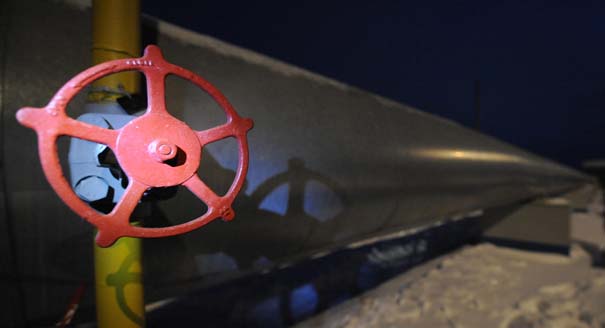
The long discussed overland pipeline bringing hydrocarbons from Russia to India is gaining some traction with the NDA government.
Source: Financial Express
The idea of an overland pipeline bringing hydrocarbons from Russia to India has been around for a while. Mooted under UPA rule, the proposal is gaining some traction with the NDA government. New Delhi and Moscow are looking for some big new projects to boost their stagnant commercial ties. Annual bilateral trade now hovers below a paltry $15 billion. Given the massive complementarities in the energy sector, the two sides rightly focus on making this the centrepiece of a stronger economic partnership in future.
Talks on Russian atomic reactor exports are making slow progress amidst the continuing differences over the application of India’s nuclear liability act. As India’s demand for oil and natural gas grows, the hydrocarbon sector presents itself as a major strategic opportunity. India already has $5bn invested in the Russian petroleum sector. India also imports crude oil worth nearly $200 million every year.India would like to import a lot more and the idea of building a direct pipeline from Russia, therefore, has become an object of political interest in Delhi and Moscow. Further impetus for the project has come from a recent Russian deal with China to export natural gas worth $400bn over a 30-year period via a new pipeline. The idea is generating some excitement and is expected to figure in the bilateral talks between Prime Minister Narendra Modi and Russian President Vladimir Putin on the margins of the BRICS summit in Brazil.
It is easy drawing pipeline routes on the map. India knows that building them on the ground is not. For none of the pipeline projects that India has debated in the last two decades has taken off for reasons of costs, geopolitical and financial. There have been many proposals to build underwater pipelines from the Gulf to India; but cost considerations have put them on hold. Overland pipeline projects have been grounded mainly for geopolitical reasons. The plan to build the
Iran-Pakistan-India (IPI) pipeline has run into strong opposition from the United States, which remains opposed to any projects involving Tehran.
India, Pakistan and Afghanistan have spent much time negotiating the TAPI pipeline that would have brought natural gas from Turkmenistan into the subcontinent. Given the security problems in the Af-Pak region, it has been hard selling the project to international bankers.
There was a plan to build a natural gas pipeline between Myanmar and India through Bangladesh. But the inability of Delhi and Dhaka to act fast saw Myanmar deciding to sell the gas to China. Beijing moved rapidly to build a twin pipeline system from the Bay of Bengal coast to the Yunnan province in southwestern China, just north of Myanmar.
Any Russian pipeline from Russia to India will have three possible routes into India. One is via Iran and Pakistan; another must traverse Afghanistan and Pakistan; and the third must come through China. The option of bringing them through Pakistan will face many of the same problems as the IPI and TAPI pipelines. The China option involves bringing the pipeline across the Great Himalayas and through the regions of Jammu and Kashmir that are part of the territorial dispute between Delhi and Beijing.
In a paradox, the only pipeline that could get off the ground in the near term is the one that would run out of India rather than into it. Delhi has been discussing with Islamabad for some time now plans to build a pipeline to the Punjab border to export liquefied natural gas to Pakistan.
Given the shortage of LNG infrastructure in Pakistan, it makes sense for Islamabad to import natural gas into Lahore from across the Radcliffe Line. In the budget presented to the Lok Sabha last week, Finance Minister Arun Jaitley exempted from customs duty the LNG that will be imported into India and then exported to Pakistan. Although this decision will cut the import costs for Islamabad, the Nawaz Sharif government may not have the freedom to act in Pakistan’s enlightened economic self-interest.
From the Indian perspective, though, the Modi government would be wise to focus on connecting India’s hydrocarbon grids with those of the immediate neighbours. Given its vast coastline, Delhi should devote its attention for now to importing hydrocarbons by sea, investing in equity oil in Russia and other energy-rich countries, and concluding swap arrangements rather than grandiose transregional pipelines.
This article was originally published in the Financial Express.
Former Nonresident Senior Fellow, Carnegie India
A leading analyst of India’s foreign policy, Mohan is also an expert on South Asian security, great-power relations in Asia, and arms control.
Recent Work

C. Raja Mohan, Darshana M. Baruah


Alexander Gabuev, Paul Haenle, C. Raja Mohan, …
Carnegie does not take institutional positions on public policy issues; the views represented herein are those of the author(s) and do not necessarily reflect the views of Carnegie, its staff, or its trustees.

Across Asia, China is better positioned to withstand energy shocks from the fallout of the Iran war. Its abundant coal capacity can ensure stability in the near term. Yet at the same time, the country’s energy transition away from coal will make it even less vulnerable during the next shock.

Damien Ma

Malaysia’s chairmanship sought to fend off short-term challenges while laying the groundwork for minimizing ASEAN’s longer-term exposure to external stresses.

Elina Noor

For Malaysia, the conjunction that works is “and” not “or” when it comes to the United States and China.
Elina Noor
In July 2025, Vietnam and China held their first joint army drill, a modest but symbolic move reflecting Hanoi’s strategic hedging amid U.S.–China rivalry.

Nguyễn Khắc Giang

The Thai-Cambodian conflict highlights the limits to China's peacemaker ambition and the significance of this role on Southeast Asia’s balance of power.

Pongphisoot (Paul) Busbarat