

In The Media
Vikram Nehru
{
  "authors": [
    "Vikram Nehru"
  ],
  "type": "legacyinthemedia",
  "centerAffiliationAll": "dc",
  "centers": [
    "Carnegie Endowment for International Peace",
    "Carnegie China"
  ],
  "collections": [
    "China’s Foreign Relations"
  ],
  "englishNewsletterAll": "asia",
  "nonEnglishNewsletterAll": "",
  "primaryCenter": "Carnegie Endowment for International Peace",
  "programAffiliation": "AP",
  "programs": [
    "Asia"
  ],
  "projects": [],
  "regions": [
    "East Asia",
    "China",
    "Southeast Asia"
  ],
  "topics": [
    "Economy",
    "Security",
    "Military",
    "Foreign Policy"
  ]
}
Source: Getty
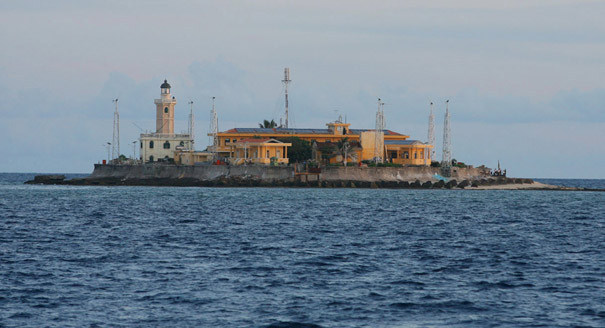
The probability is growing that a relatively minor incident in the proximity of an unimportant, remote and barren islet in the East China or South China seas could plunge Asia, and perhaps even the world, into another confrontation.
Source: Nikkei Asian Review
China's rebuff of U.S. Secretary of State Kerry's proposal that it freeze "provocative" acts in the South China Sea, made at the recent Asean Regional Forum meeting in Naypyidaw, Myanmar, was both predictable and predicted. In the face of an unyielding and recalcitrant China, Kerry's quixotic effort laid bare the bankruptcy of America's approach toward reducing regional tensions in the South China Sea. Clearly, the U.S. and its Asian partners -- not least the protagonists of the Association of Southeast Asian Nations -- need a better strategy.
The end game should be to build an enduring peace in the South China Sea. The only way to do that is to resolve conflicting territorial claims by various countries. One method would be to negotiate joint development arrangements of the disputed areas. Another would be arbitration offered under the United Nations Convention on the Law of the Sea. This can be done, as shown by recent arbitration decisions to settle disputes between the Philippines and Indonesia, Bangladesh and Myanmar, and India and Bangladesh.
The problem, however, is that China refuses to follow either of these approaches, arguing that its claims in the South China Sea are not in dispute and that any discussions should be held bilaterally between the countries involved. It rejects interference by outside parties, and it has condemned U.S. efforts to raise this issue in Asean meetings. Moreover, it has dragged its feet in finalizing a code of conduct in the South China Sea, and has been actively engaged in changing the status quo on the ground and in the sea by engaging in construction and oil exploration in disputed areas in the East China and South China seas.The challenge for the U.S. and its Asian partners is whether they can acquire the leverage to encourage China to seek a peaceful, negotiated settlement in the East China and South China seas.
One way to achieve such leverage would be to embrace China more tightly within the global economic and institutional system. The greater its integration within the global system, the bigger its stake in regional stability. After all, China is already the world's largest trading nation and is poised to become its largest economy by purchasing power parity.
The unwillingness of advanced countries to give China its appropriate place within the global institutional architecture has only reinforced China's suspicions about the current global order. It has motivated China to strike out on its own by creating new multilateral institutions, such as the New Development Bank (formerly referred to as the BRICS Development Bank), the Asian Infrastructure Investment Bank, and the Contingency Reserve Arrangement. China instead should be allowed a more important, and in some cases a leadership, role in global institutions and initiatives.
The U.S. Congress should immediately reverse its short-sighted decision earlier this year opposing governance reforms in the International Monetary Fund and give China a more prominent role in the institution. Similarly, instead of scuttling the World Bank's initiative to establish a large Global Infrastructure Facility in which China could play a leading role, the U.S. should actively encourage it. Perhaps most importantly, the 12 participating governments in the Trans-Pacific Partnership, a regional trading agreement currently being negotiated, should actively embrace China's participation, even if it means granting it relatively generous terms of accession.
A parallel approach would be for the U.S. and its Asian partners to jointly introduce confidence-building measures and ensure open communications with China so that untoward incidents do not unwittingly escalate tensions that could lead to open hostilities. Unfortunately, although China is a signatory of the Declaration of the Code of Conduct in the South China Sea, its provocative actions in contested areas of the Spratly and Paracel Islands have generally led to defensive measures by other claimant countries in the region, including Japan, Vietnam and the Philippines. This dangerous tit-for-tat game in the East China and South China seas has escalated in recent weeks and has brought the region to the brink of armed conflict.
To break this vicious circle, Asean should finalize the regional Code of Conduct in the South China Sea as soon as possible and invite Japan and the U.S. to become signatories. The agreement would govern behavior on freezing construction and exploration activities in disputed areas, sharing information on shipping and freedom of navigation, and confidence building measures to help de-escalate tensions. Even if China is not a signatory, a formal code of conduct will at least lend incremental certainty to the actions of the signatories and indicate the standards of conduct which the region would also expect of China.
Deterrence needs to be the third arrow. It is already a part of the strategic thinking of most East Asian nations. China's stance in the East China and South China seas, justified or not, is isolating it from its neighbors and encouraging them to forge stronger military ties with one another. This is reflected in the rapid military buildup in Southeast Asia -- where growth in military expenditures is second only to Eastern Europe -- Japan's new national security strategy and military sales to its Asean neighbors, and the military dimension of the U.S. rebalancing strategy toward Asia. But these measures lack a coherent framework and their whole is well short of the sum of its parts.
The U.S. and its Asian partners need to develop multilateral defense arrangements in a gradual manner so as not to destabilize the current fragile peace. Initially, such arrangements could include joint military training, coordinated weapons purchases, shared intelligence, common radar and air-defense capabilities, joint military exercises, cooperative military medicine, and inter-operability of systems and equipment -- all while leveraging regional defense discussions through Asean-centered institutions such as ADMM+ (Asean Plus Defense Ministerial Meeting), ARF and the East Asia Summit.
Like previous conflicts triggered by a single event, the probability is growing that a relatively minor incident in the proximity of an unimportant, remote and barren islet in the East China or South China seas could plunge Asia, and perhaps even the world, into another confrontation. Asia cannot close its eyes to this possibility and wish the problem away. It needs to underpin its growing interdependence with China with a clear strategy, crafted and coordinated with its key strategic partners. Asia may hope for the best, but it must prepare for the worst.
This article was originally published in the Nikkei Asian Review.

Former Nonresident Senior Fellow, Asia Program
Nehru was a nonresident senior fellow in the Carnegie Asia Program. An expert on development economics, growth, poverty reduction, debt sustainability, governance, and the performance and prospects of East Asia, his research focuses on the economic, political, and strategic issues confronting Asia, particularly Southeast Asia.
Recent Work
Vikram Nehru
Vikram Nehru
Carnegie does not take institutional positions on public policy issues; the views represented herein are those of the author(s) and do not necessarily reflect the views of Carnegie, its staff, or its trustees.

Chinese biotech companies have been on the receiving end of U.S. economic coercion. Yet their responses have differed significantly because firm and state interests are not uniformly aligned. For Washington, treating all Chinese tech firms the same, irrespective of their actual interests, risks pushing them farther into Beijing’s corner.

Xue Gong

China’s latest energy plan explicitly calls for integrating data centers into the electricity system, particularly connecting them to green energy. It appears Beijing wants to use compute as a source of domestic demand to absorb renewables excess capacity.

Damien Ma

But their "principal to principal" model will only be as effective as the political strength of each leader back home.
Damien Ma

U.S. unpredictability has allowed China to capitalize on its positioning as the “responsible great power”. Paradoxically, the more China wins the perception game, the more likely expectations will rise for Beijing to deliver not just words but to demonstrate with its deeds.

Chong Ja Ian

Hanoi and Beijing have long treated each other as distant cousins rather than comrades in arms. That might be changing as both sides draw closer to hedge against uncertainty and America’s erratic behavior.

Nguyễn Khắc Giang