

Commentary
Alexey Malashenko
{
  "authors": [
    "Alexey Malashenko"
  ],
  "type": "commentary",
  "centerAffiliationAll": "",
  "centers": [
    "Carnegie Endowment for International Peace",
    "Carnegie Russia Eurasia Center"
  ],
  "collections": [],
  "englishNewsletterAll": "",
  "nonEnglishNewsletterAll": "",
  "primaryCenter": "Carnegie Russia Eurasia Center",
  "programAffiliation": "",
  "programs": [],
  "projects": [
    "Eurasia in Transition"
  ],
  "regions": [
    "Central Asia",
    "Kazakhstan",
    "Russia",
    "Eastern Europe",
    "Ukraine"
  ],
  "topics": [
    "Foreign Policy"
  ]
}
Source: Getty
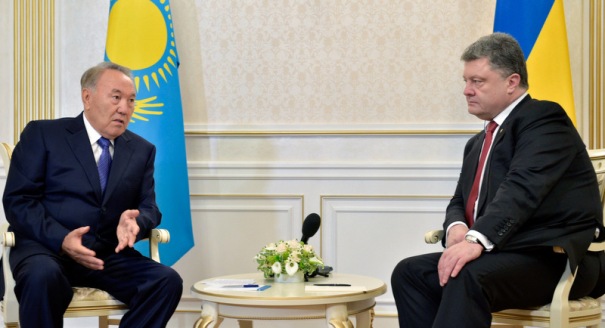
The Ukraine crisis has betrayed fissures in the Russo-Kazakh relationship. It is difficult to predict a post-Nazarbayev Kazakh policy toward Russia, but developments in Ukraine suggest that future Kazakh leaders will have to deal with a new source of friction with the Kremlin.
Kazakh leaders have been hesitant to speak out about the crisis in Ukraine. To be sure, the EuroMaidan Revolution is an affront to Kazakh President Nursultan Nazarbayev and other Central Asian leaders’ authoritarian regimes. Regional elites fear large-scale protest movements, particularly as the question of presidential succession becomes a subject of debate in two key Central Asian countries – Kazakhstan and Uzbekistan – potentially triggering socio-political tensions. Despite these concerns, a homegrown Maidan is not the biggest problem facing Kazakhstan. Nazarbayev is more troubled by Russia’s aggressive response to the revolution, which has cast a shadow over the entire post-Soviet space. Though Russia and Kazakhstan remain important economic and political allies, Kazakhstan, like other post-Soviet states, has been reluctant to support Moscow’s actions in Ukraine.
Nursultan Nazarbayev has expressed veiled skepticism about the Kremlin’s course in Ukraine. In an interview with Kazakhstan’s Khabar TV channel, Nazarbayev remarked that “Kazakhstan always reserves the right to leave the Eurasian Economic Union (EEU) if it poses a threat to the country’s independence.” This statement clearly demonstrates that Astana sees the EEU exclusively as an economic union and rejects Russia’s political ambitions within the union. Nazarbayev has said on multiple occasions that the EEU is not a political organization, but in light of recent events in Ukraine his remarks to Khabar TV are especially significant.
Nazarbayev also said that “Ukraine’s fate awaits Kazakhstan in the case of an overreach on the issue of language.” In other words, the Kazakh authorities’ neglect of the Russian language may become a major threat to Kazakhstan’s stability and sovereignty. For this reason, Nazarbayev personally supports trilingual a Kazakhstan, with Kazakh, Russian, and English as its official languages.
While the issue of the status of the Russian language was one of the pretexts for Russia’s invasions of Crimea and the Donbas, it was Ukraine’s European choice that most surprised the Kremlin. Putin did not anticipate Ukraine’s attempt to free itself from Russia’s embrace, which has dealt a blow to his integration projects. Kazakhstan does not intend to turn away from Russia; nevertheless, it is letting Russia know that it will not forgo its political independence.
Russia’s Ukrainian policy gave the West, and primarily the United States, a significant opportunity to weaken Moscow’s positions in the post-Soviet space, which the Kremlin may not have anticipated. Americans and Europeans happily watch Russia’s neighbors’ cautiously negative reaction to Moscow’s policies. At a meeting with President Nazarbayev in May, Deputy State Secretary William Burns stressed that the U.S. supports the sovereignty and territorial integrity of all the countries in Central Asia, stressing the importance of friendly relations with Kazakhstan.
Moscow is of two minds about the “neutrally negative” position of Kazakhstan and its other neighbors. On the one hand, it understands that former Soviet republics will be uncomfortable with any breech of national sovereignty, just as they were after Russia supported the separation of Abkhazia and South Ossetia from Georgia in 2008. On the other hand, Russia expects a level of obedience from Astana. Russian politicians have recently made offensive and even threatening statements towards Kazakhstan. At the Seliger Youth Forum last month, Putin gave Kazakhs cause for concern. Anna Sazonova, a previously unknown student, asked Putin about russophobia and nationalist sentiment in Kazakhstan. Vladimir Putin reminded the audience that Kazakhstan never existed as a state and appeared on world maps only as a result of Nazarbayev’s efforts. Some saw it as a reference to Kazakhstan’s fragility, while others interpreted it as high praise of President Nazarbayev’s state-building work. In the same conversation, Putin emphasized that if Kazakhstan wants to remain a part of the “global civilization,” it must stay in the Russian sphere of influence. The Kazakh politician Aykin Konurov dismissed it as a “gaffe,” saying that “it resembles an awkward message in which the suzerain provokes its vassal.”
The Ukraine crisis has betrayed fissures in the Russo-Kazakh relationship, even under President Nazarbayev, who has traditionally been a staunch Putin supporter. It is difficult to predict a post-Nazarbayev Kazakh policy toward Russia, but developments in Ukraine suggest that future Kazakh leaders will have to deal with a new source of friction with the Kremlin. Young Kazakh politicians increasingly speak English, and perhaps they will be more willing to leave the Russian world than their predecessors. Of course, it is possible that Nazarbayev will be succeeded by a politician with strong business interests in Russia. Even so, the Ukrainian crisis has taught the Kazakh elite to be much more apprehensive in their dealings with Russia.
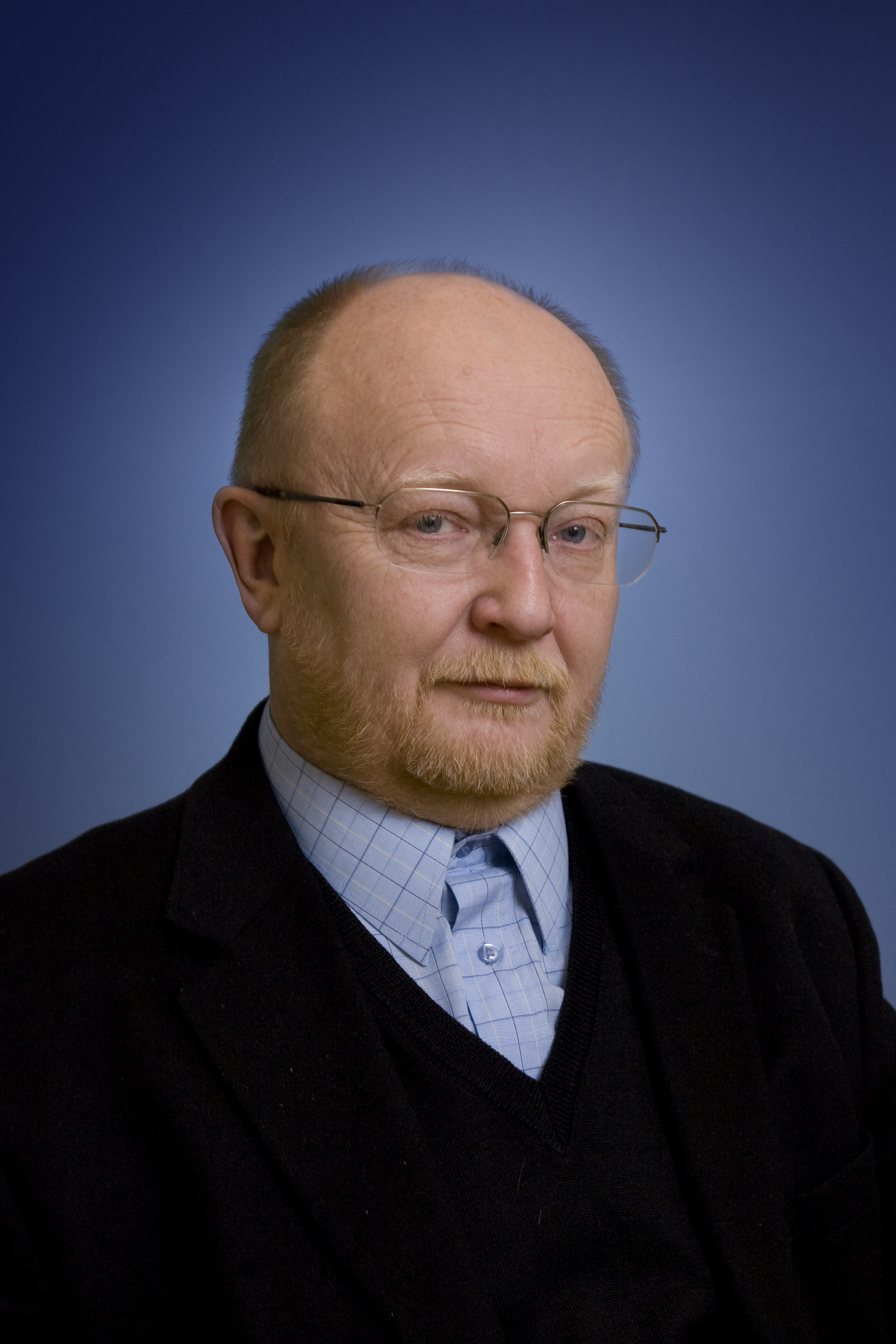
Former Scholar in Residence, Religion, Society, and Security Program
Malashenko is a former chair of the Carnegie Moscow Center’s Religion, Society, and Security Program.
Recent Work
Alexey Malashenko
Alexey Malashenko
Carnegie does not take institutional positions on public policy issues; the views represented herein are those of the author(s) and do not necessarily reflect the views of Carnegie, its staff, or its trustees.

U.S. unpredictability has allowed China to capitalize on its positioning as the “responsible great power”. Paradoxically, the more China wins the perception game, the more likely expectations will rise for Beijing to deliver not just words but to demonstrate with its deeds.

Chong Ja Ian

Hanoi and Beijing have long treated each other as distant cousins rather than comrades in arms. That might be changing as both sides draw closer to hedge against uncertainty and America’s erratic behavior.

Nguyễn Khắc Giang

Across Asia, China is better positioned to withstand energy shocks from the fallout of the Iran war. Its abundant coal capacity can ensure stability in the near term. Yet at the same time, the country’s energy transition away from coal will make it even less vulnerable during the next shock.

Damien Ma

Malaysia’s chairmanship sought to fend off short-term challenges while laying the groundwork for minimizing ASEAN’s longer-term exposure to external stresses.

Elina Noor
For Malaysia, the conjunction that works is “and” not “or” when it comes to the United States and China.
Elina Noor