

Article
- +1
Toby Dalton, Mark Hibbs, Nicole Grajewski, …
{
  "authors": [
    "Mark Hibbs"
  ],
  "type": "legacyinthemedia",
  "centerAffiliationAll": "dc",
  "centers": [
    "Carnegie Endowment for International Peace",
    "Malcolm H. Kerr Carnegie Middle East Center"
  ],
  "collections": [
    "Iranian Proliferation"
  ],
  "englishNewsletterAll": "ctw",
  "nonEnglishNewsletterAll": "",
  "primaryCenter": "Carnegie Endowment for International Peace",
  "programAffiliation": "NPP",
  "programs": [
    "Nuclear Policy"
  ],
  "projects": [],
  "regions": [
    "Middle East",
    "Iran",
    "Türkiye"
  ],
  "topics": [
    "Security",
    "Nuclear Policy",
    "Arms Control"
  ]
}
Source: Getty
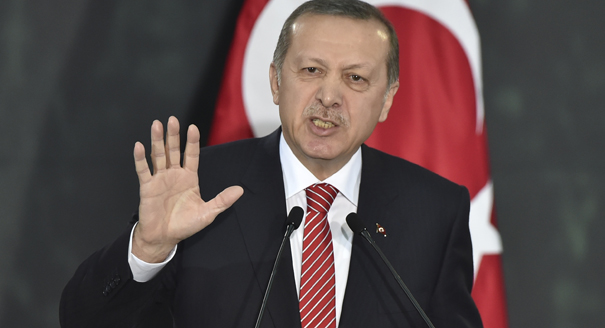
Turkey has figured in a recent case where nonproliferation interests and perceived strategic interests collided.
Two months from now in New York, cabinet-level officials from 189 countries will read out national statements filled to the brim with resolve to combat the spread of nuclear arms, as they do every five years when the Nuclear Nonproliferation Treaty (NPT) is reviewed by its member states.
The NPT imposes legally binding obligations on its parties. These include putting peaceful-use nuclear materials under safeguards, and not manufacturing nuclear weapons. But there are other things that constitute good nonproliferation behavior that the NPT does not require. When governments don’t do those things, it is often because internal conflicts arise at the level of national government decision-making–especially when more than one policy goal competes for supremacy, and when perceived strategic interests are at stake.
Beginning in the late 1970s, the United States became increasingly annoyed by two Turkish companies that were supplying power inverters for Pakistan’s uranium enrichment program. After having requested Turkey for ten years without avail to halt this trade, in 1988 U.S. President Ronald Reagan personally raised it with Turkey’s President, Kenan Evren. But after that tete-a-tete another decade passed before Turkey snuffed out the assistance to Pakistan. For Ankara, the bottom line then was that Pakistan was a critical bilateral partner–and more important than Turkey’s nonproliferation interest in this instance.U.S. officials were deterred from taking action by their own internal policy conflicts. Some concluded that allegations against the Turkish firms justified halting aid to Turkey under terms of the U.S. Foreign Assistance Act, which barred recipients from contributing to foreign nuclear-weapon programs. But that proposal got nowhere because the need to keep Pakistan on board Washington’s proxy war with the Soviet Union in Afghanistan “was always in the way,” as one former U.S. diplomat recalled.
Turkey also figured in a recent case where nonproliferation interests and perceived strategic interests collided.
Beginning in April 2013, Germany’s Federal Attorney General’s Office prosecuted four businessmen accused of supplying a wealth of equipment for Iran’s IR-40 heavy water reactor project, a unit which, it said, “may be used to produce weapons-grade plutonium.”
Berlin then requested Ankara to extradite to Germany an Iranian citizen, Hossein Tanideh, who prosecutors, on the basis of wire taps and other evidence, concluded had been directed in 2006 by Iran to procure equipment for the primary circuit of the IR-40 reactor. Tanideh had been arrested in Turkey in early 2013 after Turkish investigators, cooperating with foreign counterparts, probed Tanideh’s commercial activities in Turkey. Prosecutors believed that Tanideh had used shell companies and false identities to try to obtain the equipment for Iran. Germany’s Attorney General determined that Tanideh was working for the company responsible for construction of the IR-40 and that is subject to Security Council sanctions since 2006. The U.S. Department of State identifies that organization as the Modern Industries Technique Company (MITEC).
In November 2013, a German court convicted the four businessmen of export control violations, including of the Security Council embargo of assistance to Iran’s nuclear program, and for seriously disturbing Germany’s foreign relations.
Tanideh remained in custody in Turkey, and Germany still aimed to prosecute him. The Turkish government mulled its options. It could honor the German extradition request. Or it could prosecute Tanideh in Turkey for export control violations that its probe of Tanideh found had been perpetrated.
Instead, Turkey released Tanideh from custody in early 2014, and it is now assumed by Western governments closely following the case that Tanideh has returned to Iran.
Tanideh is by all accounts not an insignificant player in Iran’s clandestine nuclear procurement effort. Since 2012 his name has been on the list of Specially Designated Nationals (SDN) maintained by the U.S. Treasury Department subject to sanctions and asset seizure for aiding Iran’s nuclear program.
So why didn’t Turkey extradite Tanideh to Germany or put him on trial in Turkey?
The short answer you get is that Tanideh was released as a consequence of bilateral intelligence cooperation between Iran and Turkey. Sources report that what happened in the Tanideh case was generally consistent with unconfirmed published accounts asserting that Hakan Fidan, from 2010 until this month head of Turkey’s intelligence agency, MIT, had riled Western governments by cooperating with Iran, and who may have passed on to Iran classified U.S. government intelligence assessments that had been shared with Turkey. This month, Turkish media assert that Fidan had been implicated in a Turkish judicial probe targeting pro-Iran officials in the Turkish government, and that the government thereafter pressured Turkish prosecutors to drop their investigation. Effective February 10, Fidan, a close associate of President Recip Tayyip Erdogan, resigned, according to Turkish press reports, in order to run for parliament.
Behind Turkish-Iranian intelligence cooperation however may lie deeper interests–including protecting Turkey’s 500-mile-long border with Syria, to say nothing of its 200-mile-long frontier with Iran. Since 2014 perimital security may be a more strategic concern for Turkey in the wake of Turkish efforts since 2013 to assist combatents who aim to topple Syrian President Bashar al-Assad, some of whom may be jihadists. Separately, Turkey’s AKP rulers may be minding other bilateral interests with Iran that in 2014 outweighed Ankara’s nonproliferation interest in cooperating with an important NATO and European Union partner country to halt illegal procurement to Iran’s nuclear program–including in Turkey. These might include lucrative trade ties with Iran; compensation to Iran for Turkish deployment of technology related to NATO’s anti-missile defenses; cooperation with Iran on managing political and security developments in Iraq and Kurdistan; and, in the future, cooperation with Iran in fighting jihadist terrorists.

Nonresident Senior Fellow, Nuclear Policy Program
Hibbs is a Germany-based nonresident senior fellow in Carnegie’s Nuclear Policy Program. His areas of expertise are nuclear verification and safeguards, multilateral nuclear trade policy, international nuclear cooperation, and nonproliferation arrangements.
Recent Work


Toby Dalton, Mark Hibbs, Nicole Grajewski, …
Mark Hibbs
Carnegie does not take institutional positions on public policy issues; the views represented herein are those of the author(s) and do not necessarily reflect the views of Carnegie, its staff, or its trustees.

The nuclear relationship between China and the United States is increasingly shaped by widening perception gaps rather than deliberate strategic design.

Tong Zhao
The Thai-Cambodian conflict highlights the limits to China's peacemaker ambition and the significance of this role on Southeast Asia’s balance of power.

Pongphisoot (Paul) Busbarat
Beijing believes that Washington is overestimating its own leverage and its ability to handle the trade war’s impacts.


Rick Waters, Sheena Chestnut Greitens
Tapping our network of China experts in the region, Carnegie China offers this latest “China Through a Southeast Asian Lens” report to offer preliminary assessments of whether the U.S. effort to reshape the global trading order will lead countries in the region to tilt toward Beijing.



Selina Ho, Khin Khin Kyaw Kyee, Joseph Ching Velasco, …
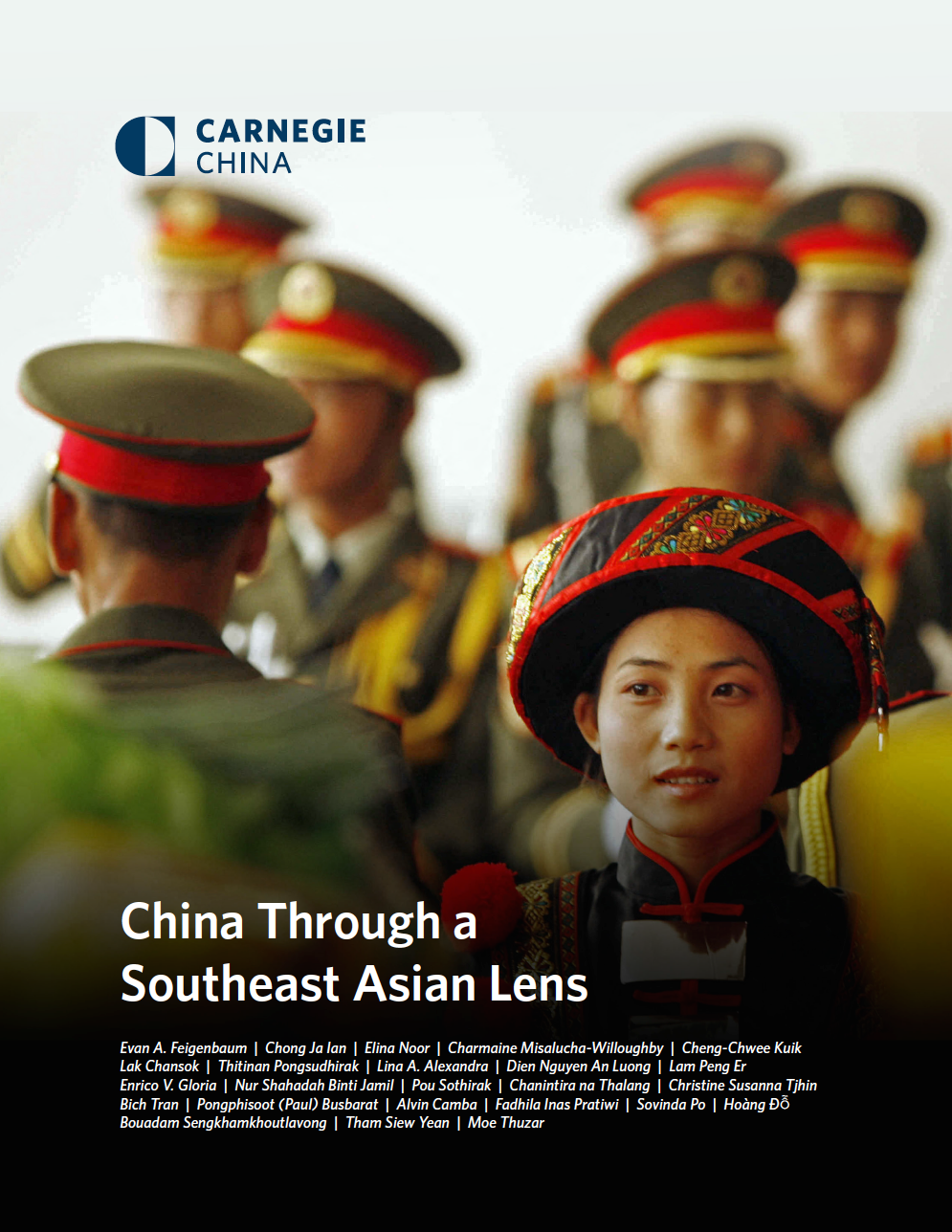
Because strategic, economic, and ideological perceptions of China contain multiple, sometimes contradictory facets in Southeast Asia, receptions of and responses to Beijing diverge across and within state lines.



Evan A. Feigenbaum, Chong Ja Ian, Elina Noor