

Commentary
Yukon Huang, Isaac B. Kardon, Matt Sheehan
{
  "authors": [
    "Yukon Huang"
  ],
  "type": "legacyinthemedia",
  "centerAffiliationAll": "dc",
  "centers": [
    "Carnegie Endowment for International Peace"
  ],
  "collections": [],
  "englishNewsletterAll": "asia",
  "nonEnglishNewsletterAll": "",
  "primaryCenter": "Carnegie Endowment for International Peace",
  "programAffiliation": "AP",
  "programs": [
    "Asia"
  ],
  "projects": [],
  "regions": [
    "East Asia",
    "China"
  ],
  "topics": [
    "Political Reform",
    "Economy"
  ]
}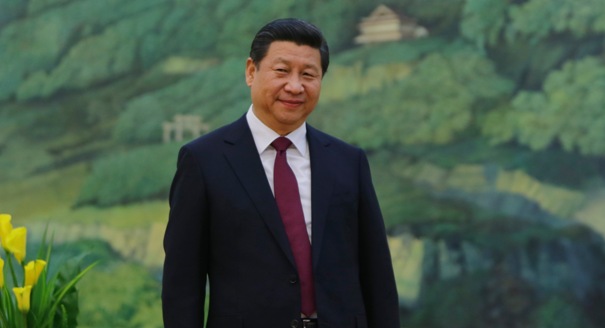
Source: Getty
Xi Jinping’s anticorruption campaign will only succeed if more is done to address the structural factors making corruption possible.
Source: Wall Street Journal
A decade from now, President Xi Jinping’s reign might be defined more by the success of his anticorruption campaign than his country’s material progress. China has always been the outlier on many economic issues, and so it is with corruption. Studies show that for most developing countries, corruption retards economic growth. They also suggest that developed countries are less corrupt than developing ones. So has China managed to grow so rapidly because or in spite of rampant corruption? And why has corruption in China gotten worse rather than better?
Corruption has featured prominently in China’s dynastic history, but this current bout stems, ironically, from the major reforms launched by Deng Xiaoping. His opening-up of the economy four decades ago paved the way for a hybrid socialist market economy that, similar to the former Soviet Union republics, is particularly prone to corruption during its transition. Deng’s famous saying that “to get rich is glorious” removed any moral qualms about making money—legally or illegally.
The creation of a dual-track economy, with parallel market and state-driven activities and prices, created the incentive for corruptive interaction among three central players. One is the private entrepreneur who saw the potential to prosper by providing a better product but lacked the resources to do so. The solution often was to co-opt a representative of a state enterprise who could provide the resources, especially financing from state-owned banks. Both, however, needed the blessing of the local official—almost always also a Party member—who had the authority to make the collaboration politically acceptable.Corruption and growth thus went hand in hand. In China’s overly centralized bureaucracy, these relationships helped get around the excessive regulations and controls and thus improved efficiency. Corruption is usually seen as hurtful to growth because it represses investment, but China’s investment rate is widely seen as being too high rather than too low. Its unique, regionally decentralized administrative system checked the growth-inhibiting aspects of corruption by setting investment and production targets for local officials. This fostered a unity of purpose, so that even as corruption flourished, the collaborators worked to make growth the guiding principle for governance.
Corruption in the transition phase was enhanced by the existence of dual prices for consumer and producer goods—one market-determined, the other subsidized. This created the opportunity for illicit gains through price arbitrage. Unification of output prices eliminated most of those rent-seeking opportunities years ago. Today the problem lies in the distorted prices for inputs such as land, energy, capital and labor. That is why Mr. Xi’s anticorruption campaign has been targeting the energy companies and why land-development practices, interest-rate liberalization and even labor-migration policies are so high on the reform agenda.
China’s rapid growth encouraged ever-rising levels of corruption because more wealth creation meant more could to be siphoned off. An economy’s most vulnerable period comes during the transition from being centrally controlled to being market-driven, when the rules and property rights are unclear. The danger lies in being stuck in the transition. Thus the defining question now is whether China will eventually fulfill its Third Plenum pledge, made more than a year ago, that the market—not the state—will be the primary force for allocating resources. Otherwise corruption will continue to flourish.
While corruption in China hasn’t led to economic stagnation, its demoralizing effect on perceptions of social equity and justice is driving the current crackdown. Campaigns tend to be run by “moralists” who argue for fundamental changes in values—in this case to preserve the credibility of the Communist Party. It is this need to maintain legitimacy that drives Mr. Xi’s actions.
Economists like Premier Li Keqiang tend to focus more on altering incentives by eliminating regulations that nurture corruption. Simplifying investment procedures and lowering tax rates are thus the focus of attention, making the negotiation of free-trade or investment treaties the instruments of reducing corruption.
The current corruption campaign is heavy on dealing with nonstructural factors and moral suasion by trying to reign in bribes and greed through enhanced penalties. The chance of going to jail for corruption according to one study, is only 3% in China—making corruption a low-risk, high-return gamble. Persecuting more “tigers and flies” changes the risk-benefit calculation. But ultimately Mr. Xi will succeed only if more is done to address the structural factors driving corruption.
This means breaking the corruptive relationship between the central players in the dual economy, separating the roles and responsibilities of the four major agents driving China’s system—the Party, the government, enterprises and banks. This would require some form of political liberalization to build more effective mechanisms for accountability and transparency that would make it more difficult for corruption to be sustainable.
Many seeking precedents for what might happen in China look to the Arab Spring movement or countries like Indonesia. But more appropriate are the experiences of the very few highly successful developing economies formerly with autocratic political systems, such as Singapore, South Korea and Taiwan. There, rapid economic growth accompanied by the rise of a more urban and services-oriented middle-class triggered gradual political liberalization. This is the likely course for China, albeit managed by the Party.

Senior Fellow, Asia Program
Huang is a senior fellow in the Carnegie Asia Program where his research focuses on China’s economy and its regional and global impact.
Recent Work


Yukon Huang, Isaac B. Kardon, Matt Sheehan
Yukon Huang, Genevieve Slosberg
Carnegie does not take institutional positions on public policy issues; the views represented herein are those of the author(s) and do not necessarily reflect the views of Carnegie, its staff, or its trustees.

Across Asia, China is better positioned to withstand energy shocks from the fallout of the Iran war. Its abundant coal capacity can ensure stability in the near term. Yet at the same time, the country’s energy transition away from coal will make it even less vulnerable during the next shock.

Damien Ma

In the latest Five-Year Plan, the Chinese president cements the shift to an innovation-driven economy over a consumption-driven one.
Damien Ma

For Malaysia, the conjunction that works is “and” not “or” when it comes to the United States and China.

Elina Noor

ASEAN needs to determine how to balance perpetuating the benefits of technology cooperation with China while mitigating the risks of getting caught in the crosshairs of U.S.-China gamesmanship.
Elina Noor
In July 2025, Vietnam and China held their first joint army drill, a modest but symbolic move reflecting Hanoi’s strategic hedging amid U.S.–China rivalry.

Nguyễn Khắc Giang