
• Commentary
  • Research
  • Experts
  • Events
Carnegie China logoCarnegie lettermark logo
{
  "authors": [
    "Dmitri Trenin",
    "Yu Bin"
  ],
  "type": "legacyinthemedia",
  "centerAffiliationAll": "dc",
  "centers": [
    "Carnegie Endowment for International Peace",
    "Carnegie Russia Eurasia Center"
  ],
  "collections": [],
  "englishNewsletterAll": "ctw",
  "nonEnglishNewsletterAll": "",
  "primaryCenter": "Carnegie Russia Eurasia Center",
  "programAffiliation": "russia",
  "programs": [
    "Russia and Eurasia"
  ],
  "projects": [],
  "regions": [
    "East Asia",
    "China",
    "Russia"
  ],
  "topics": [
    "Economy",
    "Trade",
    "Foreign Policy"
  ]
}

Source: Getty

In The Media
Carnegie Russia Eurasia Center

China-Russia Relations

Xi Jinping’s visit to Russia has high value in the wake of the Ukraine crisis and the West’s response.

Link Copied
By Dmitri Trenin and Yu Bin
Published on May 8, 2015

Source: China Radio International’s People In the Know

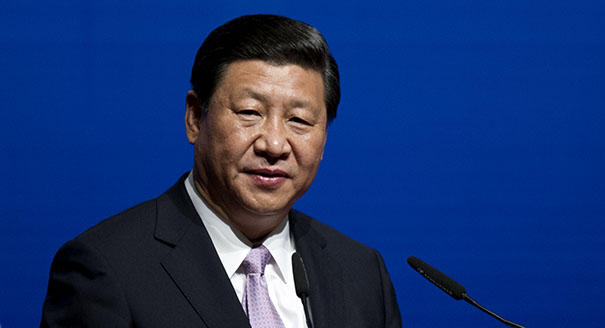
China’s President Xi Jinping is going to Russia for his fourth visit to the country since he became the Chinese president in 2013. His main agendas in Russia include an attendance at the 70th anniversary celebration of Russia’s victory in World War II. The visit is also expected to bring forth now cooperative initiatives between the two neighbors bonded by an ever deeper strategic partnership.

On China Radio International, Carnegie Moscow Center’s Dmitri Trenin discussed Xi Jinping’s visit to Russia with Zheng Chenguang. He was joined by Yu Bin, a professor of political science at the Wittenberg University in the United States.

The visit has high symbolic value in the wake of the Ukraine crisis and the West’s response, Trenin said. He added that Russia regards China as a potential replacement for the sanction regime losses as well as an opportunity to reform its own economy through joint projects in infrastructure and science and technology.

This interview was originally broadcast on China Radio International.

About the Authors

Dmitri Trenin

Former Director, Carnegie Moscow Center

Trenin was director of the Carnegie Moscow Center from 2008 to early 2022.

Yu Bin

Authors

Dmitri Trenin
Former Director, Carnegie Moscow Center
Yu Bin
EconomyTradeForeign PolicyEast AsiaChinaRussia

Carnegie does not take institutional positions on public policy issues; the views represented herein are those of the author(s) and do not necessarily reflect the views of Carnegie, its staff, or its trustees.

More Work from Carnegie China

  • Commentary
    Malaysia’s Year as ASEAN Chair: Managing Disorder

    Malaysia’s chairmanship sought to fend off short-term challenges while laying the groundwork for minimizing ASEAN’s longer-term exposure to external stresses.

      Elina Noor

  • Commentary
    When It Comes to Superpower Geopolitics, Malaysia Is Staunchly Nonpartisan

    For Malaysia, the conjunction that works is “and” not “or” when it comes to the United States and China.

      Elina Noor

  • Commentary
    ASEAN-China Digital Cooperation: Deeper but Clear-Eyed Engagement

    ASEAN needs to determine how to balance perpetuating the benefits of technology cooperation with China while mitigating the risks of getting caught in the crosshairs of U.S.-China gamesmanship.

      Elina Noor

  • Commentary
    Neither Comrade nor Ally: Decoding Vietnam’s First Army Drill with China

    In July 2025, Vietnam and China held their first joint army drill, a modest but symbolic move reflecting Hanoi’s strategic hedging amid U.S.–China rivalry.

      • Nguyen-khac-giang

      Nguyễn Khắc Giang

  • Commentary
    Today’s Rare Earths Conflict Echoes the 1973 Oil Crisis — But It’s Not the Same

    Regulation, not embargo, allows Beijing to shape how other countries and firms adapt to its terms.

      Alvin Camba

Get more news and analysis from
Carnegie China
Carnegie China logo, white
  • Research
  • About
  • Experts
  • Events
  • Contact
  • Careers
  • Privacy
  • For Media
Get more news and analysis from
Carnegie China
© 2026 Carnegie Endowment for International Peace. All rights reserved.







