

Commentary
But their "principal to principal" model will only be as effective as the political strength of each leader back home.
Damien Ma
{
  "authors": [
    "Karim Sadjadpour",
    "Behnam Ben Taleblu"
  ],
  "type": "other",
  "centerAffiliationAll": "dc",
  "centers": [
    "Carnegie Endowment for International Peace",
    "Malcolm H. Kerr Carnegie Middle East Center"
  ],
  "collections": [],
  "englishNewsletterAll": "menaTransitions",
  "nonEnglishNewsletterAll": "",
  "primaryCenter": "Carnegie Endowment for International Peace",
  "programAffiliation": "MEP",
  "programs": [
    "Middle East"
  ],
  "projects": [],
  "regions": [
    "Middle East",
    "Iran"
  ],
  "topics": [
    "Political Reform",
    "Foreign Policy",
    "Nuclear Policy"
  ]
}
Source: Getty
Iran today remains a country of enormous but unfulfilled potential. And unless and until Tehran starts to privilege its national interests before revolutionary ideology, both the Iranian people and those in its regional crosshairs will continue to suffer the consequences.
Source: FRIDE
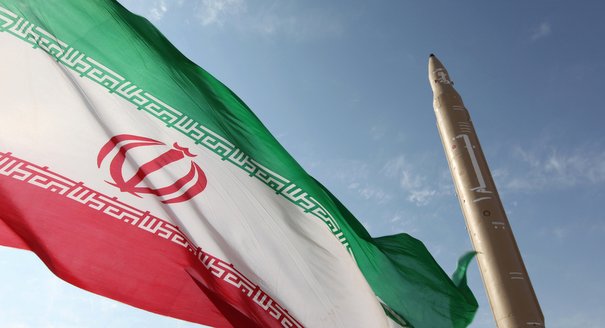
No country in the Middle East has Iran’s combination of geographic size, strategic location, large and educated population, ancient history, and vast natural resources. Regardless of whom rules Tehran, these attributes will always fuel aspirations of regional primacy. During the reign of the United States (US)-allied Shah, Mohammed Reza Pahlavi, Iran’s external ambitions were cloaked in nationalism and prioritised developing Iranian power and influence within the international system. Since the 1979 revolution and the advent of the Islamic Republic, Iran’s foreign policy has been cloaked in an anti-Imperialist, Islamist revolutionary ideology that has expanded the country’s regional influence by challenging the international system — but has subjected its population to economic hardship, insecurity, and global isolation.Foremost among these policies has been the Islamic Republic’s staunch opposition to the US and its interests and allies in the Middle East. Since radical students seized the US embassy in the 1979 hostage crisis, Iran and the US have been engaged in an often cold, and occasionally hot, political and asymmetrical conflict from the Levant to the Persian Gulf. While the promise of a nuclear deal has raised hopes for US-Iran reconciliation, Iranian Supreme Leader Ayatollah Khamenei has consistently made clear his profound mistrust toward Washington and his opposition to political normalisation....

Senior Fellow, Middle East Program
Karim Sadjadpour is a senior fellow at the Carnegie Endowment for International Peace, where he focuses on Iran and U.S. foreign policy toward the Middle East.
Behnam Ben Taleblu
Carnegie does not take institutional positions on public policy issues; the views represented herein are those of the author(s) and do not necessarily reflect the views of Carnegie, its staff, or its trustees.

But their "principal to principal" model will only be as effective as the political strength of each leader back home.

Damien Ma

U.S. unpredictability has allowed China to capitalize on its positioning as the “responsible great power”. Paradoxically, the more China wins the perception game, the more likely expectations will rise for Beijing to deliver not just words but to demonstrate with its deeds.

Chong Ja Ian

Hanoi and Beijing have long treated each other as distant cousins rather than comrades in arms. That might be changing as both sides draw closer to hedge against uncertainty and America’s erratic behavior.

Nguyễn Khắc Giang

Across Asia, China is better positioned to withstand energy shocks from the fallout of the Iran war. Its abundant coal capacity can ensure stability in the near term. Yet at the same time, the country’s energy transition away from coal will make it even less vulnerable during the next shock.
Damien Ma

Malaysia’s chairmanship sought to fend off short-term challenges while laying the groundwork for minimizing ASEAN’s longer-term exposure to external stresses.

Elina Noor