

Article
Deborah Gordon, Stephen D. Ziman
{
  "authors": [
    "Deborah Gordon"
  ],
  "type": "legacyinthemedia",
  "centerAffiliationAll": "dc",
  "centers": [
    "Carnegie Endowment for International Peace"
  ],
  "collections": [],
  "englishNewsletterAll": "ctw",
  "nonEnglishNewsletterAll": "",
  "primaryCenter": "Carnegie Endowment for International Peace",
  "programAffiliation": "SCP",
  "programs": [
    "Sustainability, Climate, and Geopolitics"
  ],
  "projects": [
    "Carnegie Oil Initiative"
  ],
  "regions": [
    "North America",
    "United States"
  ],
  "topics": [
    "Climate Change"
  ]
}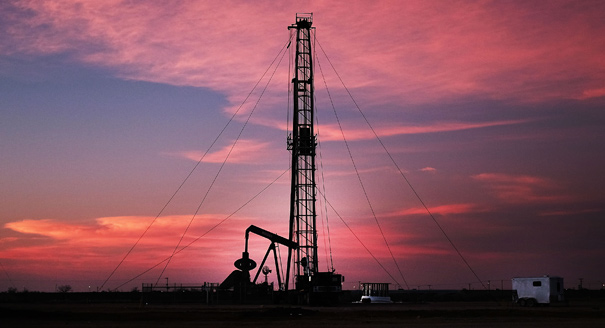
Source: Getty
From its sheer volumes to what it’s made of and its environmental impacts, the next century of oil will likely be very different from the last.
Source: Christian Science Monitor
As oil prices waver and the world’s power brokers scramble, a fundamental, burning question is growing: What exactly is oil?
What is seemingly a simple question is becoming harder to answer. From its sheer volumes to what it’s made of and its environmental impacts, the next century of oil will likely be very different from the last. Despite John D. Rockefeller’s successful corporate marketing, there is no standard oil.
This paradigm shift in petroleum resources is confounded by outdated myths.Although Conventional oil reserves, the principal liquid petroleum resource that fueled the twentieth century, are depleting, there is no shortage of alternative oils around the globe. In fact, there may at least 500 years of oil in place, a significant share of which may be technically recoverable over time. Three-quarters of the estimated 24 trillion barrels of alternative oils buried in different formations will likely require unconventional techniques to extract, refine, and consume. This highlights the fact that oil resources will need to be managed anew in terms of their infrastructures, economics, safety, local environmental, and global climate impacts.
Think again. It’s a brave new world of oil. Tomorrow’s oils are expected to be less like yesterday’s. The more technologically adept we become, the farther companies can reach into once inaccessible regions for alternative oils. This includes oils that reside tens of thousands of feet below the Earth’s surface, some that are so waterlogged that less than 5 percent of the barrel produced is actually oil, and others that can leave coal-like residues.
Just as oils are changing, so are their climate impacts. In a sample of 30 global oils, it is estimated that there is an 80 percent difference in greenhouse gas emissions (GHGs) between the lowest- and highest-emitting oils. In other words, some oils are nearly twice as dirty as others. And the total emission spread between oils is expected to grow as new alternative oils are identified. Some have ten times higher emissions than others to extract, while others have five times higher emissions to refine. Bottom line: oil’s climate impacts appear to have large variance, and these differences are large enough to matter.
Not necessarily. If only it were that simple – then the market would work wonders to protect the environment. But the economics of oil are far more complex than the industry lets on. Private costs do not stand in as proxies for public goods. In fact, there does not appear to be a correlation between oil production costs and greenhouse gas emissions. Some oils, like offshore oils, are relatively cheap to extract according to the global oil consultancy, Rystad, but can have large variance and relatively high average climate footprints. Other oils that are expensive to produce, like deepwater oils, may have relatively lower greenhouse gas emissions. The truth is that producers, investors, traders, regulators, and the public know precious little about the economics and externalities of alternative oils.
Unlikely – at least not without smart, durable policy intervention. Electric vehicles, advanced biofuels, liquefied natural gas, and others alternative fuels cannot readily compete with oil. Instead, oils will largely compete against other oils. Most current oil displacement strategies measure benefits in terms of avoided emissions from an average barrel of oil. But it is the marginal barrel of oil avoided that serves as the economic rationale for the increased use of alternative oils in the market. ExxonMobil forecasts that oil demand will outpace gas, coal, and all other energy sources through mid century. This projection underscores the serious challenge of a wholesale shift beyond petroleum.
Oil data transparency is the key to busting these myths. Knowledge and disclosure about what oil is becoming will be necessary to increase market efficiency, expand choices, leverage opportunities, ensure safety, and address climate challenges.
This article was originally published in the Christian Science Monitor.

Former Director and Senior Fellow, Energy and Climate Program
Gordon was director of Carnegie’s Energy and Climate Program, where her research focuses on oil and climate change issues in North America and globally.
Recent Work
Deborah Gordon, Stephen D. Ziman
Deborah Gordon, Smriti Kumble, David Livingston
Carnegie does not take institutional positions on public policy issues; the views represented herein are those of the author(s) and do not necessarily reflect the views of Carnegie, its staff, or its trustees.

The nuclear relationship between China and the United States is increasingly shaped by widening perception gaps rather than deliberate strategic design.

Tong Zhao

But their "principal to principal" model will only be as effective as the political strength of each leader back home.

Damien Ma

U.S. unpredictability has allowed China to capitalize on its positioning as the “responsible great power”. Paradoxically, the more China wins the perception game, the more likely expectations will rise for Beijing to deliver not just words but to demonstrate with its deeds.

Chong Ja Ian

For Malaysia, the conjunction that works is “and” not “or” when it comes to the United States and China.

Elina Noor
Regulation, not embargo, allows Beijing to shape how other countries and firms adapt to its terms.

Alvin Camba