

Article
China has showcased its engineering prowess with small modular reactor demonstration projects. But turning these technological achievements into commercial success will be a greater challenge.
Tong Zhao
{
  "authors": [
    "Marat Atnashev"
  ],
  "type": "commentary",
  "centerAffiliationAll": "",
  "centers": [
    "Carnegie Endowment for International Peace",
    "Carnegie Russia Eurasia Center"
  ],
  "collections": [
    "Inside Russia"
  ],
  "englishNewsletterAll": "",
  "nonEnglishNewsletterAll": "",
  "primaryCenter": "Carnegie Russia Eurasia Center",
  "programAffiliation": "",
  "programs": [],
  "projects": [],
  "regions": [
    "Russia"
  ],
  "topics": [
    "Economy"
  ]
}
Source: Getty
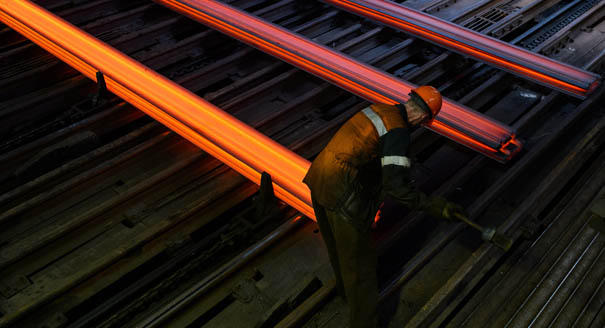
Since the first Five-Year Plan, the steel industry has been a major engine of the Russian economy. Despite being privatized, market-oriented and relatively competitive, it became burdened with large amounts of debt and may be headed for greater government involvement with the maladies that entails
Since the first Five-Year Plan, the steel industry has been a major engine of the Russian economy. Under Stalin, steel was a crucial part of the Soviet Union’s industrialization and a symbol of its modernization. It is no coincidence that Stalin—né Joseph Dzhugashvili—chose a nom de guerre that means “man of steel.”
Today, the steel industry accounts for 20 percent of the country’s industrial production and employs around 1 million people. Since being privatized in the 1990s, steel has become one of the country’s most market-oriented industries. The state is minimally involved in steel, making it more efficient and competitive than other industries; competition and private ownership have optimized production capacities and introduced important technological innovations.
Despite these reforms, Russian steel may be in trouble soon. It is gradually depleting investment reserves from the Soviet era, and isn’t able to generate enough revenue to renovate its dilapidated facilities. Such a system has a limited lifespan; it can only survive as long as its physical plants last.
Revenue has fallen largely because of the global economic downturn: falling demand has led to excess production capacity, driving down prices and forcing producers to work at or below variable cost. Low demand can last for decades, meaning that profit margins in the steel industry may be slim for quite some time.
The industry’s woes are also related to its experience with privatization in the 1990s, which coincided with the rapid growth of the Chinese economy. Emboldened by seemingly limitless demand and easy access to financing, the leaders of the Russian steel industry quickly set their sights on foreign assets. However, none of the companies’ major investments abroad have paid off. Instead, they became burdened with large amounts of debt, much of which is now owned by the Russian government. Thus, steel is at once reformed and market-oriented, and highly dependent on the state.
The current surplus of production capacity means that Russian steel companies will have to search for new ways to remain profitable.
The American steel industry presents an intriguing model. Unlike Russian steel, which is produced in massive, remote “monotowns”—cities in which a single industry comprises most of the economy—American steel is produced in small, compact plants that give it significant advantages over competitors. American plants are geographically well located (keeping freight costs low), and often produce niche products that are difficult to substitute. Further, complicated marketing schemes and regional and national protectionism mean that international competitors face considerable barriers to entering the American market.
If the Russian government continues to take a hands-off approach to the steel industry, this alternative may be a viable way forward. It would entail further reducing and restructuring production facilities, closing inefficient enterprises, and abandoning some unprofitable export routes. These steps would cut the fat off an industry that is stuck in the nineteenth century, free up several hundred thousand people for more productive employment, and increase the efficiency of the remaining workers. Understandably, the government is unlikely to support such restructuring, as it would have profound, negative social consequences.
In the future, Russia may also consider nationalizing the steel industry. This could be done easily enough: currently, the total capitalization of all steel companies is many times less than their total debt, most of which belongs to state-owned banks. In other words, the state is already the main investor in the industry.
However, the state isn’t looking to add to its problems. Mechel, one of Russia’s largest metallurgic companies, has been on the verge of bankruptcy for three years, but no one—including the government—wants to bankrupt the company and assume responsibility for it. As long as stockholders manage to balance transaction flows without capital infusions, everyone will be happy with the status quo. The state sees stockholders of Mechel and other companies as managers hired to deal with problems. For their part, stockholders see their assets as relatively inexpensive stock options: their losses are capped by low capitalization, and they get to keep all of the gains.
In the long run, the Russian economy may pay a high price for the creeping nationalization of the industry through increased debt to the state. Besides the cost of debt forgiveness, government support will allow inefficient enterprises to stay in business, reduce operational efficiency, increase corruption, and lead to gradual monopolization.
Thus, even though Russian steel is currently a relatively reformed, market-oriented industry with little government participation, if it does not continue to reform itself, it may be headed for greater government involvement and the host of maladies that entails.
Marat Atnashev is an independent analyst and the former vice president of Evraz
Marat Atnashev
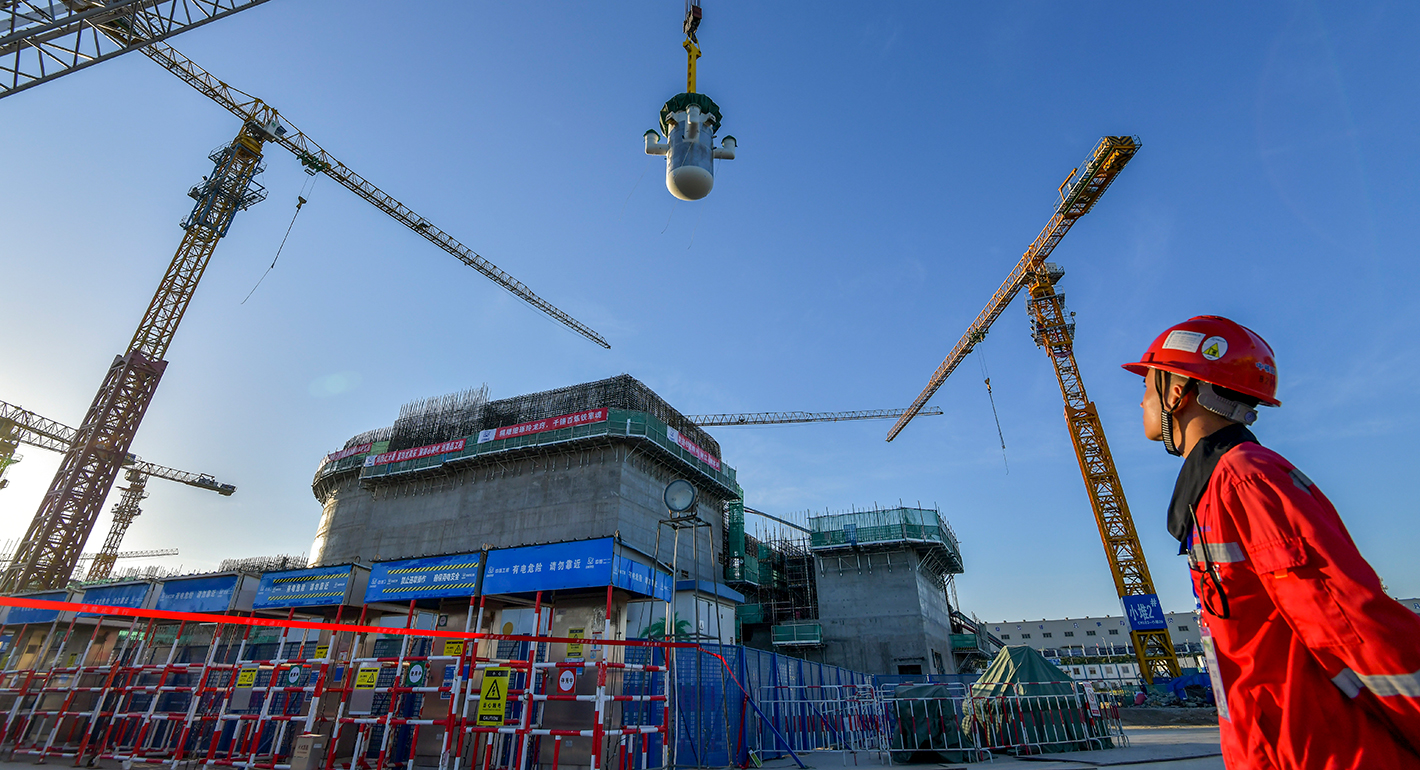
China has showcased its engineering prowess with small modular reactor demonstration projects. But turning these technological achievements into commercial success will be a greater challenge.

Tong Zhao

The Plaza Accord was not an externally imposed punishment of Japan but part of a broader restructuring that Japanese economists and policymakers themselves recognized was necessary. Its effects were undermined, however, when Tokyo responded to the resulting slowdown with policies that exacerbated investment, credit expansion, and the very imbalances the adjustment was intended to resolve.

Michael Pettis
China’s banking crisis in the 2000s was resolved by transferring the costs to households through financial repression—a decision that recapitalized the banks while exacerbating the structural imbalances that continue to shape the Chinese economy today.
Michael Pettis

In the latest Five-Year Plan, the Chinese president cements the shift to an innovation-driven economy over a consumption-driven one.

Damien Ma
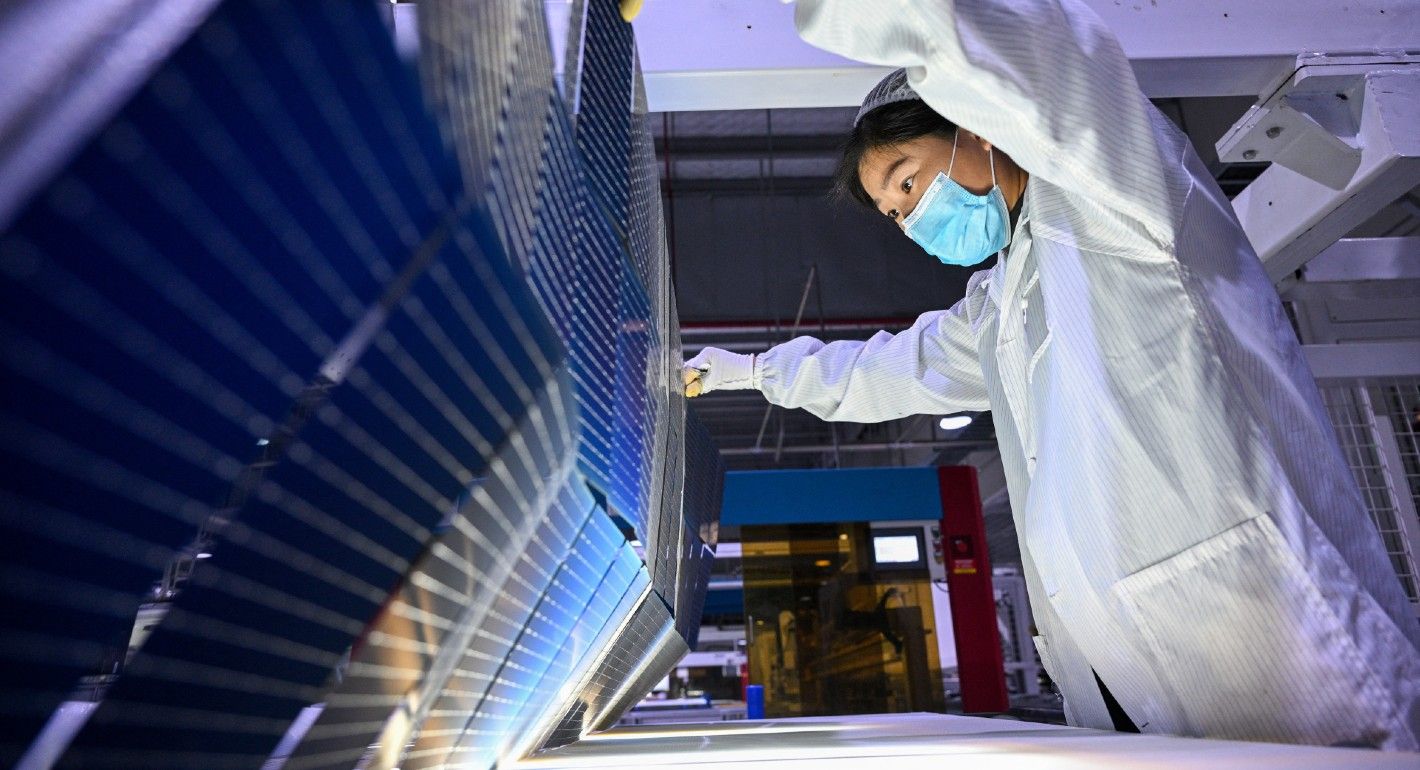
Rather than climate ambitions, compatibility with investment and exports is why China supports both green and high-emission technologies.

Mathias Larsen