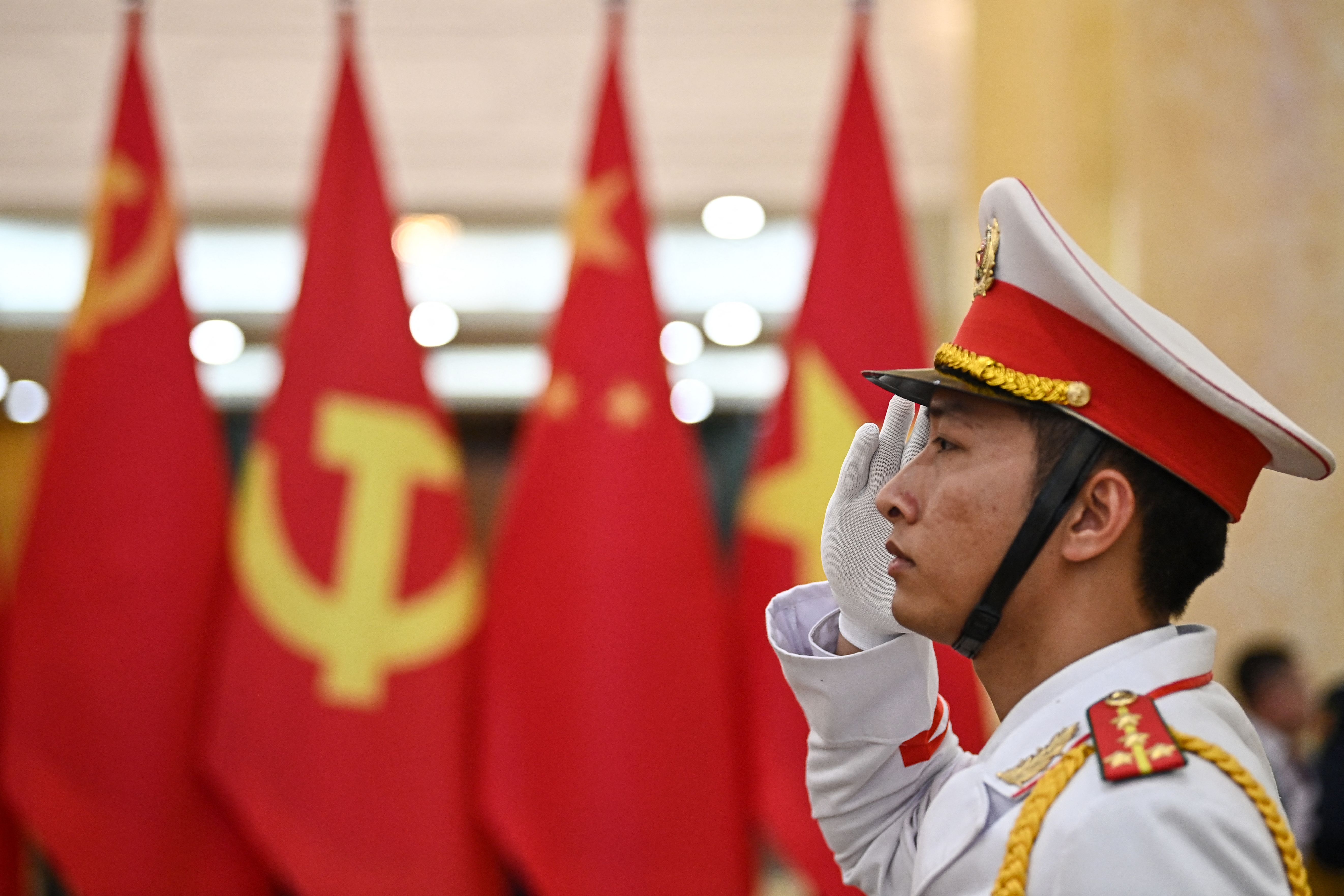


In July 2025, Vietnam and China held their first joint army drill, a modest but symbolic move reflecting Hanoi’s strategic hedging amid U.S.–China rivalry.
Nguyễn Khắc Giang
{
"authors": [
"Marc Lynch",
"Stacey Philbrick Yadav"
],
"type": "legacyinthemedia",
"centerAffiliationAll": "dc",
"centers": [
"Carnegie Endowment for International Peace",
"Malcolm H. Kerr Carnegie Middle East Center"
],
"collections": [
"Arab Awakening"
],
"englishNewsletterAll": "menaTransitions",
"nonEnglishNewsletterAll": "",
"primaryCenter": "Carnegie Endowment for International Peace",
"programAffiliation": "MEP",
"programs": [
"Middle East"
],
"projects": [],
"regions": [
"Middle East",
"Saudi Arabia",
"Yemen",
"Gulf"
],
"topics": [
"Political Reform",
"Security",
"Military"
]
}Source: Getty
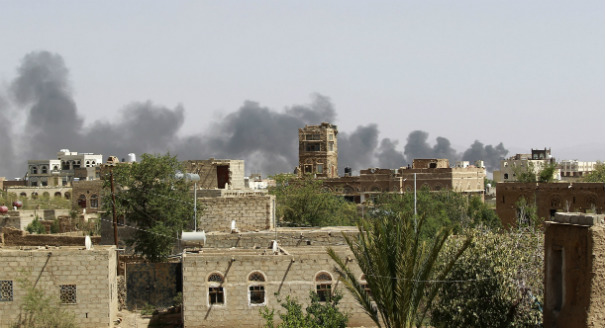
The conflict in Yemen has produced a humanitarian disaster, but possibilities remain for bilateral negotiations between warring parties.
Source: Project on Middle East Political Science
Yemen’s highly polarized political sphere makes it difficult to envision what a victory would look like for any side or what a future Yemeni state would like look. Speaking with Carnegie’s Marc Lynch, Stacey Philbrick Yadav discusses the current situation in Yemen and the humanitarian effects of the ongoing conflict.
This interview originally appeared at the Project on Middle East Political Science.
Former Nonresident Senior Fellow, Middle East Program
Marc Lynch was a nonresident senior fellow in Carnegie’s Middle East Program where his work focuses on the politics of the Arab world.
Stacey Philbrick Yadav
Carnegie does not take institutional positions on public policy issues; the views represented herein are those of the author(s) and do not necessarily reflect the views of Carnegie, its staff, or its trustees.
In July 2025, Vietnam and China held their first joint army drill, a modest but symbolic move reflecting Hanoi’s strategic hedging amid U.S.–China rivalry.
Nguyễn Khắc Giang
The Thai-Cambodian conflict highlights the limits to China's peacemaker ambition and the significance of this role on Southeast Asia’s balance of power.
Pongphisoot (Paul) Busbarat
Beijing believes that Washington is overestimating its own leverage and its ability to handle the trade war’s impacts.
Rick Waters, Sheena Chestnut Greitens
Tapping our network of China experts in the region, Carnegie China offers this latest “China Through a Southeast Asian Lens” report to offer preliminary assessments of whether the U.S. effort to reshape the global trading order will lead countries in the region to tilt toward Beijing.
Selina Ho, Khin Khin Kyaw Kyee, Joseph Ching Velasco, …
Because strategic, economic, and ideological perceptions of China contain multiple, sometimes contradictory facets in Southeast Asia, receptions of and responses to Beijing diverge across and within state lines.
Evan A. Feigenbaum, Chong Ja Ian, Elina Noor