

Commentary
Aron Lund
{
  "authors": [
    "Aron Lund"
  ],
  "type": "legacyinthemedia",
  "centerAffiliationAll": "dc",
  "centers": [
    "Carnegie Endowment for International Peace"
  ],
  "collections": [
    "Arab Awakening"
  ],
  "englishNewsletterAll": "menaTransitions",
  "nonEnglishNewsletterAll": "",
  "primaryCenter": "Carnegie Endowment for International Peace",
  "programAffiliation": "MEP",
  "programs": [
    "Middle East"
  ],
  "projects": [],
  "regions": [
    "Middle East",
    "Syria"
  ],
  "topics": [
    "Political Reform",
    "Democracy",
    "Economy",
    "Security"
  ]
}
Source: Getty
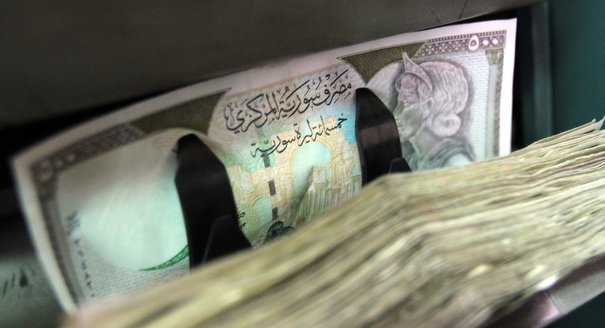
As the Syrian pound continues to lose value, paychecks may simply become too few and too small to move the full machinery of the state.
Source: Century Foundation
In five years of war, the people of Syria have suffered enormously. At least 300,000 Syrians are thought to have been killed, with another 2 million wounded—that’s one in ten Syrians. More than 6 million Syrians are internal refugees, and 5 million have been forced into exile.
Even in the relatively stable government-controlled areas that are home for most Syrians, living standards have plummeted. According to a UN report, an incredible 83 percent lived below the poverty line in 2015, compared to less than a third before the war. Fully half of the population is now considered to live in extreme poverty. Unemployment was at 55 percent in 2015, with four out of five youths lacking a job. Many goods are hard to come by, and the government is in slow retreat from the limited welfare services and subsidies it used to offer. In five years, GDP has shrunk 55 percent.Since this March, the value of Syria’s currency, the pound, has been sliding fast. Some economists now warn of a serious currency crisis. The dwindling value of the pound is cutting into Syrians’ purchasing power while raising the cost of subsidies on things like oil, which is imported and must be paid for in hard currency....
Read the full text of this article, originally published at the Century Foundation.
Former Nonresident Fellow, Middle East Program
Aron Lund was a nonresident fellow in the Middle East Program and the author of several reports and books on the Syrian opposition movement.
Recent Work
Aron Lund
Aron Lund
Carnegie does not take institutional positions on public policy issues; the views represented herein are those of the author(s) and do not necessarily reflect the views of Carnegie, its staff, or its trustees.

China’s banking crisis in the 2000s was resolved by transferring the costs to households through financial repression—a decision that recapitalized the banks while exacerbating the structural imbalances that continue to shape the Chinese economy today.

Michael Pettis

In the latest Five-Year Plan, the Chinese president cements the shift to an innovation-driven economy over a consumption-driven one.

Damien Ma

Rather than climate ambitions, compatibility with investment and exports is why China supports both green and high-emission technologies.

Mathias Larsen
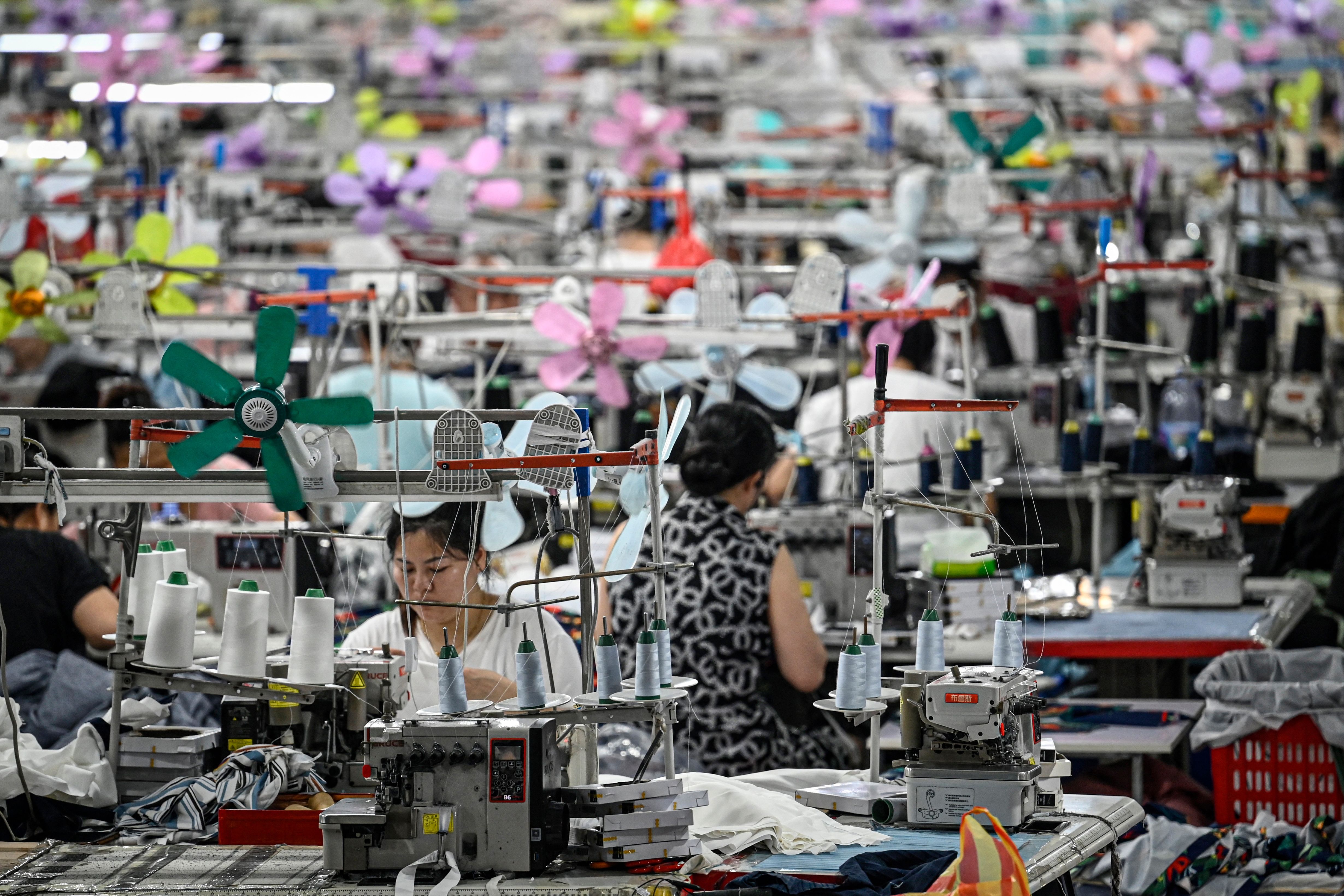
“Involution” is a new word for an old problem, and without a very different set of policies to rein it in, it is a problem that is likely to persist.
Michael Pettis

While China's investment story seems contradictory from the outside, the real answers to Beijing's high-quality growth ambitions are hiding in plain sight across the nation's cities.
Yuhan Zhang