

Commentary
Togzhan Kassenova
{
  "authors": [
    "Togzhan Kassenova"
  ],
  "type": "legacyinthemedia",
  "centerAffiliationAll": "dc",
  "centers": [
    "Carnegie Endowment for International Peace"
  ],
  "collections": [],
  "englishNewsletterAll": "ctw",
  "nonEnglishNewsletterAll": "",
  "primaryCenter": "Carnegie Endowment for International Peace",
  "programAffiliation": "NPP",
  "programs": [
    "Nuclear Policy"
  ],
  "projects": [],
  "regions": [
    "East Asia",
    "Japan"
  ],
  "topics": [
    "Nuclear Policy"
  ]
}
Source: Getty
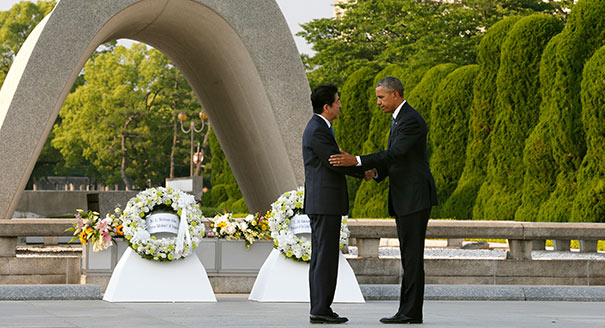
What does President Obama’s visit to Hiroshima mean for his nuclear legacy?
Source: CCTV America
Speaking on CCTV America on the eve of President Obama’s visit to Hiroshima, Carnegie’s Togzhan Kassenova discussed the significance of his trip. Kassenova explained that the trip served to remind of Obama’s personal commitment to a nuclear-free world, but also underscored the lack of progress with his nuclear agenda. Kassenova also commented on preserving the memory of Hiroshima and Nagasaki, noting that approximately 200,000 people continue to suffer adverse effects of the bombs.

Former Nonresident Fellow, Nuclear Policy Program
Kassenova was a nonresident fellow in the Nuclear Policy Program at the Carnegie Endowment.
Recent Work
Togzhan Kassenova

Toby Dalton, Togzhan Kassenova, Lauryn Williams
Carnegie does not take institutional positions on public policy issues; the views represented herein are those of the author(s) and do not necessarily reflect the views of Carnegie, its staff, or its trustees.

Across Asia, China is better positioned to withstand energy shocks from the fallout of the Iran war. Its abundant coal capacity can ensure stability in the near term. Yet at the same time, the country’s energy transition away from coal will make it even less vulnerable during the next shock.

Damien Ma
GDP growth means something fundamentally different in China than in most countries.

Michael Pettis
The Trump administration’s effort to reshape the global trading system and reset overseas security commitments is creating an historic inflection point. Less clear is how far China will be able to capitalize on these dynamics.

Li Mingjiang, Le Hong Hiep, Ngeow Chow Bing, …
Most Southeast Asian states behave as if the actions of their Northeast Asian neighbors and the Philippines will be sufficient to maintain a regional status quo from which they can benefit.

Chong Ja Ian
Patriotic and nationalist sentiments have been co-opted by self-media and social media platforms to generate profit. This has given rise to a traffic-driven business of cyber nationalism that relies on extreme xenophobic rhetoric.

Wang Qiyue, Li Mingjiang