

Q&A
Darshana M. Baruah, Satyendra Prasad, Denghua Zhang
{
  "authors": [
    "Darshana M. Baruah"
  ],
  "type": "other",
  "centerAffiliationAll": "",
  "centers": [
    "Carnegie Endowment for International Peace",
    "Carnegie India"
  ],
  "collections": [],
  "englishNewsletterAll": "",
  "nonEnglishNewsletterAll": "",
  "primaryCenter": "Carnegie Endowment for International Peace",
  "programAffiliation": "",
  "programs": [],
  "projects": [],
  "regions": [
    "South Asia",
    "India",
    "United States",
    "Asia"
  ],
  "topics": [
    "Security",
    "Foreign Policy"
  ]
}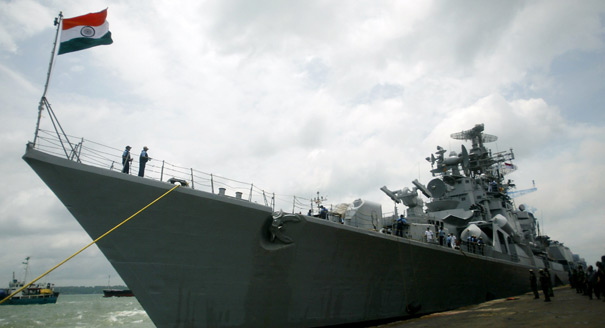
Source: Getty
Rather than just looking at Maritime Domain Awareness collaboration as a reaction to China’s rise, India must see it as a necessary step to maintain its position in the Indian Ocean and secure its strategic leverage in its primary area of interest.
Source: Asia Policy 22
The Indian Ocean is an area of primary importance to the Indian Navy and has generally been free of conflict compared with the Pacific. India’s location naturally makes its navy one of the key players in the region and an important security provider for the Indian Ocean community. In recent years, the country has significantly focused on improving its maritime domain awareness (MDA) in response to maritime security threats in coastal waters and much farther afield, and this initiative is now increasingly being driven by China’s presence in the Indian Ocean.
India’s image as a regional leader was badly damaged when targets in Mumbai, India’s financial hub, were attacked from the sea on November 26, 2008. The attacks were carried out by nonstate actors originating from Pakistan and involved the perpetrators hijacking an Indian fishing vessel and sailing to Mumbai. These attacks brought to the forefront vulnerabilities in India’s defense strategy and led to a reorientation of its maritime security policies to place much greater emphasis on MDA. India’s recently released maritime security strategy emphasizes MDA as a critical requirement for maritime security and an essential tool to deter adversaries and maintain a strategic advantage.1 It is a broad concept, involving awareness of the positions and intentions of all actors (whether friendly, hostile, or neutral) and in all dimensions (on, over, and under the seas).
India’s vision of MDA now extends beyond its coastal waters and exclusive economic zone (EEZ) to cover much of the Indian Ocean. While India largely operates by itself in MDA, it will increasingly need to cooperate with key partners, including the United States. This essay looks at India’s evolving interest in MDA and concludes that the country needs to work more closely with its regional friends and develop a new maritime outlook in the face of a rapidly changing geopolitical landscape in the Indian Ocean region...
1 Indian Navy, Ensuring Secure Seas: Indian Maritime Security Strategy (New Delhi, October 2015), http://indiannavy.nic.in/sites/default/files/Indian_Maritime_Security_Strategy_Document_25Jan16.pdf.

Former Nonresident Scholar, South Asia Program
Darshana M. Baruah was a nonresident scholar with the South Asia Program at the Carnegie Endowment for International Peace where she directs the Indian Ocean Initiative.
Recent Work

Darshana M. Baruah, Satyendra Prasad, Denghua Zhang
Darshana M. Baruah
Carnegie does not take institutional positions on public policy issues; the views represented herein are those of the author(s) and do not necessarily reflect the views of Carnegie, its staff, or its trustees.

The Plaza Accord was not an externally imposed punishment of Japan but part of a broader restructuring that Japanese economists and policymakers themselves recognized was necessary. Its effects were undermined, however, when Tokyo responded to the resulting slowdown with policies that exacerbated investment, credit expansion, and the very imbalances the adjustment was intended to resolve.

Michael Pettis

The nuclear relationship between China and the United States is increasingly shaped by widening perception gaps rather than deliberate strategic design.

Tong Zhao
China’s banking crisis in the 2000s was resolved by transferring the costs to households through financial repression—a decision that recapitalized the banks while exacerbating the structural imbalances that continue to shape the Chinese economy today.
Michael Pettis

Chinese biotech companies have been on the receiving end of U.S. economic coercion. Yet their responses have differed significantly because firm and state interests are not uniformly aligned. For Washington, treating all Chinese tech firms the same, irrespective of their actual interests, risks pushing them farther into Beijing’s corner.

Xue Gong

But their "principal to principal" model will only be as effective as the political strength of each leader back home.

Damien Ma